Tailings pond liner system design is a critical aspect of modern mining operations. Tailings ponds are used to store waste materials generated during mineral processing, often containing toxic chemicals, heavy metals, and fine particles.
Without a properly engineered liner system, these contaminants can seep into the surrounding soil and groundwater, causing severe environmental damage and regulatory violations.
This guide provides a comprehensive overview of tailings pond liner systems, including structure design, material selection, and best practices to ensure long-term containment and safety.
What Is a Tailings Pond Liner System?
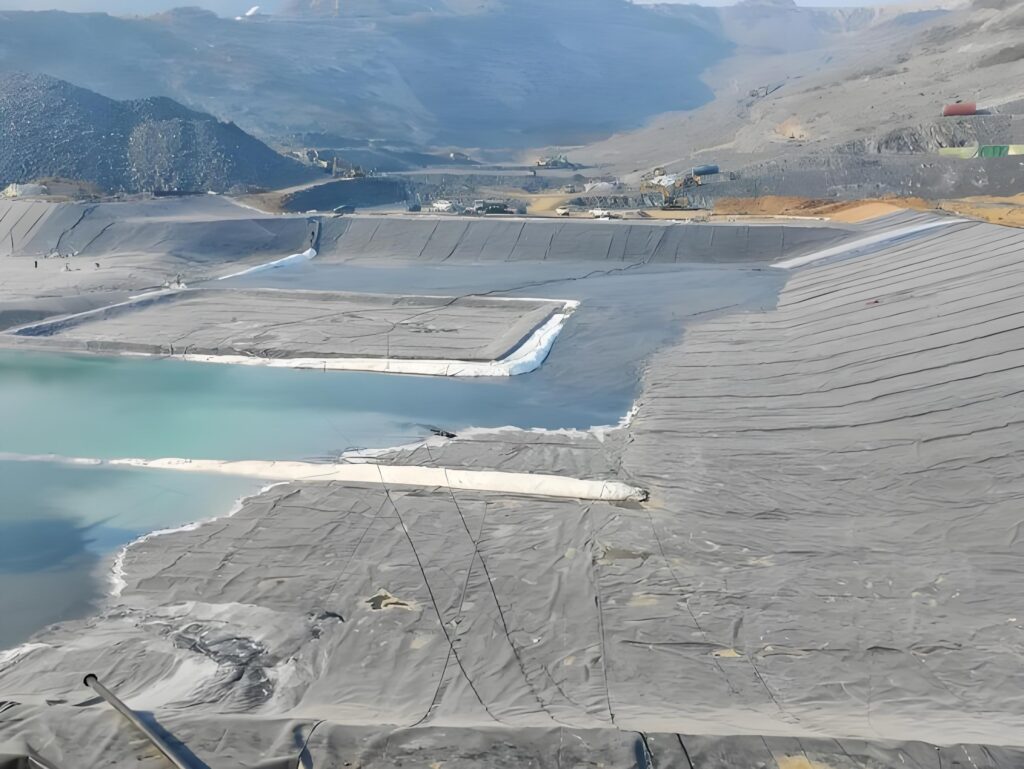
A tailings pond liner system is a multi-layer impermeable barrier system installed at the base and sides of a tailings storage facility (TSF).
Its main functions include:
- Preventing seepage of contaminated water
- Protecting groundwater and surrounding ecosystems
- Improving structural stability of the pond
- Supporting efficient water recovery
Typical Structure of a Tailings Pond Liner System
A standard liner system usually consists of the following layers (from bottom to top):
1. Compacted Subgrade
- Prepared soil foundation
- Smooth and free of sharp objects
- Compacted to 90–95% Proctor density
2. Geosynthetic Clay Liner (GCL) (Optional)
- Provides secondary containment
- Swells upon contact with water to block flow
- Often used in high-risk projects
3. HDPE Geomembrane (Primary Liner)
The core barrier layer of the system.
Key features:
- Extremely low permeability (~10⁻¹⁴ m/s)
- Excellent chemical resistance
- Long service life (30–100 years)
Recommended thickness:
- 1.5 mm (60 mil) – standard applications
- 2.0 mm (80 mil) – high-risk or aggressive environments
4. Geotextile Protection Layer
- Nonwoven geotextile placed above/below geomembrane
- Protects against puncture and mechanical damage
Typical specifications:
- 300–800 GSM
- High puncture resistance
- Strong cushioning performance
5. Drainage Layer
- Gravel or geonet system
- Allows efficient collection of seepage water
Functions:
- Reduces hydraulic pressure
- Improves stability
- Enhances water recovery
Why Tailings Pond Liner Systems Are Essential
Tailings ponds contain harmful substances such as:
- Heavy metals (lead, arsenic, mercury)
- Cyanide (gold mining)
- Acidic or alkaline process water
A properly designed liner system:
- Prevents environmental contamination
- Ensures compliance with regulations
- Reduces long-term liability risks
Key Design Considerations
1. Chemical Resistance
Tailings often contain aggressive chemicals.
HDPE geomembranes are preferred because they:
- Resist acids, alkalis, and hydrocarbons
- Maintain stability in harsh environments
2. Load and Settlement
Tailings ponds may store millions of tons of waste.
Design must consider:
- Vertical load pressure
- Differential settlement
- Long-term deformation
3. Slope Stability
Side slopes require careful design to prevent sliding.
Solutions include:
- Textured HDPE geomembranes
- High-friction interfaces
- Proper anchoring systems
4. Seepage Control
Effective seepage control involves:
- Double liner systems
- Leak detection layers
- Drainage systems
This ensures early detection and prevention of leakage.
Single vs Double Liner Systems
Single Liner System
- One HDPE geomembrane layer
- Suitable for low-risk or temporary applications
Double Liner System
- Primary liner + secondary liner
- Leak detection system in between
Used for:
- High-risk mining operations
- Strict environmental regulations
Installation Best Practices
Proper installation is as important as design.
Key steps include:
- Careful subgrade preparation
- Use of protective geotextiles
- Professional welding (hot wedge / extrusion)
- Seam testing (air pressure, vacuum box)
- Avoiding installation during extreme weather
Poor installation can reduce system performance by up to 50%.
Common Failures to Avoid
- Inadequate liner thickness
- Poor subgrade preparation
- Lack of protection layers
- Weak seam welding
- Insufficient drainage
Avoiding these issues ensures long-term system reliability.
Choosing a Reliable Supplier
High-quality materials are essential for tailings pond safety.
A qualified supplier should provide:
- GRI-GM13 compliant HDPE geomembranes
- Consistent thickness and quality control
- Technical support and installation guidance
For example, Tinhy Geosynthetics Co., Ltd. offers certified geomembrane and geotextile solutions widely used in mining, landfill, and water containment projects worldwide.
Conclusion
A well-designed tailings pond liner system is essential for safe and sustainable mining operations.
By combining:
- High-quality HDPE geomembranes
- Protective geotextiles
- Effective drainage systems
you can achieve:
- Long-term containment (30–100 years)
- Environmental protection
- Regulatory compliance
Investing in proper liner design and installation is not just an engineering decision—it is a commitment to environmental responsibility and project success.