Resources
Company News
Industry News
Knowledge Base
Project Cases
Innovation
Team Power Fuels TINHY’s Global Geosynthetics Solutions
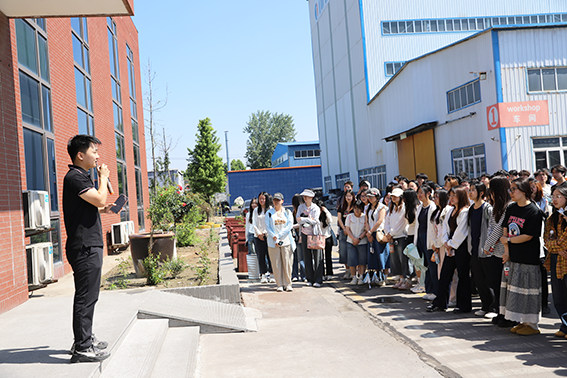
Tinhy and University of Jinan Celebrate Six Years of Industry–University Collaboration
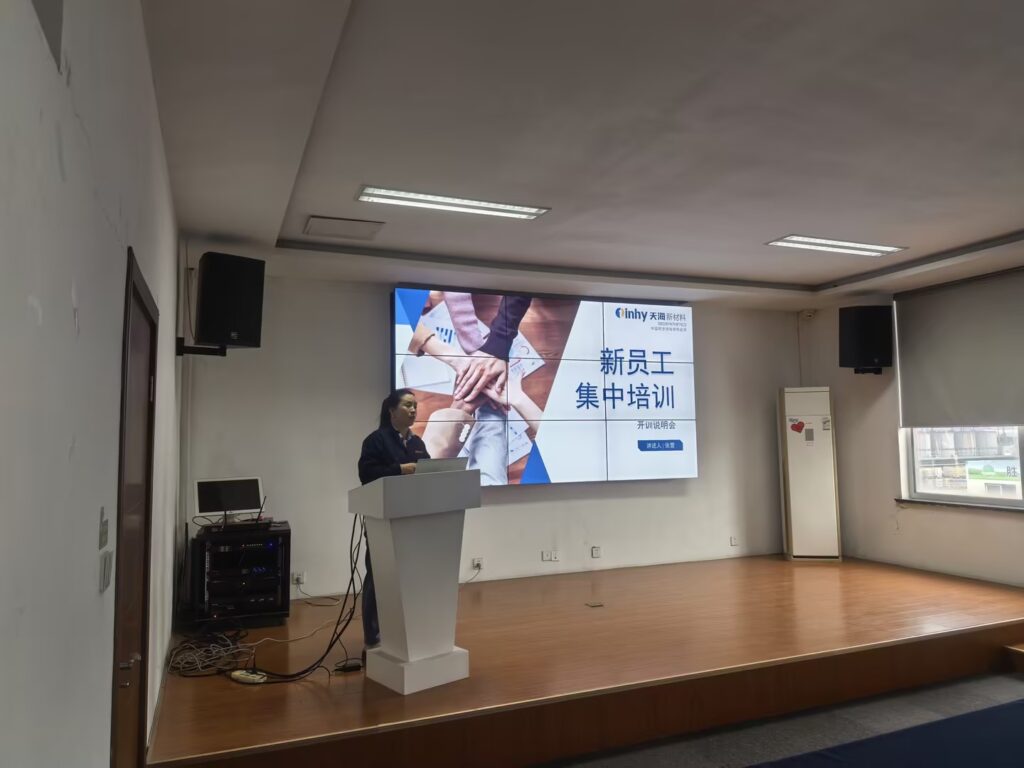
Empowering New Talent, Building the Future: Tinhy Successfully Conducts New Employee Orientation Training
Tinhy Conducts Comprehensive Emergency Drill to Strengthen Workplace Safety Defenses
Company Mid – Year Summary and Team – Building Activity Report
Is geomembrane a geotechnical engineering material?
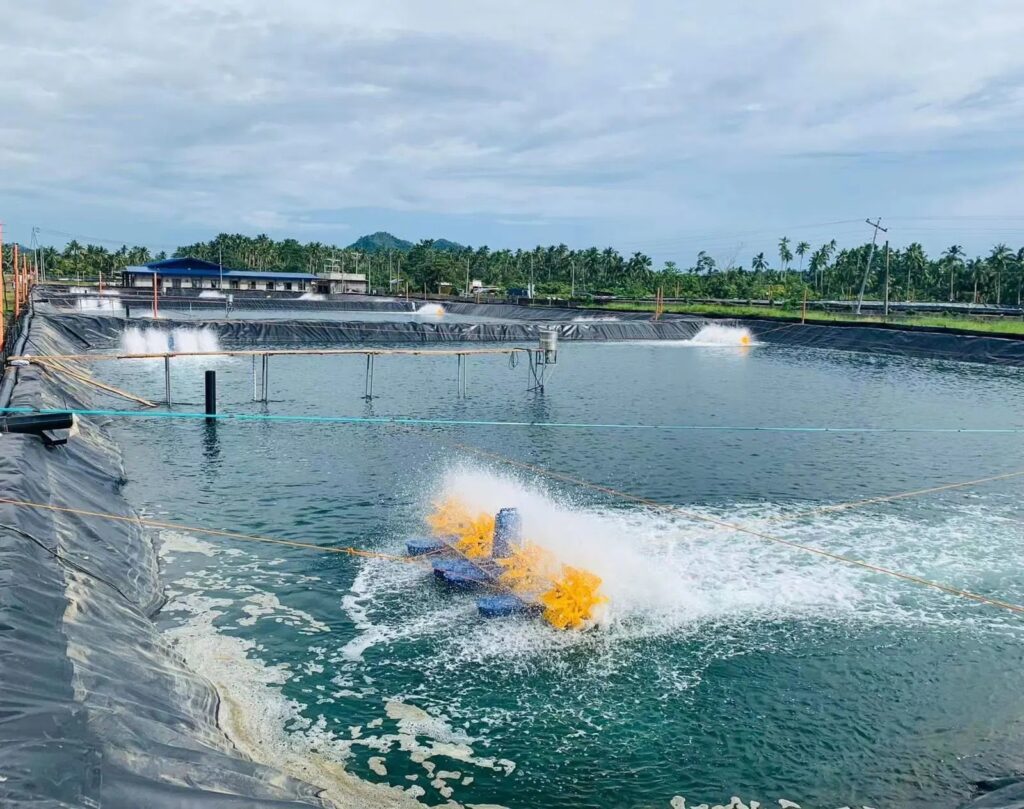
What are the application scenarios of geomembrane?
What are the functions of geotextiles?
Cómo elegir geomembrana de hdpe en proyectos de ingeniería
How to choose hdpe geomembrane in engineering projects
China’s Geotechnical Construction Materials Embrace New Opportunities
Tips for Moisture-Proof Storage of Geotextiles
Key Construction Points and Precautions for High-Density Polyethylene Geomembrane
what is pond lining material ?
What is geomembrane?
HDPE geomembrane construction plans and technical measures
What quality tests do HDPE geomembranes need to do?
Tinhy’s MDS® Drainage Solution
Installation Robots
Top 7 EPDM Geomembrane Applications and Buying Guide in 2026
The 8 Best Geomembrane 1mm Solutions for Engineering Projects in 2026
How Much Does Geogrid Cost? A Complete Guide to Geogrid Pricing and Selection
Textured HDPE Geomembrane: 8 Powerful Benefits and Applications for Slope & Containment Projects
4 oz Non Woven Geotextile: 7 Powerful Benefits, Applications and Buying Guide
40 mil LLDPE Liner: 7 Powerful Applications, Benefits and Selection Guide
Pond Liner Cost Per Square Foot: 7 Powerful Factors That Affect Price and Selection
LDPE Sheet 500 Micron Price: Ultimate Guide to Cost, Applications and Smart Buying
Non Woven Geotextile Landscape Fabric: 8 Powerful Benefits and Complete Selection Guide
Geotextile 120g m²: Complete Guide to Applications, Benefits and Selection
Should HDPE or PVC be used to install geomembrane in reservoirs?
What is the price of geomembrane?
Material characteristics of three different geomembranes
Esquema de construcción de geomembrana de HDPE y medidas técnicas
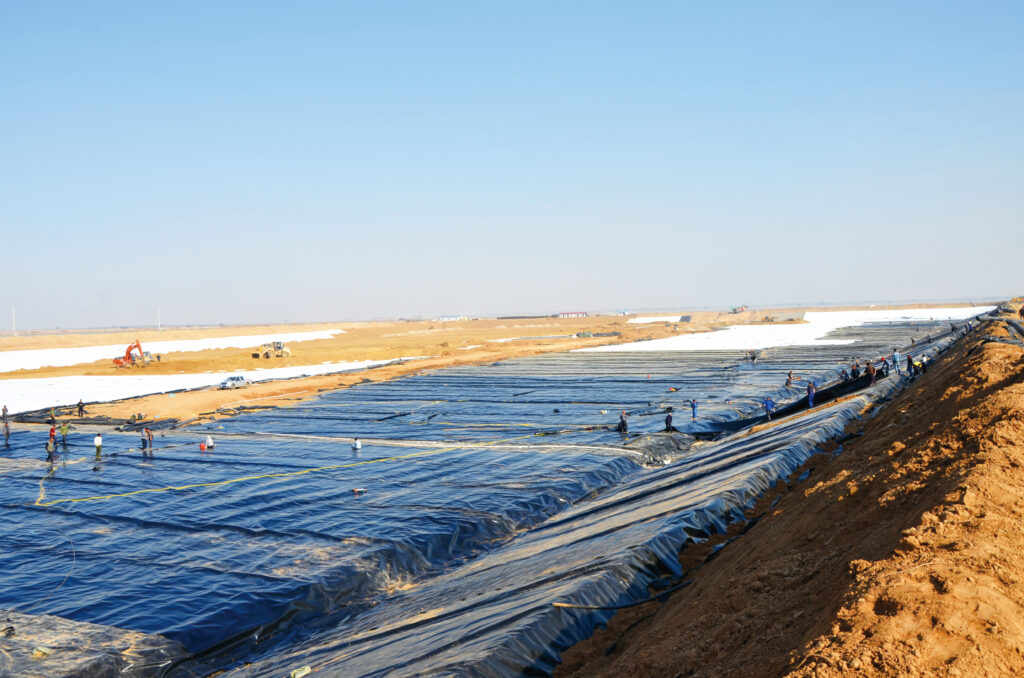
hdpe geomembrane pond liner in Congo (DRC)
How to lay and weld HDPE geomembrane?
HDPE geomembrane 0.2-4.0mm
HOME ABOUT PRODUCTS APPLICATION CONTENTUS RESOURCES
Home Resources Knowledge Base Top 7 EPDM Geomembrane Applications and Buying Guide in 2026

Top 7 EPDM Geomembrane Applications and Buying Guide in 2026

time:August 11, 2026 Views:7

As water conservation, environmental protection, and infrastructure projects continue to expand worldwide, selecting the right geomembrane has become one of the most important decisions for engineers, contractors, and project owners. Among the many geomembrane materials available today, EPDM geomembrane stands out for its exceptional flexibility, weather resistance, and long service life.

Unlike rigid geomembranes such as HDPE, EPDM (Ethylene Propylene Diene Monomer) is a synthetic rubber liner capable of maintaining outstanding elasticity under both extremely low and high temperatures. It easily conforms to irregular subgrades, making it an ideal waterproofing solution for ponds, reservoirs, canals, landscaping projects, aquaculture farms, and environmental containment systems. ASTM provides guidance for selecting appropriate test methods for EPDM geomembranes used in geotechnical and geoenvironmental applications, including smooth, reinforced, and composite membranes.

At Tinhy Geosynthetics, we have over 20 years of experience manufacturing high-performance geosynthetic materials for global infrastructure projects. Our EPDM geomembranes are produced using premium synthetic rubber compounds and strict quality control procedures to deliver reliable waterproofing performance, excellent UV resistance, and long-term durability for demanding engineering applications.

This guide explores everything you need to know about EPDM geomembranes, including their features, benefits, applications, selection criteria, and why Tinhy Geosynthetics is a trusted supplier for projects worldwide.

What Is EPDM Geomembrane?

EPDM geomembrane is a flexible waterproof membrane manufactured from Ethylene Propylene Diene Monomer (EPDM) synthetic rubber. It is specifically designed to create an impermeable barrier that prevents water, chemicals, and other liquids from penetrating soil or groundwater.

Compared with thermoplastic geomembranes, EPDM offers superior flexibility and can stretch significantly without cracking. This makes it particularly suitable for projects with uneven terrain or areas subject to settlement.

Typical specifications include:

  • Thickness: 0.75 mm–2.0 mm
  • Roll Width: Up to 15 m
  • Elongation: 300–500%
  • Service Life: 30–50+ years
  • Operating Temperature: -40°C to 80°C

EPDM geomembranes are commonly manufactured in black for maximum UV protection, although customized colors are available for landscaping projects.

Key Features of EPDM Geomembrane

1. Exceptional Flexibility

The biggest advantage of EPDM is its outstanding elasticity.

Unlike rigid liners, EPDM can easily adapt to:

  • Uneven ground
  • Complex pond shapes
  • Curved embankments
  • Foundation settlement

Its high elongation significantly reduces the risk of cracking during long-term service.

2. Excellent UV and Ozone Resistance

Because EPDM contains advanced weather-resistant polymers, it performs exceptionally well in exposed environments.

Compared with many other waterproofing materials, EPDM offers:

  • Outstanding UV stability
  • Excellent ozone resistance
  • Minimal surface degradation
  • Long-term outdoor durability

This makes it suitable for decorative lakes, reservoirs, golf course ponds, and exposed water storage facilities.

3. Superior Weather Resistance

EPDM remains flexible under extreme climate conditions.

Whether installed in cold northern regions or hot tropical environments, it maintains stable mechanical performance without becoming brittle or excessively soft.

Typical operating temperature range:

  • Low temperature: -40°C
  • High temperature: +80°C

4. Reliable Chemical Resistance

EPDM geomembranes resist numerous chemicals commonly encountered in environmental engineering.

Typical applications include:

  • Agricultural fertilizers
  • Municipal wastewater
  • Industrial wastewater
  • Mild acids
  • Mild alkalis

For projects involving highly aggressive chemicals or mining leach solutions, HDPE geomembranes may be more appropriate.

5. Excellent Waterproof Performance

One of the primary functions of an EPDM geomembrane is preventing water loss.

Its extremely low permeability effectively reduces seepage in:

  • Irrigation reservoirs
  • Landscape ponds
  • Aquaculture farms
  • Water storage systems

Properly installed EPDM liners help conserve water while protecting surrounding soil.

6. Easy Installation

Compared with thermoplastic geomembranes requiring thermal welding, EPDM liners can often be installed using factory-fabricated panels, compatible tapes, or adhesive systems depending on project requirements, reducing installation complexity in many water containment projects. Installation guidance emphasizes smooth subgrade preparation, geotextile protection, correct seam treatment, and quality inspection.

Benefits include:

  • Fast deployment
  • Fewer installation tools
  • Easy repairs
  • Lower labor costs

7. Environmentally Friendly

EPDM geomembranes are widely used in ecological water projects because they are suitable for:

  • Fish ponds
  • Shrimp farms
  • Landscape lakes
  • Wildlife habitats

Their inert material helps maintain healthy aquatic environments.

Top 7 Applications of EPDM Geomembrane

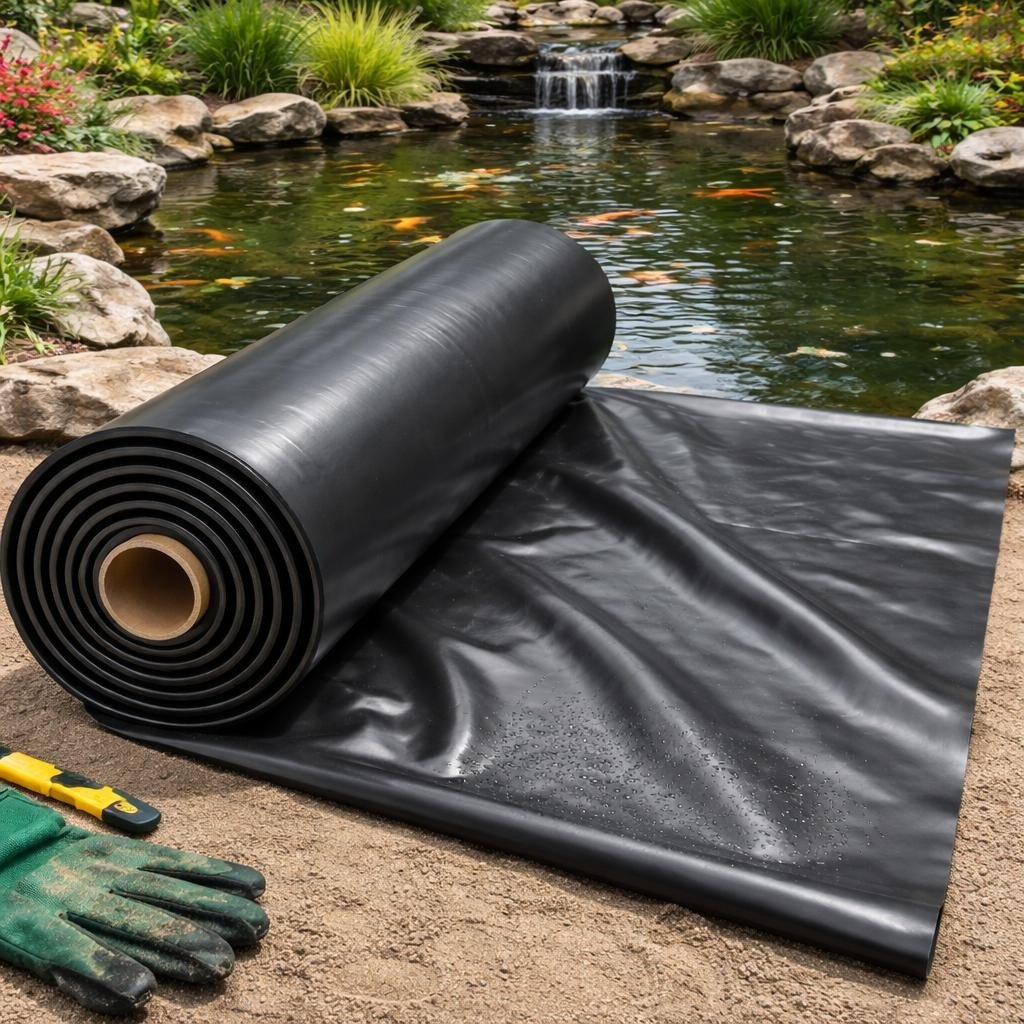
1. Decorative Pond Liners

EPDM is the preferred liner for landscape ponds because of its flexibility and natural appearance.

Applications include:

  • Garden ponds
  • Koi ponds
  • Waterfalls
  • Artificial streams

Its ability to conform to complex shapes makes installation easier than rigid geomembranes.

2. Reservoir Waterproofing

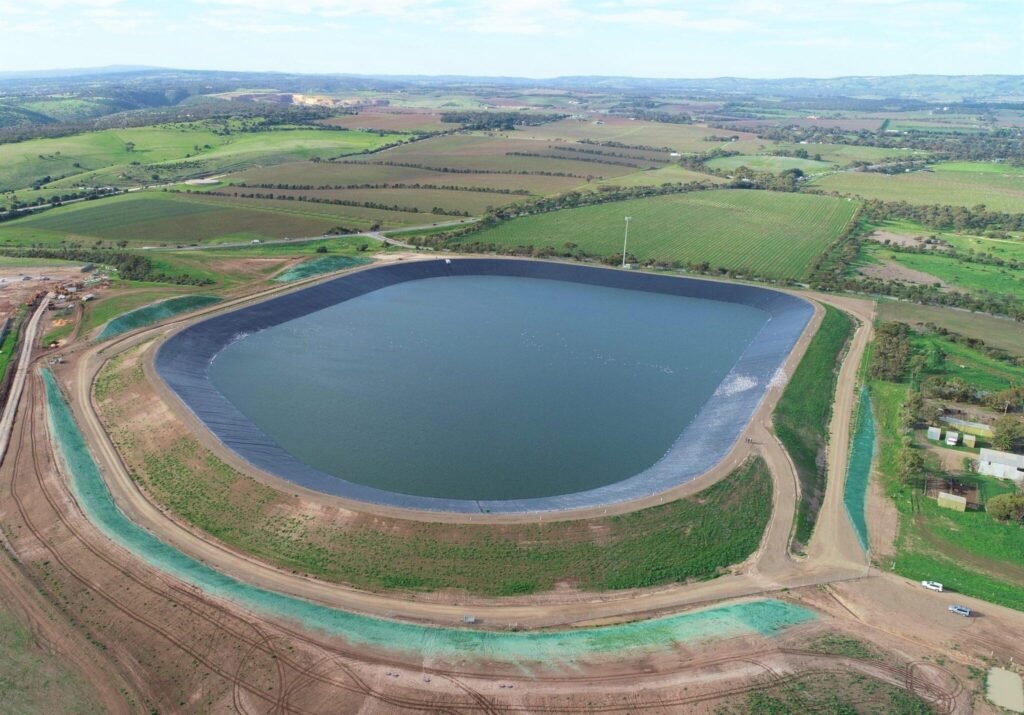
Agricultural and municipal reservoirs require reliable waterproof barriers to reduce water loss.

EPDM liners help:

  • Improve water conservation
  • Prevent seepage
  • Extend reservoir service life
  • Reduce maintenance costs

3. Irrigation Canal Lining

Canal seepage leads to significant water loss.

Installing EPDM geomembranes improves irrigation efficiency by creating an impermeable lining system that minimizes leakage.

4. Aquaculture Farms

Modern aquaculture depends on maintaining stable water quality.

EPDM geomembranes are widely used in:

  • Fish ponds
  • Shrimp ponds
  • Crab farms
  • Aquaculture reservoirs

Benefits include:

  • Easy cleaning
  • Reduced contamination
  • Improved biosecurity
  • Long service life

5. Wastewater Lagoons

Municipal wastewater treatment plants require durable waterproof systems.

EPDM geomembranes provide:

  • Reliable containment
  • Chemical resistance
  • UV stability
  • Flexible installation

6. Landscape Lakes

Architectural water features demand waterproof materials that perform well for decades.

EPDM is widely selected for:

  • Public parks
  • Commercial landscapes
  • Golf courses
  • Ecological restoration projects

7. Secondary Containment Systems

Industrial facilities often require secondary containment around storage tanks.

EPDM geomembranes provide reliable protection against accidental liquid leakage while remaining flexible over uneven foundations.

EPDM vs HDPE Geomembrane: Which Is Better?

Choosing between EPDM geomembrane and HDPE geomembrane depends on your project’s operating conditions, installation environment, and long-term performance requirements. Both materials provide excellent waterproofing, but they excel in different applications.

Feature EPDM Geomembrane HDPE Geomembrane
Material Synthetic Rubber High-Density Polyethylene
Flexibility Excellent Moderate
Elongation 300–500% 600–900% (higher elongation but stiffer material)
UV Resistance Excellent Excellent with carbon black additives
Chemical Resistance Good Excellent
Low Temperature Performance Outstanding Very Good
Installation Adhesive or tape seaming Hot wedge/extrusion welding
Best Applications Ponds, reservoirs, landscaping Landfills, mining, wastewater, hazardous containment
Expected Service Life 30–50+ years 50+ years under proper conditions

When Should You Choose EPDM?

EPDM geomembranes are ideal when your project requires maximum flexibility and easy installation.

Recommended applications include:

  • Landscape ponds
  • Decorative lakes
  • Golf course water features
  • Fish and shrimp farms
  • Irrigation reservoirs
  • Water gardens

Because EPDM conforms easily to irregular terrain, it minimizes wrinkles and simplifies installation on complex subgrades.

When Should You Choose HDPE?

HDPE geomembranes are better suited for heavy-duty engineering projects where chemical resistance and mechanical strength are critical.

Typical applications include:

  • Municipal landfills
  • Hazardous waste containment
  • Mining heap leach pads
  • Tailings storage facilities
  • Industrial wastewater ponds
  • Oil and gas containment

HDPE also complies with internationally recognized specifications such as GRI-GM13, making it one of the most widely specified geomembranes for environmental protection projects.

How to Choose the Best EPDM Geomembrane

Selecting the appropriate EPDM geomembrane involves more than comparing prices. The following factors should be carefully evaluated before purchasing.

1. Select the Appropriate Thickness

Different projects require different liner thicknesses.

Application Recommended Thickness
Decorative ponds 0.75–1.0 mm
Fish ponds 1.0–1.2 mm
Irrigation reservoirs 1.2–1.5 mm
Wastewater lagoons 1.5 mm
Industrial containment 1.5–2.0 mm

A thicker liner generally provides greater puncture resistance and durability, particularly on rocky or uneven subgrades.

2. Evaluate Raw Material Quality

Premium EPDM geomembranes should be manufactured from high-quality synthetic rubber compounds with advanced UV stabilizers and anti-aging additives.

Inferior materials may suffer from:

  • Premature aging
  • Reduced elasticity
  • Lower weather resistance
  • Shorter service life

Always request technical data sheets and third-party test reports before purchasing.

3. Check Roll Dimensions

Larger roll widths reduce the number of field seams, helping lower installation costs and minimize potential leakage points.

For large reservoirs and ponds, wide rolls can significantly improve installation efficiency.

4. Verify Product Certifications

Reliable manufacturers should provide internationally recognized quality certifications and testing reports.

Look for:

  • ISO 9001 Quality Management
  • ISO 14001 Environmental Management
  • ISO 45001 Occupational Health and Safety
  • Third-party laboratory testing

For EPDM geomembrane materials, ASTM has also published specifications covering material quality and performance requirements for geotechnical and geoenvironmental applications.

5. Consider Technical Support

Choosing an experienced manufacturer offers more than just supplying materials.

Professional suppliers should provide:

  • Product selection assistance
  • Engineering recommendations
  • Installation guidance
  • Technical documentation
  • After-sales support

This helps reduce construction risks and improves long-term project performance.

Why Choose Tinhy Geosynthetics?

Established in 2002, Tinhy Geosynthetics has become a trusted manufacturer of geomembranes and geosynthetic products for customers worldwide.

With decades of manufacturing experience and continuous investment in production technology, Tinhy delivers reliable waterproofing solutions for environmental, hydraulic, mining, and civil engineering projects.

Advanced Manufacturing

Tinhy operates:

  • More than 20 advanced production lines
  • Over 300 experienced employees
  • Modern quality inspection laboratories
  • Large-scale manufacturing capacity

This enables us to provide consistent product quality and timely delivery for projects of all sizes.

Comprehensive Product Range

Our geomembrane products include:

  • HDPE Geomembrane
  • Textured HDPE Geomembrane
  • LDPE Geomembrane
  • LLDPE Geomembrane
  • EPDM Geomembrane
  • Composite Geomembrane

We also manufacture complementary geosynthetic products such as:

  • Nonwoven Geotextile
  • Woven Geotextile
  • Geogrid
  • Geocell
  • Geosynthetic Clay Liner (GCL)
  • Drainage Geocomposites

This allows customers to source complete geosynthetic solutions from a single supplier.

Strict Quality Control

Quality is at the core of every Tinhy product.

Our manufacturing process follows strict quality management procedures supported by:

  • ISO 9001
  • ISO 14001
  • ISO 45001
  • Professional laboratory testing

Each production batch undergoes comprehensive inspections to ensure stable performance before shipment.

Global Project Experience

Tinhy products have been successfully applied in:

  • Water conservancy projects
  • Reservoir construction
  • Aquaculture farms
  • Municipal wastewater treatment
  • Mining operations
  • Landfill engineering
  • Agricultural irrigation systems

Our engineering team works closely with contractors and consultants to recommend suitable geomembrane solutions for each project.

Professional Technical Support

Beyond supplying products, Tinhy provides:

  • Material selection recommendations
  • Project consultation
  • Installation guidance
  • Customized production
  • OEM and private label services
  • Global logistics support

We strive to become a long-term partner rather than simply a material supplier.

Conclusion

EPDM geomembranes have become one of the most reliable waterproofing materials for ponds, reservoirs, landscaping, aquaculture, and environmental engineering projects. Their outstanding flexibility, UV resistance, weather durability, and long service life make them an excellent choice for applications where the liner must conform to irregular surfaces or remain exposed for many years.

However, selecting the right EPDM geomembrane requires more than comparing prices. Factors such as thickness, raw material quality, installation method, certifications, and technical support all influence the long-term success of a project. Proper installation—including careful subgrade preparation, protection with geotextile where needed, and correct seam treatment—is equally important to maximize service life.

At Tinhy Geosynthetics, we combine over two decades of manufacturing experience with advanced production technology and strict quality control to provide dependable geomembrane solutions for customers around the world. Whether your project involves water storage, aquaculture, landscaping, or environmental protection, our team is ready to help you select the most suitable EPDM geomembrane for your specific requirements.

Contact Tinhy Geosynthetics today to request technical specifications, product samples, or a customized quotation, and let our experts help you build a durable, cost-effective waterproofing system.

Knowledge Base
Share:
info@tinhygeosynthetics.com Bai Jinxi
Consultation

    Get The Latest Product Prices

    Your inquiries are welcomed at any time and please feel free to contact us via email, phone calls, and online chatbox on our site.

    We will definitely give you a reply ASAP after we receive your messages.

      0/180