Resources
Company News
Industry News
Knowledge Base
Project Cases
Innovation
Team Power Fuels TINHY’s Global Geosynthetics Solutions
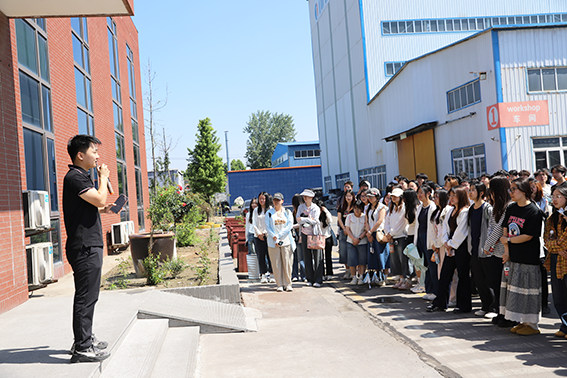
Tinhy and University of Jinan Celebrate Six Years of Industry–University Collaboration
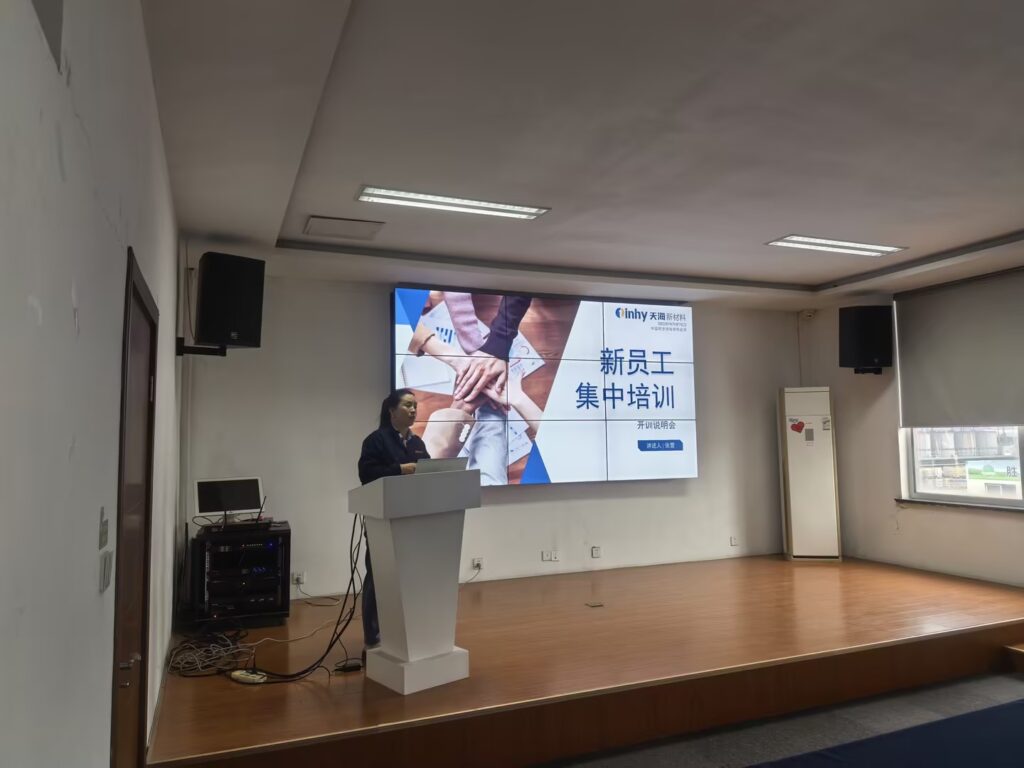
Empowering New Talent, Building the Future: Tinhy Successfully Conducts New Employee Orientation Training
Tinhy Conducts Comprehensive Emergency Drill to Strengthen Workplace Safety Defenses
Company Mid – Year Summary and Team – Building Activity Report
Is geomembrane a geotechnical engineering material?
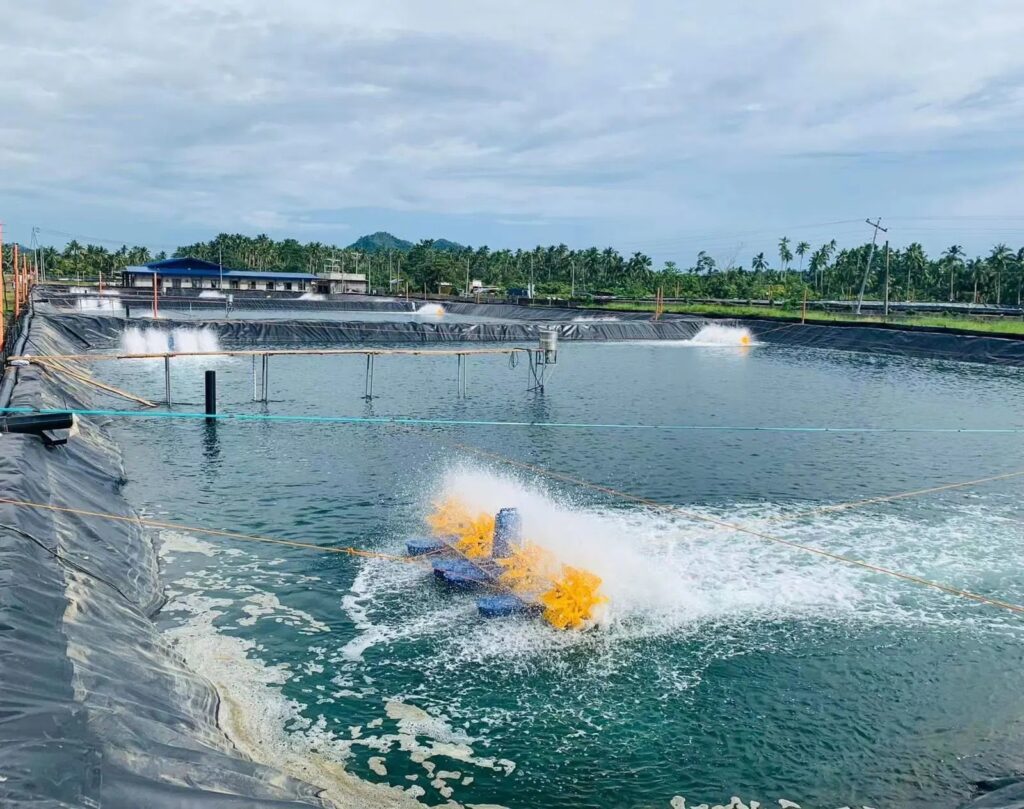
What are the application scenarios of geomembrane?
What are the functions of geotextiles?
Cómo elegir geomembrana de hdpe en proyectos de ingeniería
How to choose hdpe geomembrane in engineering projects
China’s Geotechnical Construction Materials Embrace New Opportunities
Tips for Moisture-Proof Storage of Geotextiles
Key Construction Points and Precautions for High-Density Polyethylene Geomembrane
what is pond lining material ?
What is geomembrane?
HDPE geomembrane construction plans and technical measures
What quality tests do HDPE geomembranes need to do?
Tinhy’s MDS® Drainage Solution
Installation Robots
Woven Geotextile Fabric Price: Specifications, Applications & Buying Guide
8 Geogrid Options for Retaining Walls: Types, Specifications & Buying Guide
LDPE Sheet 500 Micron Price: Cost Factors, Specifications & Buying Guide
7 Black PVC Pond Liner Options: Specifications & Buying Guide
8 Geotextile Suppliers to Consider in 2026: Products & Buying Guide
7 PVC Geomembrane Manufacturers: Products, Quality & Buying Guide
6 HDPE Pond Liner Suppliers: Products, Quality & Buying Guide
10 Geomembrane Options: Types, Manufacturers & Buying Guide
6 LLDPE Geomembrane Manufacturers: Products, Quality & Buying Guide
7 Best Geotextile Manufacturers: Products, Quality & Buying Guide
Should HDPE or PVC be used to install geomembrane in reservoirs?
What is the price of geomembrane?
Material characteristics of three different geomembranes
Esquema de construcción de geomembrana de HDPE y medidas técnicas
hdpe geomembrane pond liner in Congo (DRC)
How to lay and weld HDPE geomembrane?
HDPE geomembrane 0.2-4.0mm
HOME ABOUT PRODUCTS APPLICATION CONTENTUS RESOURCES
Home Resources Knowledge Base Woven Geotextile Fabric Price: Specifications, Applications & Buying Guide

Woven Geotextile Fabric Price: Specifications, Applications & Buying Guide
time:October 08, 2026 Views:17

Woven geotextile fabric price is one of the first things buyers consider when sourcing geotextiles for road construction, soil stabilization, mining, drainage, landfills, embankments, and other civil engineering projects.

However, there is no single price for woven geotextile fabric. The final cost depends on several factors, including raw material, tensile strength, fabric weight, roll dimensions, production specifications, order quantity, packaging, and delivery terms.

Woven geotextiles are manufactured by interlacing polymer yarns, commonly polypropylene (PP). Compared with many nonwoven geotextiles, their woven structure can provide high tensile strength and dimensional stability, making them suitable for applications where reinforcement and separation are important.

For international buyers, comparing only the factory price per square meter can be misleading. A better approach is to compare the complete delivered cost together with product performance and project requirements.

What Is Woven Geotextile Fabric?

Woven geotextile fabric is a permeable geosynthetic material manufactured by weaving polymer yarns into a stable fabric structure.

PP woven geotextile is commonly used where the project requires tensile strength, separation, soil stabilization, or reinforcement.

Typical characteristics include:

  • High tensile strength
  • Low elongation compared with many nonwoven products
  • Good dimensional stability
  • Resistance to separation under construction loads
  • Permeability through the fabric structure
  • Easy roll handling and installation
  • Availability in different weights and strength grades

The actual performance depends on the polymer, yarn structure, weaving technology, fabric weight, and manufacturing quality.

What Determines Woven Geotextile Fabric Price?

The price of woven geotextile fabric is mainly determined by the specification required for the project.

1. Raw Material

Polypropylene (PP) is one of the most common materials used for woven geotextiles.

The quality and consistency of the polymer can influence tensile performance, elongation, durability, and production consistency.

For infrastructure projects, buyers should ask the supplier about:

  • Polymer type
  • Virgin or recycled material
  • Yarn structure
  • UV stabilization
  • Manufacturing specifications

Material quality should be considered together with the required engineering performance rather than comparing polymer cost alone.

2. Tensile Strength

Tensile strength is one of the most important factors affecting woven geotextile fabric price.

A relatively low-strength woven geotextile generally requires less polymer and yarn than a high-strength reinforcement fabric.

For example, a project requiring approximately 20 kN/m tensile strength will normally have different material requirements from one requiring 100 kN/m or higher.

However, the highest tensile strength is not always the most economical choice.

The correct approach is to select the lowest specification that reliably satisfies the engineering requirements.

3. Fabric Weight — GSM

Fabric weight, usually expressed as g/m² or GSM, is another major price factor.

In general:

Higher GSM → more polymer material → higher material cost

However, GSM should not be used as a substitute for tensile strength.

Two woven geotextiles with the same GSM may have different tensile strength, elongation, aperture structure, and other properties.

Therefore, buyers should compare the complete technical data sheet rather than purchasing solely according to weight.

4. Roll Width and Length

Roll dimensions can affect both production and logistics costs.

Wider rolls may reduce the number of overlaps required during installation, potentially improving installation efficiency.

At the same time, very wide or customized rolls can affect:

  • Production requirements
  • Packaging
  • Container loading
  • Transportation
  • Handling at the construction site

Tinhy’s current product information indicates that its woven geotextile range can be supplied in widths of approximately 2–6 m, with different weight specifications depending on the product.

5. Order Quantity

Quantity has a significant effect on the final quotation.

A small trial order may have higher costs per square meter because fixed costs such as:

  • Production setup
  • Packaging
  • Loading
  • Documentation
  • Transportation

are distributed across fewer square meters.

For large infrastructure projects, factory-direct bulk orders can generally provide a more competitive unit cost.

6. Packaging and Delivery Terms

The quoted price should always be checked against the delivery term.

For international procurement, buyers may receive quotations based on:

  • EXW
  • FOB
  • CFR
  • CIF
  • Other agreed Incoterms

The same product can therefore have very different final costs depending on the destination port and shipping arrangement.

Woven Geotextile Fabric Price Per Square Meter

As a broad market reference, standard woven geotextile products may sometimes be quoted within approximately US$0.20–US$1.50 per m², while specialized high-strength or customized products may cost more.

This range should not be treated as a fixed market price.

The actual quotation depends on:

Price Factor Effect on Cost
Raw material Polymer quality and type affect material cost
Tensile strength Higher strength generally requires more material
GSM Higher weight generally increases material consumption
Width Customized widths can affect production
Roll length Influences packaging and logistics
Order quantity Larger orders can reduce unit costs
Packaging Export packaging affects delivered cost
Destination Freight and inland transportation vary
Incoterms EXW, FOB, CIF, etc. change the quoted price

For an accurate quotation, suppliers normally need the required tensile strength, GSM, width, quantity, application, and destination.

PP Woven Geotextile Price

PP woven geotextile is widely used because polypropylene provides a useful combination of tensile performance, chemical resistance, low density, and processability.

The price of PP woven geotextile mainly depends on the product specification.

Important purchasing parameters include:

  • Material: PP
  • Mass per unit area
  • Tensile strength
  • Elongation
  • Aperture size
  • Width
  • Roll length
  • Quantity
  • Packaging
  • Delivery destination

Tinhy’s PP woven geotextile product information specifies a product range covering approximately 200–1500 g/m² and 2–6 m width, with ASTM and GB/T testing references.

For large projects, buyers should request the technical data sheet and compare equivalent specifications between suppliers.

Woven Geotextile vs. Nonwoven Geotextile

Woven and nonwoven geotextiles are not interchangeable simply because both are geotextiles.

Their structures and primary functions are different.

Feature Woven Geotextile Nonwoven Geotextile
Structure Interlaced yarns Bonded/entangled fibers
Tensile strength Generally high Varies by product
Dimensional stability Generally good More flexible
Main functions Reinforcement, separation, stabilization Filtration, drainage, separation, protection
Typical applications Roads, embankments, soft soil, heavy loads Drainage, filtration, protection, landfill systems
Selection basis Strength and soil interaction Filtration and hydraulic properties

For example, a road project over weak subgrade may require a woven geotextile for separation and reinforcement, while a drainage application may prioritize the filtration and permeability characteristics of a nonwoven geotextile.

Therefore, buyers should compare function and engineering performance, not simply price per square meter.

Main Applications of Woven Geotextile Fabric

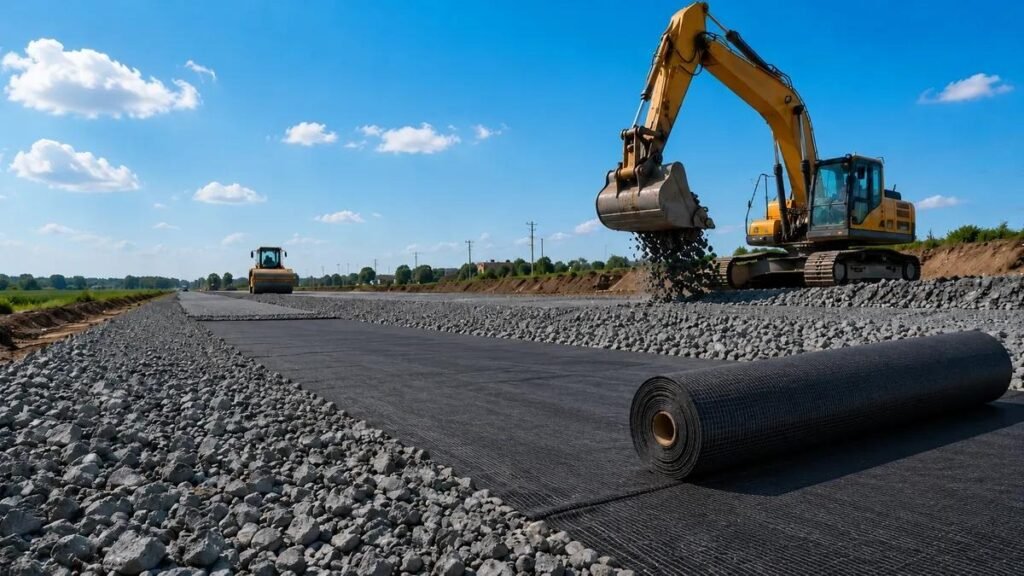
1. Road Construction

Woven geotextiles can be installed between weak subgrade soil and aggregate layers.

They help separate different soil materials and can improve the stability of the working platform.

Typical applications include:

  • Highways
  • Temporary access roads
  • Industrial roads
  • Haul roads
  • Road widening
  • Soft-soil construction areas

2. Soil Stabilization

High-strength woven geotextiles can provide tensile reinforcement within soil structures.

They may be used in:

  • Embankments
  • Working platforms
  • Reinforced slopes
  • Foundation improvement
  • Soft-ground construction

The appropriate product should be determined based on soil properties and engineering calculations.

3. Mining

Mining projects often require durable geosynthetics for roads, working platforms, stockpile areas, drainage systems, and other infrastructure.

Woven geotextiles can be considered where high tensile strength and separation are required.

4. Landfills

Woven geotextiles may be incorporated into geosynthetic systems for separation, reinforcement, or protection.

They can work together with other materials such as geomembranes, nonwoven geotextiles, geonets, and drainage composites.

The selected geotextile should match the specific layer function within the landfill design.

5. Coastal and Hydraulic Engineering

Woven geotextiles can also be used in:

  • Riverbank stabilization
  • Coastal protection
  • Embankments
  • Canal construction
  • Hydraulic structures
  • Erosion-control systems

The material should be selected according to hydraulic conditions, soil characteristics, installation stresses, and project specifications.

How to Choose the Right Woven Geotextile

Instead of asking only “What is the cheapest woven geotextile?”, buyers should start with the engineering requirements.

Step 1: Define the Application

Identify whether the material is required for:

  • Separation
  • Reinforcement
  • Soil stabilization
  • Drainage
  • Protection
  • Erosion control

Step 2: Define Required Tensile Strength

Confirm the required machine-direction and cross-machine-direction tensile strength.

Step 3: Determine GSM

Select the appropriate mass per unit area based on the required performance rather than choosing a heavier product automatically.

Step 4: Confirm Roll Dimensions

Specify:

  • Width
  • Roll length
  • Core diameter if required
  • Packaging requirements

Step 5: Confirm Testing Standards

Depending on the project, buyers may require testing according to ASTM, ISO, GB/T, or other applicable standards.

Step 6: Compare Delivered Cost

Compare:

Product price + packaging + freight + destination charges + installation considerations

rather than comparing factory price alone.

How to Reduce Woven Geotextile Purchasing Costs

There are several practical ways to reduce the total project cost without compromising technical requirements.

Buy According to Specification

Avoid purchasing an unnecessarily high-strength or high-GSM product.

The most economical product is usually the one that meets the required engineering specification—not simply the one with the lowest quotation.

Optimize Roll Dimensions

Appropriate roll widths can reduce unnecessary overlaps and installation waste.

Increase Order Volume

For large projects, consolidated production and full-container shipments may reduce the unit cost of manufacturing and transportation.

Compare Total Delivered Cost

A supplier with a lower factory price may not have the lowest final cost after freight and destination charges are included.

Work Directly With a Manufacturer

Factory-direct purchasing can simplify communication regarding:

  • Product specifications
  • Customized dimensions
  • Production schedules
  • Quality documentation
  • Packaging
  • Export logistics

How to Choose a Reliable Woven Geotextile Manufacturer

Price is important, but consistency is equally important for large engineering projects.

Before placing an order, check the supplier’s:

Manufacturing Capability

Confirm production lines, product range, available widths, production capacity, and customization capabilities.

Quality Control

Ask how the manufacturer controls:

  • Raw materials
  • Fabric weight
  • Tensile strength
  • Width
  • Roll length
  • Surface quality
  • Finished-product consistency

Testing Capability

A reliable manufacturer should be able to provide relevant technical data and test documentation.

Tinhy operates an in-house laboratory and uses documented testing and quality-control procedures covering raw materials, production, and finished products. Its current company information also lists ISO 9001, ISO 14001, ISO 45001 and GAI-LAP laboratory capabilities.

Export Experience

For international buyers, also evaluate:

  • Export packaging
  • Container loading
  • Documentation
  • Shipping coordination
  • Communication
  • Delivery schedules

These factors can have a direct impact on the final project cost.

Why Choose Tinhy Woven Geotextile?

Tinhy Geosynthetics has been involved in geosynthetic manufacturing since 2002 and currently operates a manufacturing base of approximately 120,000 m², more than 25 production lines, and 300+ employees. Its product portfolio includes woven and nonwoven geotextiles as well as geomembranes, GCL, drainage materials, and other geosynthetics.

For woven geotextile projects, Tinhy can evaluate requirements including:

  • PP woven geotextile
  • Fabric weight
  • Tensile strength
  • Roll width
  • Roll length
  • Project quantity
  • Packaging
  • Applicable testing standards

The current Tinhy product catalog identifies PP woven geotextile as a product made from PP fiber, with properties including high strength, durability, corrosion resistance, and permeability.

For large projects, the specification should be confirmed against the project drawings, technical requirements, and applicable standards before production.

Frequently Asked Questions

How much does woven geotextile fabric cost?

As a broad international reference, standard woven geotextile products may be quoted around US$0.20–US$1.50 per m², but this is not a fixed market price. Actual cost depends on material, GSM, tensile strength, roll size, quantity, and delivery terms.

What is the price of PP woven geotextile?

PP woven geotextile price depends mainly on tensile strength, GSM, width, roll length, order quantity, and destination. A supplier needs the project specifications before providing an accurate quotation.

Is woven geotextile more expensive than nonwoven geotextile?

Not necessarily. Woven and nonwoven geotextiles have different structures and functions. The correct comparison should be based on equivalent technical requirements rather than price alone.

What GSM woven geotextile should I choose?

There is no universal GSM for every project. The required GSM should be determined together with tensile strength, puncture resistance, soil conditions, construction loads, and the intended application.

What is the difference between PP woven and PET geotextile?

PP and PET geotextiles have different material properties and are selected according to project requirements. Buyers should compare tensile performance, chemical resistance, durability, temperature conditions, and applicable design specifications.

How can I get a woven geotextile fabric quotation?

Provide the supplier with:

  • Required material
  • GSM
  • Tensile strength
  • Width
  • Roll length
  • Total quantity
  • Application
  • Destination port
  • Required standard

A manufacturer can then recommend a suitable specification and provide a project-specific quotation.

Conclusion

So, how much is woven geotextile fabric price?

A broad international reference for standard woven geotextile may be around US$0.20–US$1.50 per m², but the actual price can vary significantly according to raw material, tensile strength, GSM, roll dimensions, quantity, packaging, freight, and delivery terms.

For road construction, mining, soil stabilization, embankments, landfills, and hydraulic projects, buyers should select woven geotextile according to the required engineering function rather than simply choosing the lowest price.

For a factory quotation from Tinhy Geosynthetics, provide your required GSM, tensile strength, width, quantity, application, and destination port. Tinhy’s technical and sales team can review the requirements and recommend a suitable woven geotextile specification for your project.

Knowledge Base
Share:
info@tinhygeosynthetics.com Bai Jinxi
Consultation

    Get The Latest Product Prices

    Your inquiries are welcomed at any time and please feel free to contact us via email, phone calls, and online chatbox on our site.

    We will definitely give you a reply ASAP after we receive your messages.

      0/180