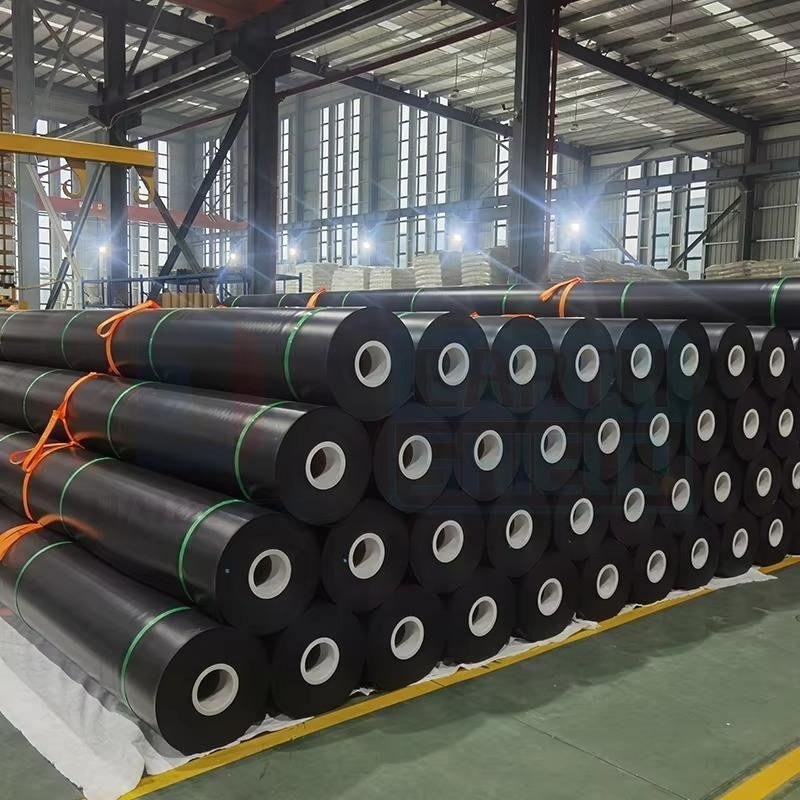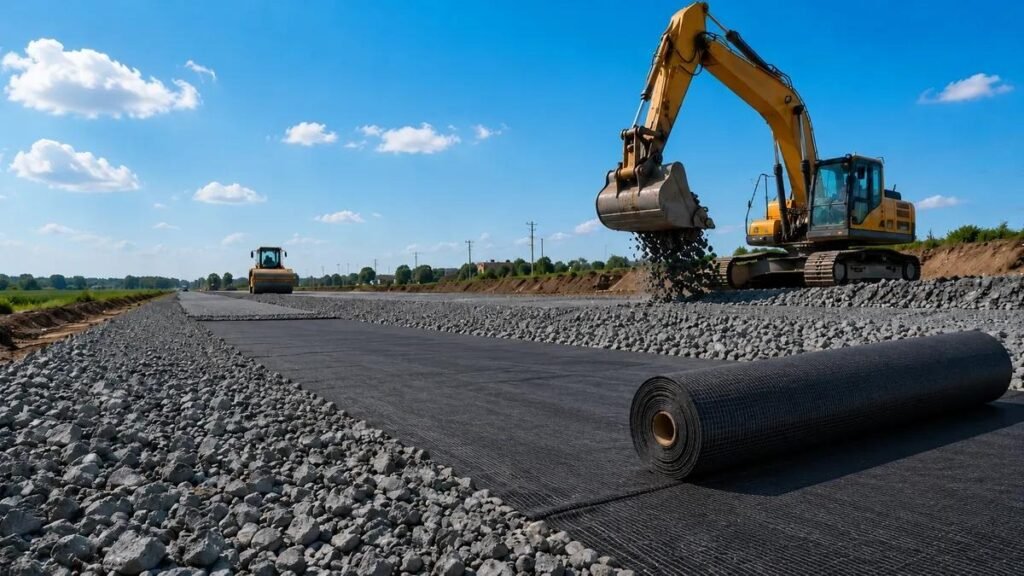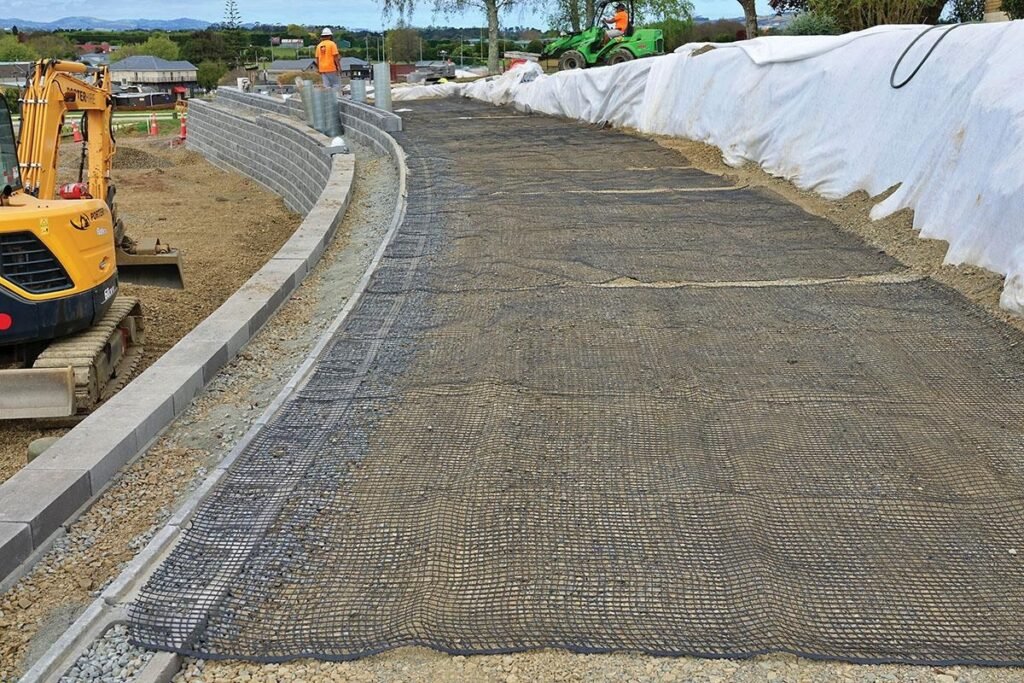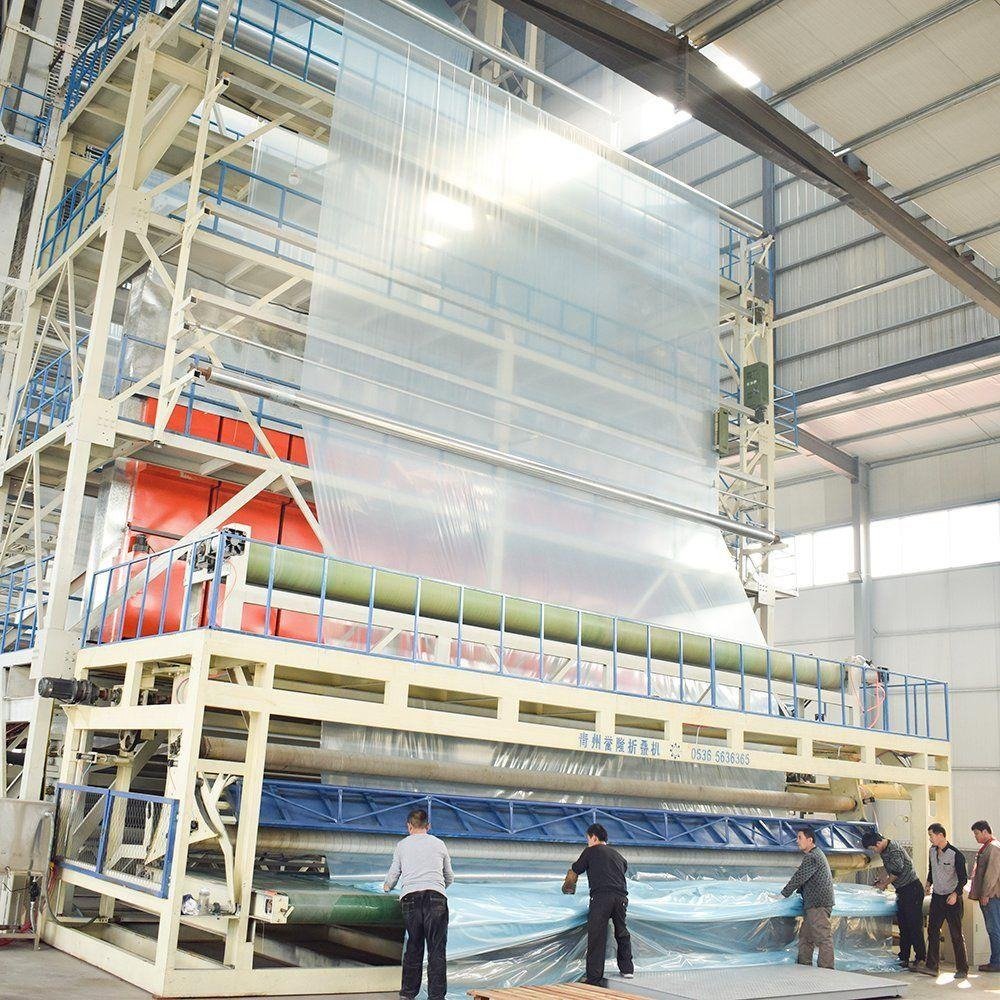
Resources
Company News
Industry News
Knowledge Base
Project Cases
Innovation
Team Power Fuels TINHY’s Global Geosynthetics Solutions
Tinhy and University of Jinan Celebrate Six Years of Industry–University Collaboration
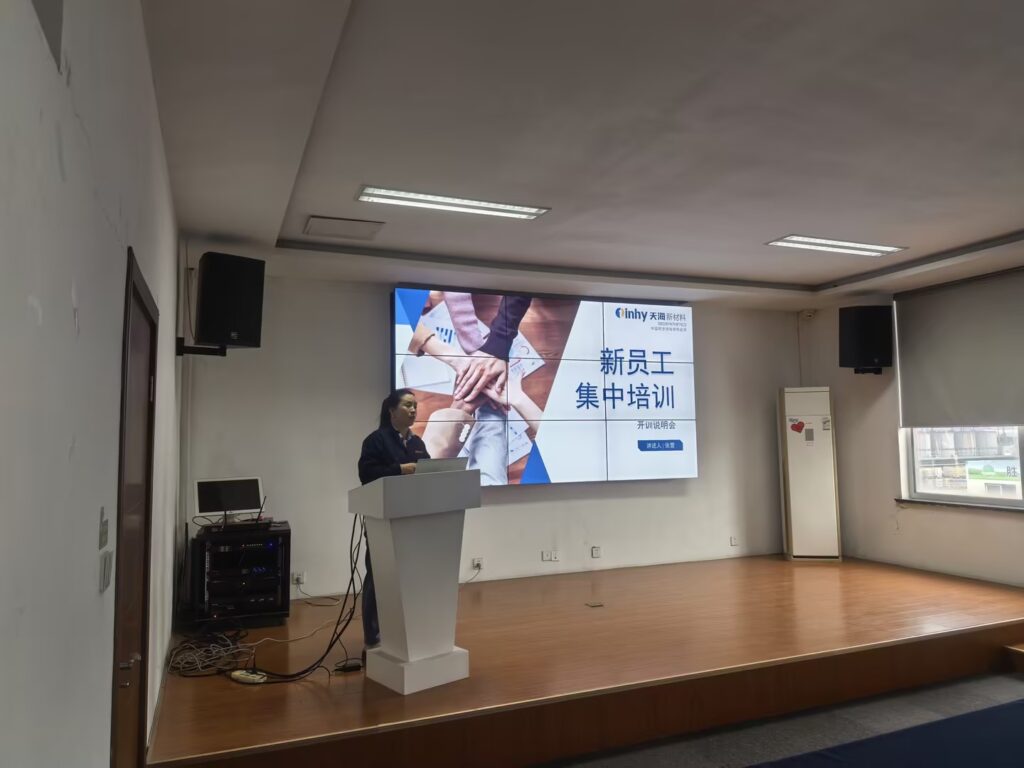
Empowering New Talent, Building the Future: Tinhy Successfully Conducts New Employee Orientation Training
Tinhy Conducts Comprehensive Emergency Drill to Strengthen Workplace Safety Defenses
Company Mid – Year Summary and Team – Building Activity Report
Is geomembrane a geotechnical engineering material?
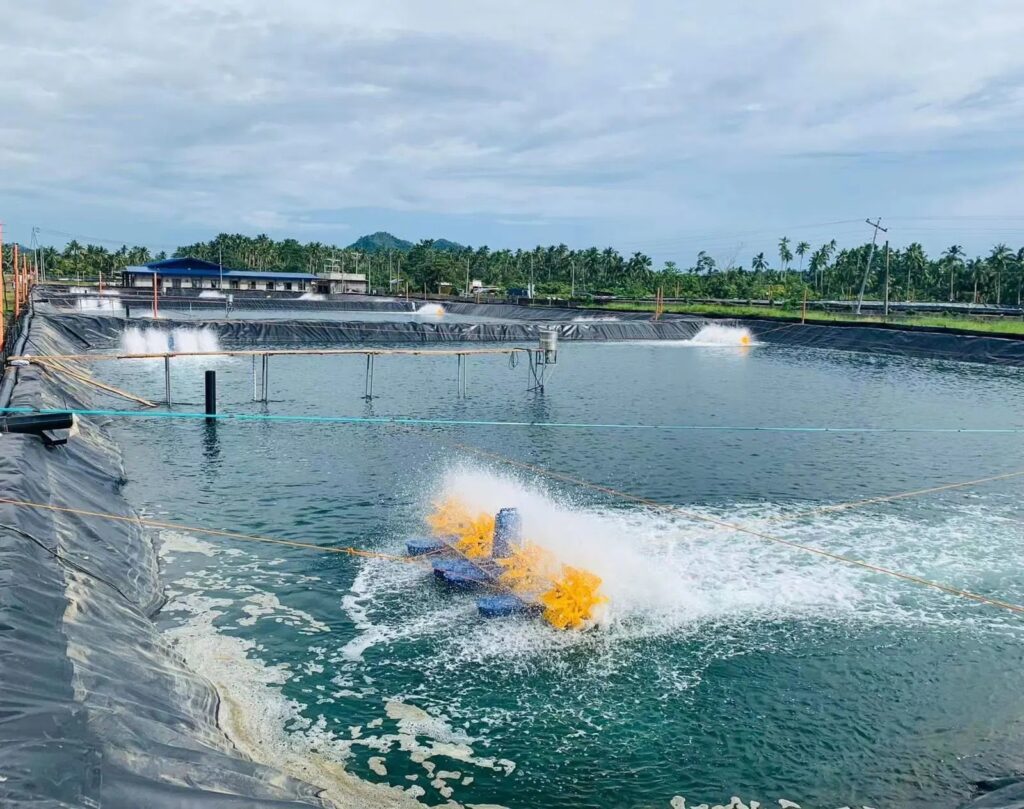
What are the application scenarios of geomembrane?
What are the functions of geotextiles?
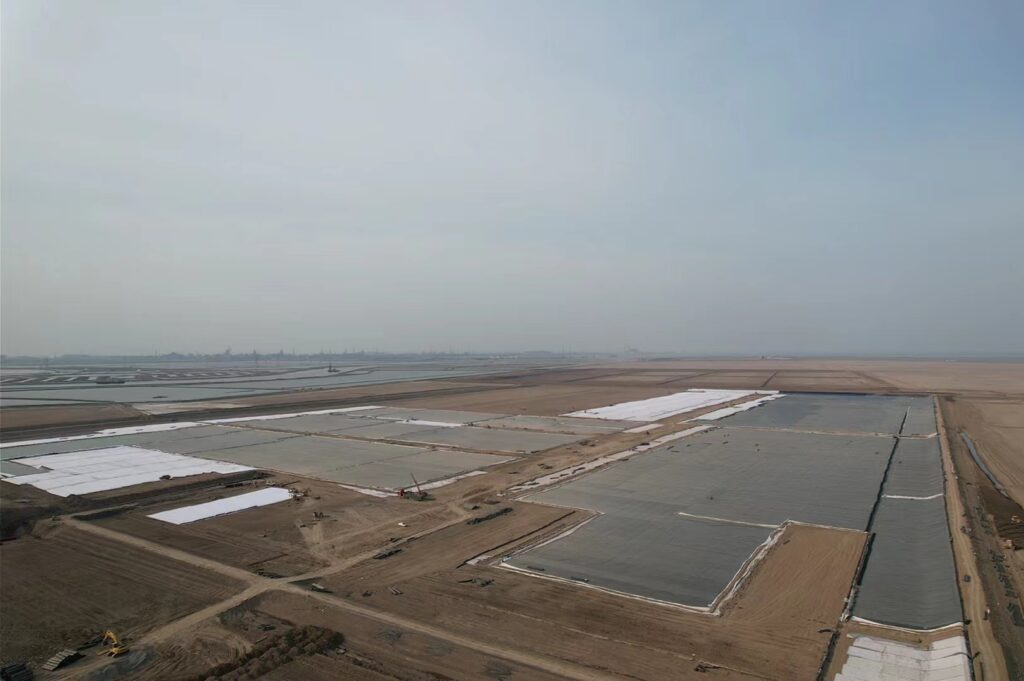
Cómo elegir geomembrana de hdpe en proyectos de ingeniería
How to choose hdpe geomembrane in engineering projects
China’s Geotechnical Construction Materials Embrace New Opportunities
Tips for Moisture-Proof Storage of Geotextiles
Key Construction Points and Precautions for High-Density Polyethylene Geomembrane
what is pond lining material ?
What is geomembrane?
HDPE geomembrane construction plans and technical measures

What quality tests do HDPE geomembranes need to do?
Tinhy’s MDS® Drainage Solution
Installation Robots
Filament Geotextile vs Staple Fiber Geotextile: Key Differences and Applications
The 6 Best Geomat Manufacturers in 2026: Complete Comparison Guide
How to Choose the Right Waterproof Geomembrane for Your Project?
What Is 60 Mil HDPE Geomembrane and What Are Its Applications?
Comprehensive Guide to 1mm Geomembrane for Landfill Applications
Top 7 Global Non Woven Geotextile Suppliers
The 7 Best PP Woven Geotextiles Review: Strength, Applications & Buying Guide
The 6 Best Geotextile 300g Review: Heavy-Duty Nonwoven Geotextile for Soil Stabilization
The 6 Best 1000 Micron HDPE Sheets Reviewed in 2026
What Is a 60 Mil Geomembrane? Complete Guide to 1.5mm HDPE Geomembrane (2026)
Should HDPE or PVC be used to install geomembrane in reservoirs?
What is the price of geomembrane?
Material characteristics of three different geomembranes
Esquema de construcción de geomembrana de HDPE y medidas técnicas
hdpe geomembrane pond liner in Congo (DRC)
How to lay and weld HDPE geomembrane?
HDPE geomembrane 0.2-4.0mm
HOME ABOUT PRODUCTS APPLICATION CONTENTUS RESOURCES
Home Resources Knowledge Base Filament Geotextile vs Staple Fiber Geotextile: Key Differences and Applications

Filament Geotextile vs Staple Fiber Geotextile: Key Differences and Applications

time:September 01, 2026 Views:7

Filament geotextile vs staple fiber geotextile is an important consideration when selecting a nonwoven geotextile for civil engineering, environmental protection, drainage, road construction, and erosion control projects.

Although both products are nonwoven geotextiles and can provide separation, filtration, drainage, protection, and reinforcement functions, their fiber structure and manufacturing processes are different. These differences affect their mechanical properties, filtration performance, installation behavior, durability, and suitable applications.

At Tinhy Geosynthetics, we manufacture and supply different types of nonwoven geotextiles for international infrastructure and environmental projects. Understanding the differences between continuous filament and staple fiber geotextiles can help engineers, contractors, and project owners select the appropriate material according to site conditions and design requirements.

Table of Contents

1. What Is Filament Geotextile?

1.1 Definition and Structure

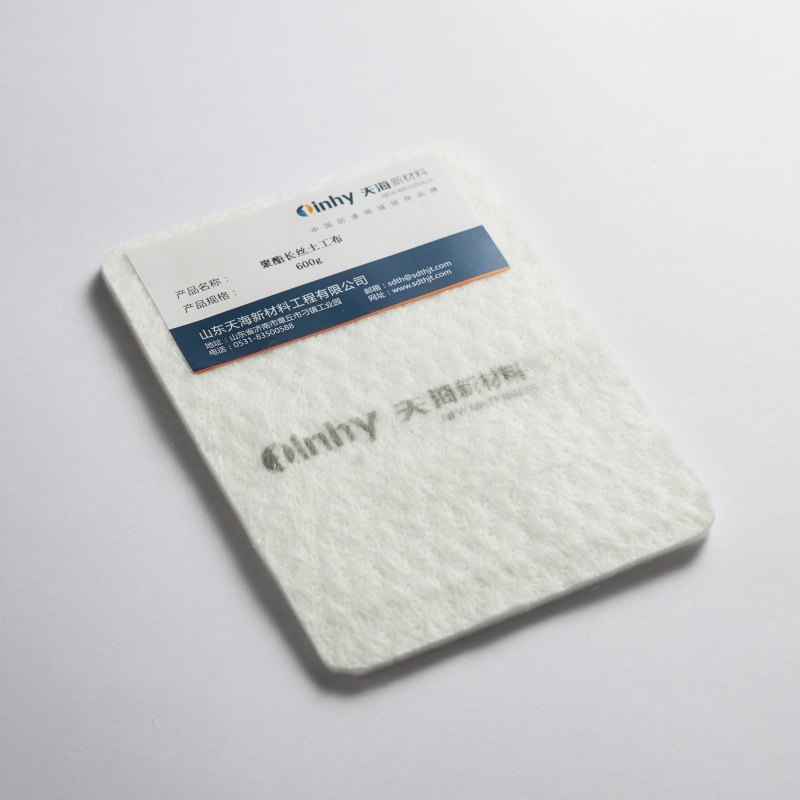
Filament geotextile, also called continuous filament nonwoven geotextile, is manufactured from continuous synthetic fibers.

The fibers are generally made from polypropylene (PP) or polyester (PET). Unlike staple fibers, the filaments are not cut into short pieces during the primary fiber-forming process. Continuous fibers are distributed into a web and bonded through processes such as needle punching or thermal bonding.

The continuous fiber structure provides good mechanical stability and consistent fabric properties across the geotextile.

Filament geotextiles are commonly selected for projects where relatively high tensile strength, puncture resistance, durability, and consistent filtration performance are required.

Typical applications include:

  • Road and highway construction
  • Railway and railway ballast protection
  • Riverbank and coastal protection
  • Landfill protection systems
  • Drainage systems
  • Erosion control
  • Reservoir and pond protection
  • Mining and industrial projects
  • Soil stabilization

2. What Is Staple Fiber Geotextile?

2.1 Definition and Structure

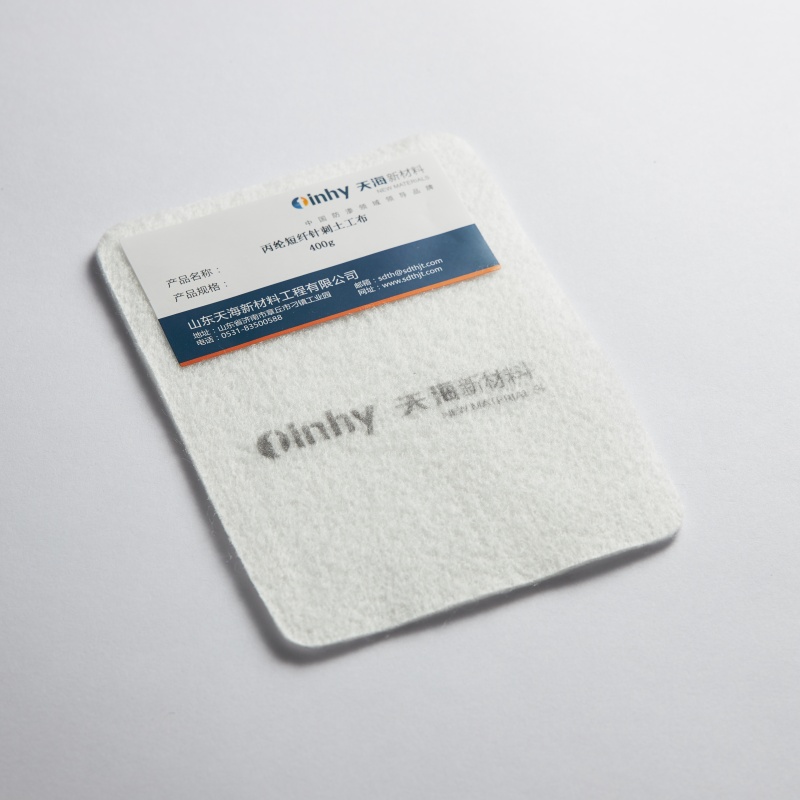
Staple fiber geotextile, also known as short fiber nonwoven geotextile, is manufactured from individual fibers that are cut to a specific length.

Polypropylene and polyester are also widely used as raw materials. During production, the short fibers are opened, distributed into a web, and mechanically bonded, commonly through needle punching.

Because the fibers are shorter and randomly arranged, staple fiber geotextiles can provide a soft and flexible fabric structure with good filtration and separation characteristics.

Staple fiber geotextiles are widely used in:

  • Drainage and filtration systems
  • Landfill systems
  • Road construction
  • Soil separation
  • Erosion control
  • Landscaping
  • Green roofs
  • Pipeline protection
  • Pond and reservoir protection
  • General civil engineering projects

3. Filament Geotextile vs Staple Fiber Geotextile: Main Differences

The most important differences between these two geotextiles come from their fiber structure and manufacturing process.

3.1 Fiber Structure

The primary difference is fiber length.

Filament geotextile uses continuous fibers that extend through the fabric structure. This creates a relatively uniform fiber network and contributes to consistent mechanical performance.

Staple fiber geotextile uses shorter fibers that are randomly distributed and mechanically entangled during manufacturing.

Therefore, the fiber structure influences tensile strength, puncture resistance, pore structure, and handling characteristics.

3.2 Strength and Mechanical Performance

Continuous filament geotextiles generally provide strong and consistent mechanical performance because the fibers remain continuous throughout the fabric.

They are often considered for applications involving:

  • Heavy construction traffic
  • High mechanical loading
  • Rock or aggregate placement
  • Long-term separation
  • Reinforcement and stabilization
  • Protection of geomembranes

Staple fiber geotextiles can also provide excellent mechanical performance, particularly when manufactured with an appropriate fiber length, basis weight, and needle-punching density.

However, product performance should always be evaluated using actual technical data rather than fiber type alone.

Important parameters include:

  • Grab tensile strength
  • CBR puncture resistance
  • Trapezoid tear strength
  • Burst strength
  • Mass per unit area
  • Thickness

3.3 Filtration and Permeability

Filtration is another important factor when comparing filament and staple fiber geotextiles.

Both types can be designed to retain soil particles while allowing water to pass through. However, their pore structure can differ because of the arrangement and bonding of the fibers.

For a filtration application, engineers should consider:

  • Apparent opening size (AOS)
  • Permittivity
  • Water flow rate
  • Soil particle size distribution
  • Long-term clogging potential

A geotextile with an appropriate pore structure should allow sufficient drainage while preventing excessive migration of soil particles.

Therefore, neither filament nor staple fiber should automatically be considered superior for every filtration application. The correct selection depends on the soil and hydraulic conditions.

4. Differences in Manufacturing Process

4.1 Continuous Filament Geotextile Production

The production of continuous filament geotextile generally involves several stages:

  1. Polymer melting
  2. Filament extrusion or spinning
  3. Continuous fiber formation
  4. Web formation
  5. Needle punching or thermal bonding
  6. Heat treatment and finishing
  7. Inspection and roll packaging

The continuous filament process creates a relatively uniform fiber structure.

4.2 Staple Fiber Geotextile Production

Staple fiber geotextile production generally involves:

  1. Polymer spinning
  2. Fiber cutting
  3. Fiber opening and blending
  4. Web formation
  5. Needle punching or thermal bonding
  6. Finishing
  7. Inspection and packaging

The ability to control fiber length and web characteristics provides manufacturers with flexibility when producing different grades of staple fiber geotextiles.

5. Filament Geotextile vs Staple Fiber: Installation Differences

Both filament and staple fiber geotextiles are relatively straightforward to install.

The general installation process includes:

  1. Preparing and leveling the subgrade
  2. Removing sharp objects and debris
  3. Unrolling the geotextile
  4. Overlapping adjacent rolls according to the project specification
  5. Fixing the geotextile with pins, staples, or other suitable methods
  6. Placing the overlying soil, aggregate, drainage material, or other construction layer

During installation, the geotextile should be protected from unnecessary damage caused by construction equipment or sharp aggregate.

For projects involving heavy construction traffic, the mechanical properties and installation survivability of the selected geotextile should be carefully evaluated.

6. Similarities Between Filament and Staple Fiber Geotextiles

Although their fiber structures are different, both products can perform several important geotechnical functions.

6.1 Separation

Both types can separate different soil or aggregate layers.

For example, a geotextile installed between soft soil and aggregate can help prevent the mixing of fine soil particles with the aggregate layer.

This helps maintain the designed thickness and performance of the aggregate layer.

6.2 Filtration

Both geotextile types can be used as filtration layers.

They allow water to pass through while retaining soil particles when the geotextile’s AOS and hydraulic properties are properly matched with the surrounding soil.

6.3 Drainage

Nonwoven geotextiles can provide water flow through their porous structure.

They are frequently incorporated into:

  • French drains
  • Subsurface drainage systems
  • Road drainage
  • Retaining wall drainage
  • Landfill drainage systems
  • Foundation drainage

6.4 Protection

Both filament and staple fiber geotextiles can protect geomembranes and other geosynthetic materials from puncture caused by aggregates or uneven subgrades.

The required basis weight and mechanical properties depend on the project conditions.

7. Advantages of Filament Geotextile

Continuous filament geotextiles can provide several advantages for demanding projects.

7.1 Consistent Fiber Structure

Continuous fibers provide a relatively uniform structure throughout the fabric, helping maintain consistent mechanical and hydraulic properties.

7.2 Good Mechanical Strength

Depending on the product specification, filament geotextiles can provide high tensile and puncture resistance.

This makes them suitable for demanding infrastructure projects where construction survivability is important.

7.3 Long-Term Stability

The continuous fiber structure and appropriate bonding technology can provide good dimensional stability and long-term performance.

7.4 Suitable for Heavy-Duty Applications

Filament geotextiles are commonly considered for:

  • Highway construction
  • Railway projects
  • Heavy-duty road bases
  • Riverbank protection
  • Landfill protection
  • Mining projects
  • Large drainage systems

8. Advantages of Staple Fiber Geotextile

Staple fiber geotextiles also offer important advantages.

8.1 Flexible Fabric Structure

The short fiber structure creates a flexible nonwoven fabric that can adapt well to different ground surfaces.

8.2 Good Filtration Performance

With an appropriately engineered pore structure, staple fiber geotextiles can provide effective soil filtration and separation.

8.3 Wide Range of Specifications

Staple fiber products can be manufactured in different weights and thicknesses to meet various project requirements.

Common specifications range from lightweight products for landscaping and drainage to heavier products for road construction and protection.

8.4 Cost-Effective for Many Projects

Staple fiber geotextiles can provide a practical balance between mechanical performance, filtration, and material cost, making them suitable for many general-purpose geotechnical applications.

9. Applications of Filament Geotextile

9.1 Road and Highway Construction

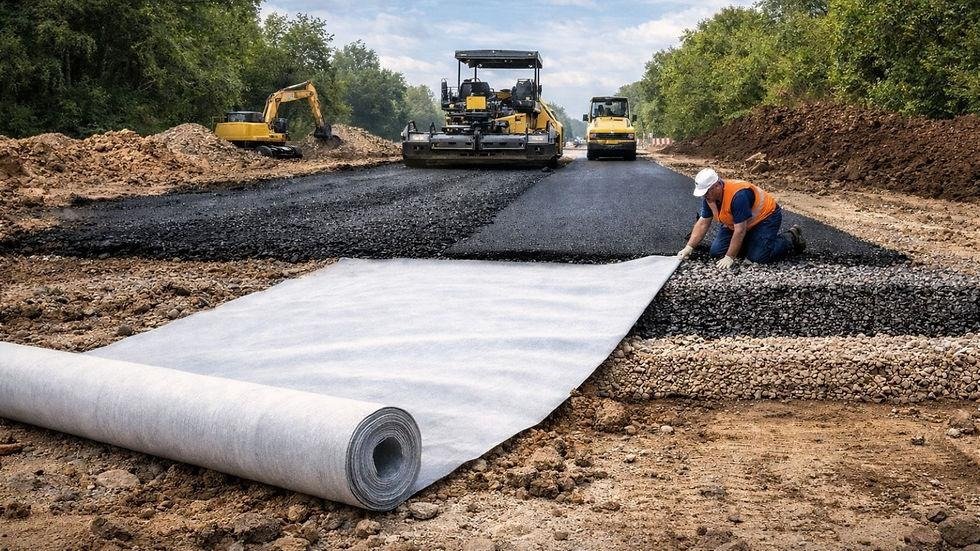
Filament geotextiles can be installed between soft subgrade soils and aggregate layers.

They help provide separation, filtration, and stabilization, particularly where subgrade conditions are challenging.

9.2 Railway Projects

Filament geotextiles can be used beneath railway ballast or within railway drainage systems to help separate fine soil particles from aggregate layers.

9.3 River and Coastal Protection

In erosion-control projects, geotextiles can be installed beneath riprap or other protective layers.

The geotextile acts as a filter layer while helping prevent soil loss caused by water movement.

9.4 Landfill Projects

Nonwoven geotextiles are commonly used as protection and filtration layers within landfill lining systems.

They can be installed above or below geomembranes depending on the engineering design.

9.5 Mining Projects

Filament geotextiles can be used for separation, drainage, protection, and filtration in mining and tailings-related infrastructure.

10. Applications of Staple Fiber Geotextile

10.1 Drainage Systems

Staple fiber geotextiles are widely used around drainage pipes and gravel drainage layers.

They help prevent surrounding soil particles from entering the drainage aggregate while allowing water to pass.

10.2 Landfill and Waste Management

Staple fiber geotextiles can be incorporated into landfill liner, drainage, protection, and cover systems.

10.3 Landscaping and Green Roofs

The flexible structure of staple fiber geotextiles makes them suitable for landscaping, garden drainage, green roofs, and vegetation-related projects.

10.4 Pipeline Protection

Geotextiles can be used around pipelines as a separation and protective layer, depending on the project design.

10.5 General Civil Engineering

Staple fiber geotextiles are widely used for soil separation, filtration, drainage, erosion control, and protection in general construction projects.

11. How to Choose Between Filament and Staple Fiber Geotextile?

There is no universal answer to which type is better. The appropriate geotextile should be selected according to the actual engineering requirements.

Consider the following factors:

11.1 Project Function

First determine whether the primary function is:

  • Separation
  • Filtration
  • Drainage
  • Protection
  • Reinforcement
  • Erosion control

The required geotextile properties will differ depending on the primary function.

11.2 Soil Conditions

Evaluate:

  • Soil type
  • Particle size
  • Subgrade strength
  • Groundwater conditions
  • Hydraulic flow
  • Expected settlement

These factors are important when selecting AOS, permittivity, tensile strength, and puncture resistance.

11.3 Construction Conditions

Consider the expected construction equipment and loading.

Projects involving excavators, dump trucks, heavy aggregate, or rock placement may require a geotextile with higher mechanical survivability.

11.4 Required Service Life

For permanent infrastructure, select a geotextile with appropriate resistance to the expected environmental conditions, including chemical exposure, biological conditions, temperature, and UV exposure where applicable.

11.5 Technical Standards

Always request technical documentation from the manufacturer.

Depending on the project and market, relevant test methods may include:

  • ASTM D4632 – Grab tensile properties
  • ASTM D6241 – CBR puncture resistance
  • ASTM D4533 – Trapezoid tear strength
  • ASTM D4491 – Permittivity and water flow
  • ASTM D4751 – Apparent opening size
  • ASTM D4355 – UV resistance

The final specification should be based on the project design and applicable local standards.

12. Filament vs Staple Fiber Geotextile Comparison

Property Filament Geotextile Staple Fiber Geotextile
Fiber structure Continuous synthetic fibers Short, cut synthetic fibers
Common materials PP / PET PP / PET
Fiber arrangement Relatively uniform continuous structure Randomly distributed short fibers
Mechanical performance Generally high and consistent Can range from moderate to high
Filtration Good when properly engineered Good when properly engineered
Flexibility Good Very good
Construction use Heavy-duty and demanding applications General-purpose and demanding applications
Typical applications Roads, railways, riverbank, landfill, mining Drainage, landfill, roads, landscaping, pipelines
Selection basis Project specifications and required performance Project specifications and required performance

13. Tinhy Geosynthetics Nonwoven Geotextile Solutions

At Tinhy Geosynthetics, we provide nonwoven geotextile solutions for different engineering requirements.

Our product range includes both continuous filament nonwoven geotextiles and staple fiber nonwoven geotextiles, allowing customers to select the appropriate product according to project conditions.

Our geotextile solutions can be supplied for applications including:

  • Road and highway construction
  • Railway engineering
  • Landfill systems
  • Mining and tailings projects
  • River and coastal protection
  • Drainage systems
  • Reservoirs and ponds
  • Erosion control
  • Soil stabilization
  • Civil engineering and environmental projects

Product specifications can be selected according to required mass per unit area, tensile strength, puncture resistance, filtration performance, roll dimensions, and applicable standards.

For large international projects, Tinhy can also support customers with technical documentation and customized production requirements.

14. Conclusion

The difference between filament geotextile and staple fiber geotextile mainly comes from their fiber structure and manufacturing process. Continuous filament geotextiles use uninterrupted synthetic fibers, while staple fiber geotextiles are manufactured from shorter fibers that are mechanically entangled or bonded.

Filament geotextiles are often selected for projects requiring consistent mechanical performance and high construction survivability, while staple fiber geotextiles provide a flexible and versatile solution for filtration, separation, drainage, protection, and general civil engineering applications.

However, fiber type alone should not determine product selection. Engineers should evaluate the actual tensile strength, puncture resistance, tear strength, AOS, permittivity, flow rate, durability, and installation conditions before choosing a geotextile.

With a range of nonwoven geotextile solutions and project-oriented technical support, Tinhy Geosynthetics helps engineers, contractors, and distributors select suitable geotextile products for different soil, hydraulic, and construction conditions.

Knowledge Base
Share:
info@tinhygeosynthetics.com Bai Jinxi
Consultation

    Get The Latest Product Prices

    Your inquiries are welcomed at any time and please feel free to contact us via email, phone calls, and online chatbox on our site.

    We will definitely give you a reply ASAP after we receive your messages.

      0/180