Resources
Company News
Industry News
Knowledge Base
Project Cases
Innovation
Team Power Fuels TINHY’s Global Geosynthetics Solutions
Tinhy and University of Jinan Celebrate Six Years of Industry–University Collaboration
Empowering New Talent, Building the Future: Tinhy Successfully Conducts New Employee Orientation Training
Tinhy Conducts Comprehensive Emergency Drill to Strengthen Workplace Safety Defenses
Company Mid – Year Summary and Team – Building Activity Report
Is geomembrane a geotechnical engineering material?
What are the application scenarios of geomembrane?
What are the functions of geotextiles?
Cómo elegir geomembrana de hdpe en proyectos de ingeniería
How to choose hdpe geomembrane in engineering projects
China’s Geotechnical Construction Materials Embrace New Opportunities
Tips for Moisture-Proof Storage of Geotextiles
Key Construction Points and Precautions for High-Density Polyethylene Geomembrane
what is pond lining material ?
What is geomembrane?
HDPE geomembrane construction plans and technical measures
What quality tests do HDPE geomembranes need to do?
Tinhy’s MDS® Drainage Solution
Installation Robots
Top 8 HDPE Pond Liner Manufacturers in the World
Geogrid vs Geotextile: Differences, Applications & How to Choose
Filament Geotextile vs Staple Fiber Geotextile: Key Differences and Applications
The 6 Best Geomat Manufacturers in 2026: Complete Comparison Guide
How to Choose the Right Waterproof Geomembrane for Your Project?
What Is 60 Mil HDPE Geomembrane and What Are Its Applications?
Comprehensive Guide to 1mm Geomembrane for Landfill Applications
Top 7 Global Non Woven Geotextile Suppliers
The 7 Best PP Woven Geotextiles Review: Strength, Applications & Buying Guide
The 6 Best Geotextile 300g Review: Heavy-Duty Nonwoven Geotextile for Soil Stabilization
Should HDPE or PVC be used to install geomembrane in reservoirs?
What is the price of geomembrane?
Material characteristics of three different geomembranes
Esquema de construcción de geomembrana de HDPE y medidas técnicas
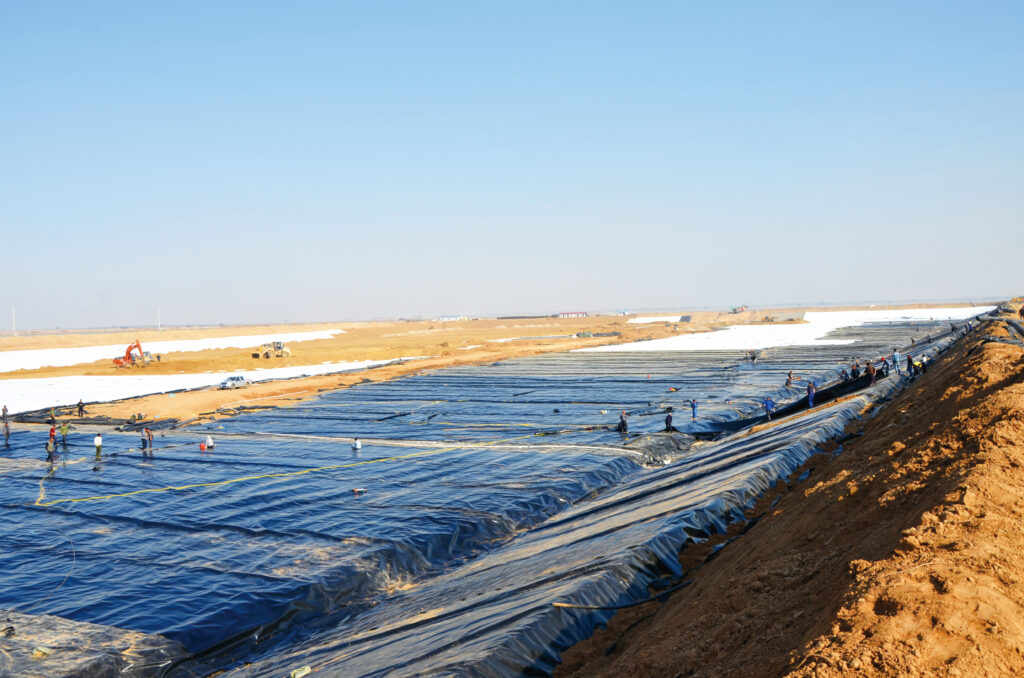
hdpe geomembrane pond liner in Congo (DRC)
How to lay and weld HDPE geomembrane?
HDPE geomembrane 0.2-4.0mm
HOME ABOUT PRODUCTS APPLICATION CONTENTUS RESOURCES
Home Resources Knowledge Base Top 8 HDPE Pond Liner Manufacturers in the World

Top 8 HDPE Pond Liner Manufacturers in the World

time:September 03, 2026 Views:11

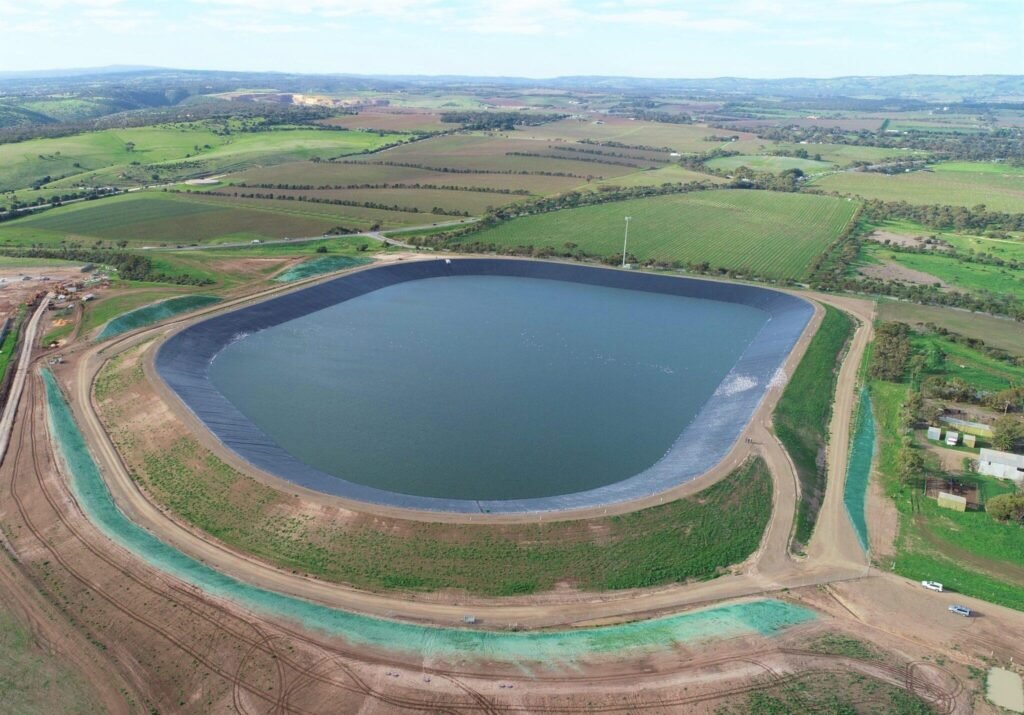
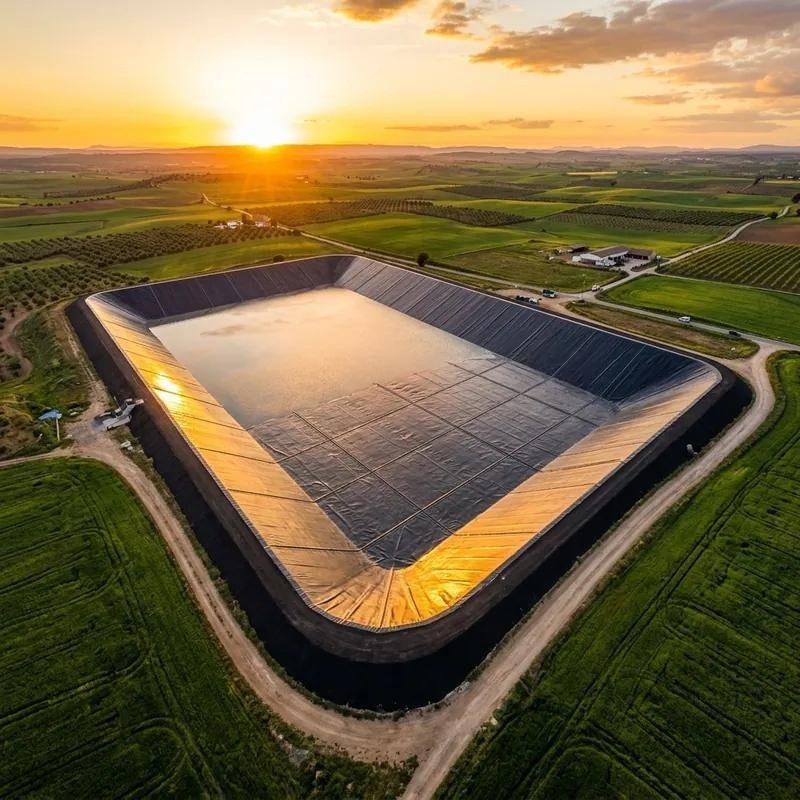
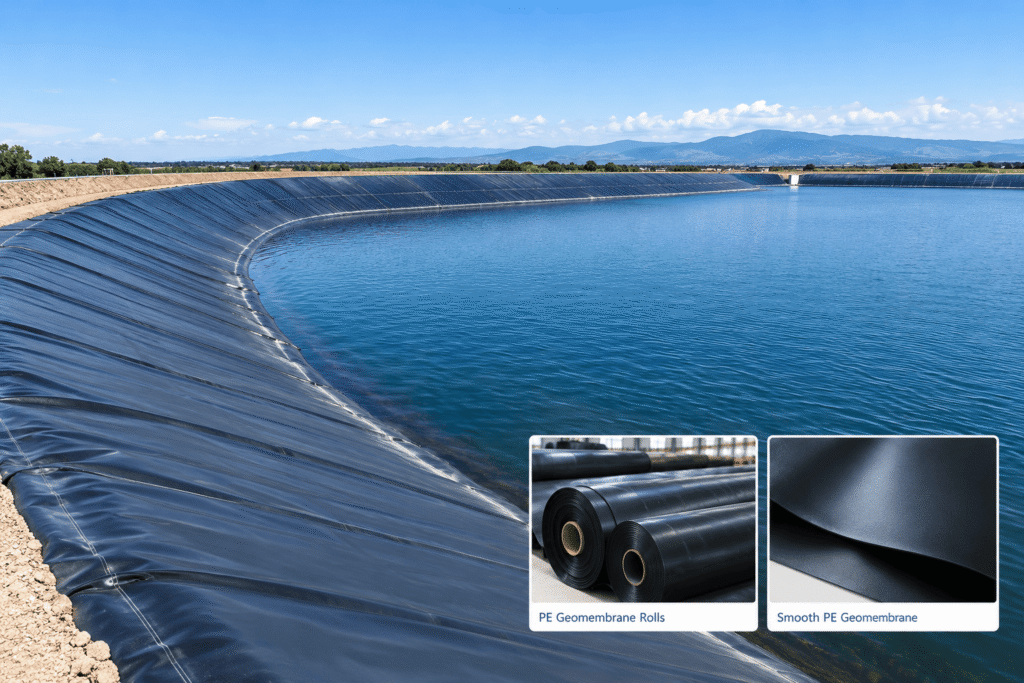
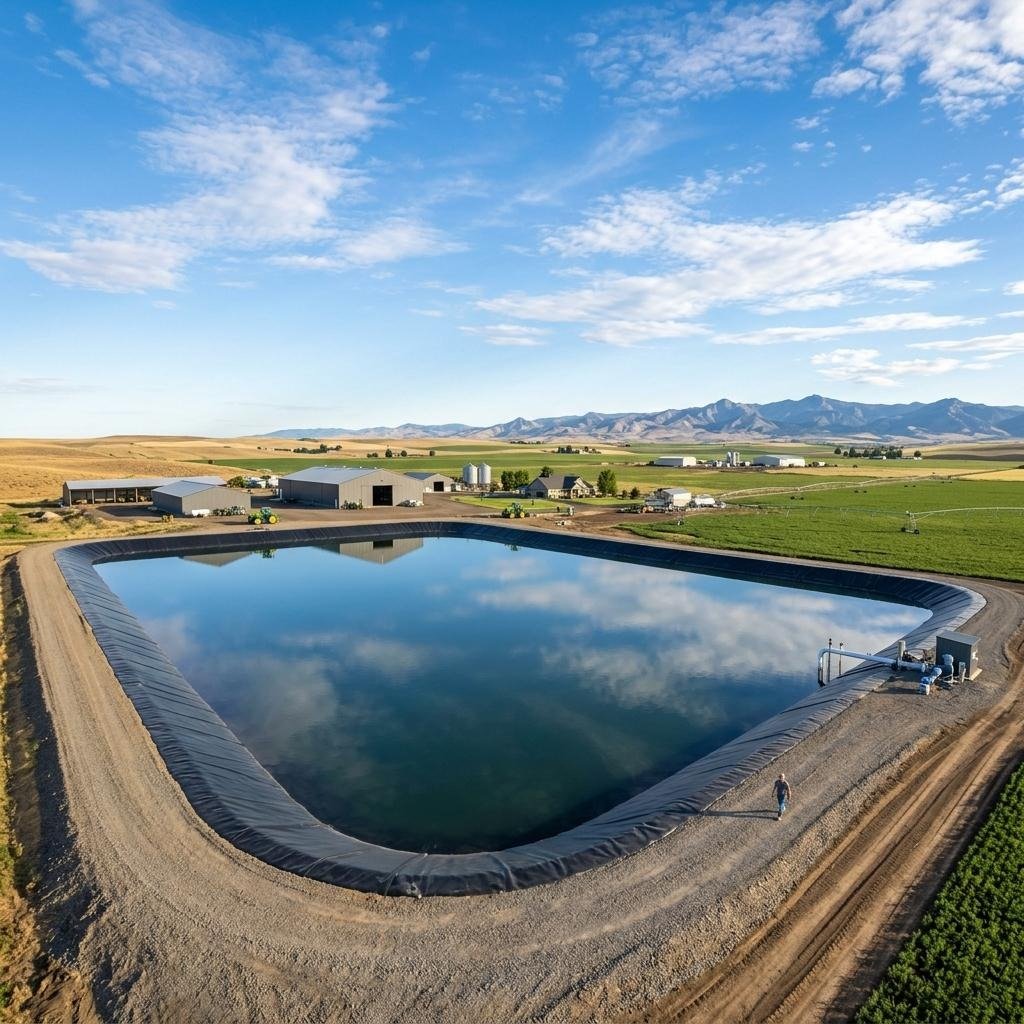
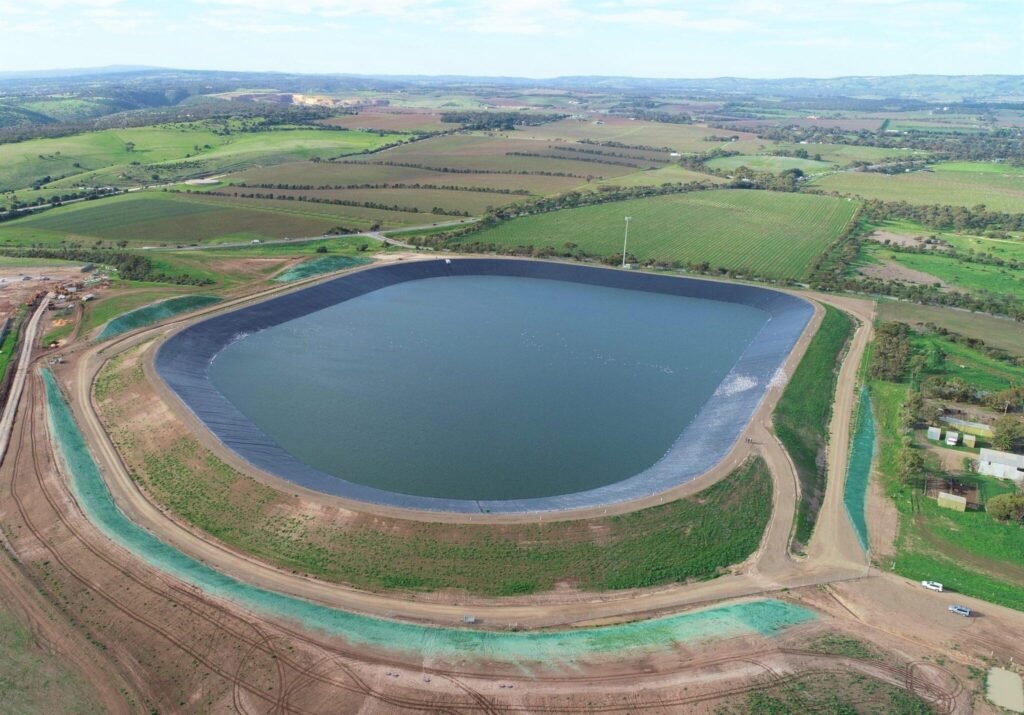
HDPE pond liners are widely used to create durable waterproof barriers for aquaculture ponds, irrigation reservoirs, wastewater ponds, decorative ponds, water storage facilities, and other containment projects.

Made from high-density polyethylene (HDPE), these geomembrane liners are valued for their combination of chemical resistance, low permeability, durability, flexibility, and resistance to environmental exposure.

However, choosing the right pond liner is only part of the decision.

The manufacturer or supplier you work with can have a major impact on product quality, technical consistency, customization, delivery, documentation, and long-term project performance.

With many geomembrane manufacturers and suppliers available worldwide, how do you identify a reliable HDPE pond liner manufacturer?

In this guide, Tinhy Geosynthetics reviews 8 manufacturers and suppliers that are relevant to the global HDPE pond liner market. We also explain what to look for when selecting an HDPE pond liner manufacturer and how to compare products beyond price alone.

Note: Manufacturer capabilities, certifications, product ranges, and regional availability can change over time. Buyers should confirm current technical data and certifications directly with each manufacturer before placing an order.

Table of Contents

1. Why Choose HDPE Pond Liners?

HDPE geomembranes have become a popular solution for water containment because they combine low permeability with good mechanical and environmental resistance.

1.1 Excellent Waterproofing Performance

HDPE geomembranes are manufactured as continuous polymeric sheets with very low permeability.

When properly designed, installed, and welded, they can form an effective barrier for water and other contained liquids.

This makes HDPE pond liners suitable for:

  • Aquaculture ponds
  • Irrigation reservoirs
  • Water storage ponds
  • Wastewater lagoons
  • Agricultural ponds
  • Mining water containment
  • Decorative ponds
  • Industrial containment systems

1.2 Chemical Resistance

HDPE has good resistance to many acids, alkalis, salts, and other chemicals.

This characteristic is particularly important in applications where pond water may contain fertilizers, treatment chemicals, wastewater, or other potentially aggressive substances.

However, chemical compatibility should always be evaluated against the specific liquid, concentration, temperature, and exposure conditions.

1.3 UV and Weather Resistance

Pond liners may remain exposed to sunlight for extended periods.

A properly formulated HDPE geomembrane can provide strong resistance to environmental exposure and UV radiation.

For exposed applications, buyers should review the manufacturer’s technical data and relevant durability testing rather than relying only on the material name.

1.4 Long Service Life

A properly selected and installed HDPE geomembrane can provide long-term containment performance.

Actual service life depends on factors such as:

  • Resin formulation
  • Carbon black and antioxidant package
  • Liner thickness
  • Temperature
  • UV exposure
  • Chemical environment
  • Installation quality
  • Subgrade conditions
  • Mechanical damage

For this reason, a manufacturer’s quality-control system is just as important as the nominal thickness of the liner.

1.5 Flexible Thickness and Surface Options

HDPE pond liners are available in different thicknesses and surface configurations.

Common options include:

  • Smooth HDPE geomembrane
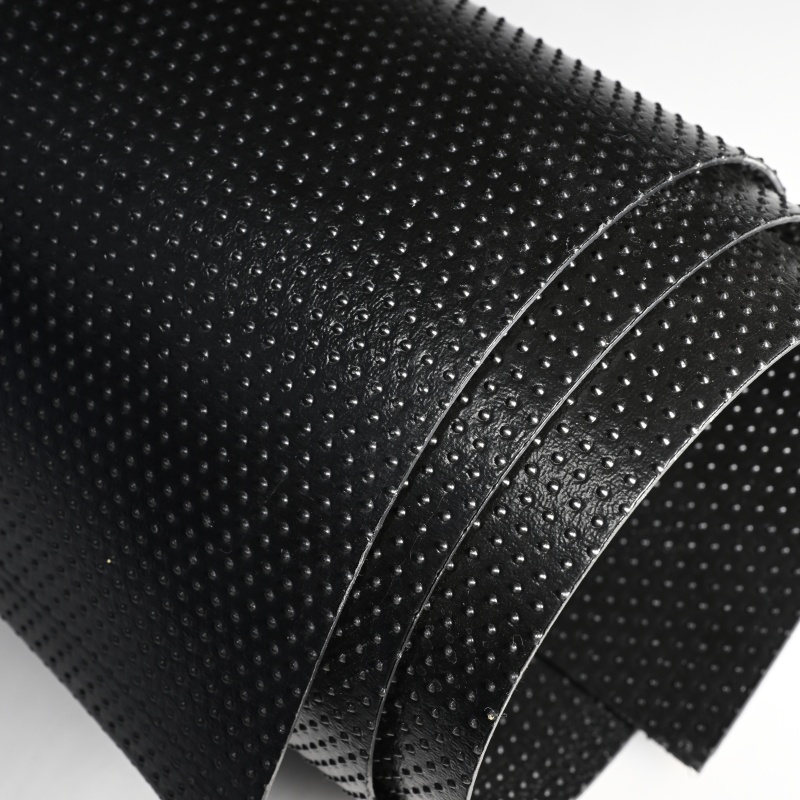
  • Textured HDPE geomembrane
  • Single-textured geomembrane
  • Double-textured geomembrane
  • Special surface finishes

Thickness selection depends on the application and project design.

For example, a small decorative pond may have very different requirements from a large aquaculture reservoir or industrial wastewater lagoon.

2. What to Look for in an HDPE Pond Liner Manufacturer

Choosing an HDPE pond liner manufacturer should involve more than comparing the lowest price.

Consider the following factors.

2.1 Manufacturing Capacity

For large projects, the manufacturer should have sufficient production capacity to supply the required quantity within the project schedule.

Ask about:

  • Production lines
  • Monthly capacity
  • Maximum roll width
  • Available thicknesses
  • Production lead time
  • Packaging and loading capacity

2.2 Raw Material Quality

The quality of HDPE pond liner starts with its raw materials.

Ask the supplier about:

  • Resin type
  • Virgin or recycled resin content
  • Carbon black content
  • Additives
  • Material traceability
  • Raw-material inspection

For demanding containment applications, material formulation and consistency are critical.

2.3 Technical Performance

Do not compare manufacturers based only on thickness.

Important HDPE geomembrane properties can include:

  • Thickness
  • Density
  • Tensile strength
  • Elongation at break
  • Tear resistance
  • Puncture resistance
  • Carbon black content
  • Oxidative induction time
  • Stress crack resistance
  • Dimensional stability
  • Seam performance

The exact requirements should be based on the project specification and applicable standards.

2.4 Certifications and Testing

A reliable manufacturer should be able to provide appropriate test reports and quality documentation.

Depending on the project, buyers may need testing according to standards such as:

  • ASTM
  • ISO
  • GRI-GM
  • EN
  • GB/T
  • Other project-specific standards

Third-party testing and independent laboratory verification can provide additional confidence for large or technically demanding projects.

2.5 Customization

Different pond projects may require different:

  • Thicknesses
  • Roll widths
  • Roll lengths
  • Surface textures
  • Colors
  • Packaging
  • Marking
  • Private-label requirements

If the project has unusual specifications, choose a manufacturer with strong production and technical support capabilities.

2.6 Quality Control

A professional HDPE pond liner factory should have quality control throughout the manufacturing process.

This may include:

Raw Material Inspection → Production Monitoring → Online Thickness Control → Laboratory Testing → Finished Roll Inspection → Packaging → Shipment

A systematic QC process helps reduce variation between production batches.

3. Top 8 HDPE Pond Liner Manufacturers

The following companies represent a selection of established manufacturers or suppliers relevant to the global HDPE geomembrane and pond liner market.

The list is intended as a buyer reference rather than an absolute ranking, because the best supplier depends on project location, specifications, quantity, certification requirements, and technical support needs.

3.1 Solmax

Solmax is a major global geosynthetics company serving environmental containment, mining, infrastructure, water, and other applications.

Its product portfolio includes geomembranes and other geosynthetic containment solutions.

Key strengths

  • Large-scale manufacturing capabilities
  • Global market presence
  • Broad geosynthetic product portfolio
  • Environmental containment expertise
  • Solutions for large infrastructure projects

Suitable for

Solmax can be considered for:

  • Large water containment projects
  • Mining applications
  • Waste management
  • Industrial containment
  • Infrastructure projects

For buyers evaluating Solmax, current product specifications and regional supply availability should be confirmed directly with the company.

3.2 AGRU

AGRU is an international manufacturer of polymer-based products and geosynthetic systems.

The company offers geomembrane and containment products for environmental, industrial, water, and infrastructure applications.

Key strengths

  • Polymer engineering expertise
  • Wide range of geosynthetic products
  • Technical support
  • Specialized containment solutions
  • International market presence

Suitable for

AGRU products may be considered for:

  • Water containment
  • Wastewater systems
  • Landfill applications
  • Industrial containment
  • Aquaculture and environmental projects

3.3 Raven Industries

Raven Industries has historically been associated with polymer films and containment products serving agricultural, environmental, and industrial markets.

Key strengths

  • Experience with polymer materials
  • Agricultural applications
  • Environmental containment
  • Flexible product solutions

Suitable for

Potential applications include:

  • Agricultural ponds
  • Water storage
  • Wastewater containment
  • Environmental projects

When comparing suppliers, buyers should verify the current product portfolio and availability for their specific region.

3.4 Tinhy Geosynthetics

Tinhy Geosynthetics is a manufacturer of geomembranes and other geosynthetic materials, with production and export experience serving international projects.

Founded in 2002, Tinhy focuses on the manufacturing and development of geomembranes, geotextiles, GCL, drainage products, geogrids, geomats, and other geosynthetics.

HDPE Geomembrane Solutions

Tinhy’s HDPE geomembrane range can be produced in different thicknesses and surface configurations according to project requirements.

Options may include:

  • Smooth HDPE geomembrane
  • Textured HDPE geomembrane
  • Different thickness specifications
  • Customized roll dimensions
  • Project-specific packaging
  • OEM requirements

Quality Control

Tinhy operates an in-house laboratory and conducts product testing according to applicable standards and project specifications.

Quality-control procedures can cover:

  • Raw-material inspection
  • Production monitoring
  • Thickness control
  • Physical property testing
  • Finished-product inspection
  • Documentation and traceability

Applications

Tinhy HDPE geomembranes can be used for:

  • Aquaculture ponds
  • Irrigation reservoirs
  • Water storage
  • Wastewater lagoons
  • Mining containment
  • Landfill systems
  • Industrial waste containment
  • Environmental protection

Why Consider Tinhy?

For international buyers, important considerations include:

  • Broad geosynthetic product portfolio
  • Customized manufacturing
  • International project experience
  • Factory-direct supply
  • Technical support
  • Quality-control documentation
  • Flexible logistics solutions

For projects requiring both HDPE geomembrane and supporting geosynthetics, working with a manufacturer that can supply multiple products can also simplify procurement.

3.5 Layfield

Layfield is a North American manufacturer and supplier of flexible containment products and geosynthetic systems.

The company serves markets including water management, environmental containment, mining, and industrial applications.

Key strengths

  • North American market experience
  • Flexible containment solutions
  • Engineering and installation support
  • Environmental applications

Suitable for

  • Water containment
  • Wastewater
  • Mining
  • Industrial containment
  • Reservoir systems

3.6 Carlisle

Carlisle has a long history in roofing, waterproofing, and building-material systems and has also been associated with engineered polymer and containment products.

Key strengths

  • Established building-material business
  • Polymer material expertise
  • Waterproofing experience
  • Technical support

For pond liner applications, buyers should confirm the current product range and technical specifications available in their market.

3.7 Firestone

Firestone has historically been strongly associated with roofing, waterproofing, and elastomeric membrane systems.

Its position in a specific HDPE pond liner application should therefore be evaluated according to the current product portfolio and regional availability.

Key considerations

  • Established membrane expertise
  • Waterproofing technology
  • International market recognition
  • Technical support

Buyers should verify whether the required HDPE geomembrane product is currently available for their project before including the supplier in a final procurement shortlist.

3.8 NAUE

NAUE is a German geosynthetics manufacturer with a strong presence in environmental and civil engineering applications.

The company’s broader geosynthetic portfolio includes products used for containment, drainage, reinforcement, separation, and environmental protection.

Key strengths

  • European engineering expertise
  • Geosynthetic technology
  • Environmental applications
  • Broad product portfolio
  • International project experience

Suitable for

  • Environmental containment
  • Water management
  • Landfill systems
  • Civil engineering
  • Infrastructure projects

4. HDPE Pond Liner Manufacturer Comparison

Manufacturer Region / Market Presence Main Strength Customization Typical Applications
Solmax Global Large-scale containment Project dependent Mining, water, environmental
AGRU Global Polymer & geosynthetic technology High Water, industrial, environmental
Raven Industries North America / International Polymer & agricultural solutions Project dependent Agriculture, water, containment
Tinhy Geosynthetics China / International Geomembranes & integrated geosynthetics High Aquaculture, water, mining, wastewater
Layfield North America / International Flexible containment High Water, mining, industrial
Carlisle North America / International Membrane & waterproofing expertise Project dependent Waterproofing, containment
Firestone International Membrane technology Project dependent Waterproofing, containment
NAUE Europe / International Geosynthetic engineering Project dependent Environmental, civil engineering

Important: This table is a high-level buyer guide, not a product-performance ranking. Always compare current technical data sheets, certifications, warranties, production capacity, and commercial terms before making a purchasing decision.

5. How to Choose the Right HDPE Pond Liner Manufacturer

Different buyers have different priorities.

For Large Infrastructure Projects

Prioritize:

  • Production capacity
  • Technical support
  • Quality documentation
  • Third-party testing
  • Project experience
  • Supply reliability

A low unit price is less important if inconsistent production or delayed delivery creates construction problems.

For Aquaculture Projects

Pay particular attention to:

  • Chemical resistance
  • Liner thickness
  • Puncture resistance
  • Seam quality
  • UV resistance
  • Fish-safe application requirements
  • Installation quality

The liner should be selected based on the water chemistry, pond size, subgrade conditions, and project design.

For Agricultural Water Storage

Important considerations include:

  • Cost per square meter
  • Required thickness
  • UV exposure
  • Installation method
  • Roll dimensions
  • Repairability
  • Transportation cost

For large agricultural ponds, roll width and packaging can have a significant impact on installation efficiency.

For Wastewater Applications

Wastewater projects typically require more attention to:

  • Chemical compatibility
  • Thickness
  • Stress crack resistance
  • Puncture resistance
  • Seam performance
  • Long-term durability
  • Regulatory requirements

The cheapest liner is not necessarily the most economical choice over the complete project life cycle.

6. What HDPE Pond Liner Thickness Should You Choose?

There is no single thickness that is correct for every pond.

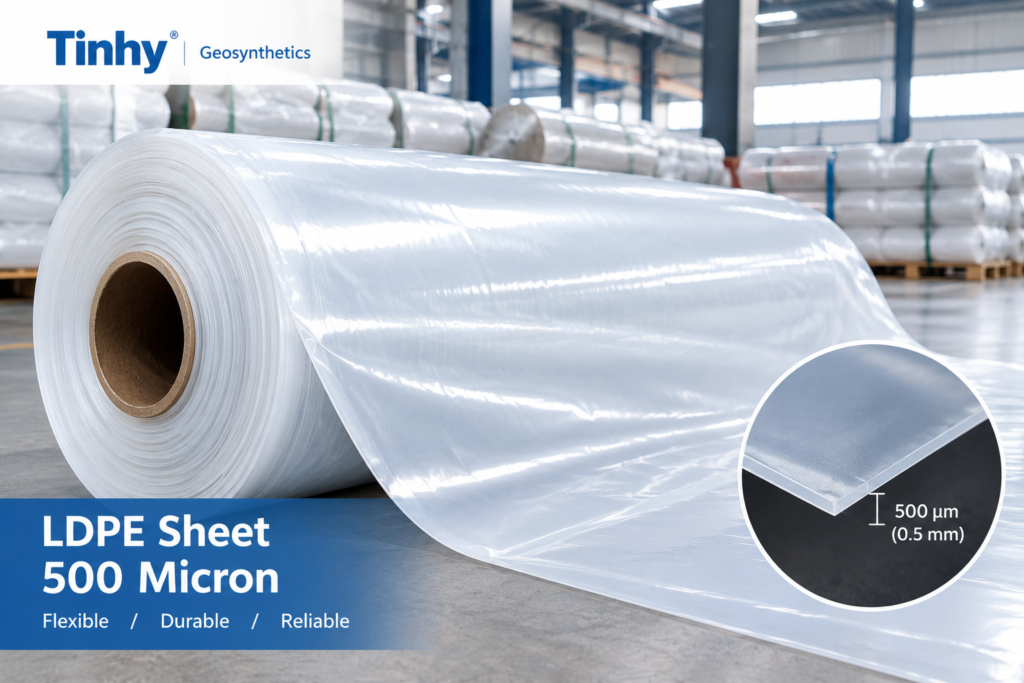
Common HDPE geomembrane thicknesses include:

  • 0.5 mm
  • 0.75 mm
  • 1.0 mm
  • 1.2 mm
  • 1.5 mm
  • 2.0 mm
  • 2.5 mm
  • 3.0 mm

The appropriate thickness depends on:

  • Pond size
  • Subgrade conditions
  • Installation method
  • Expected mechanical loads
  • Risk of puncture
  • Water depth
  • Exposure conditions
  • Required service life
  • Project specifications

For example, a liner installed on a well-prepared smooth subgrade may have very different requirements from a liner installed over rough or rocky ground.

7. Smooth vs Textured HDPE Pond Liner

Another important decision is the surface type.

Smooth HDPE Geomembrane

Smooth geomembranes are commonly used where:

  • Low-friction interfaces are preferred
  • The liner is installed on relatively flat surfaces
  • Easy welding and handling are important
  • Water containment is the primary function

Textured HDPE Geomembrane

Textured geomembranes provide higher interface friction than smooth geomembranes.

They may be considered for:

  • Sloped containment systems
  • Landfills
  • Mining applications
  • Steep-sided reservoirs
  • Composite lining systems

The selection should be based on interface shear requirements and engineering design.

8. HDPE Pond Liner Manufacturing Process

A professional HDPE pond liner factory generally follows a controlled manufacturing process.

Step 1: Raw Material Preparation

HDPE resin and required additives are prepared according to the product formulation.

Step 2: Extrusion

The polymer mixture is melted and processed through an extrusion system.

Step 3: Sheet Formation

The molten polymer is formed into a continuous geomembrane sheet.

Step 4: Surface Treatment

Depending on the product, the surface may remain smooth or receive a textured finish.

Step 5: Cooling and Calibration

The geomembrane is cooled and controlled to achieve the required thickness and dimensions.

Step 6: Online Inspection

Production parameters and product dimensions are monitored.

Step 7: Laboratory Testing

Samples are tested for relevant physical and mechanical properties.

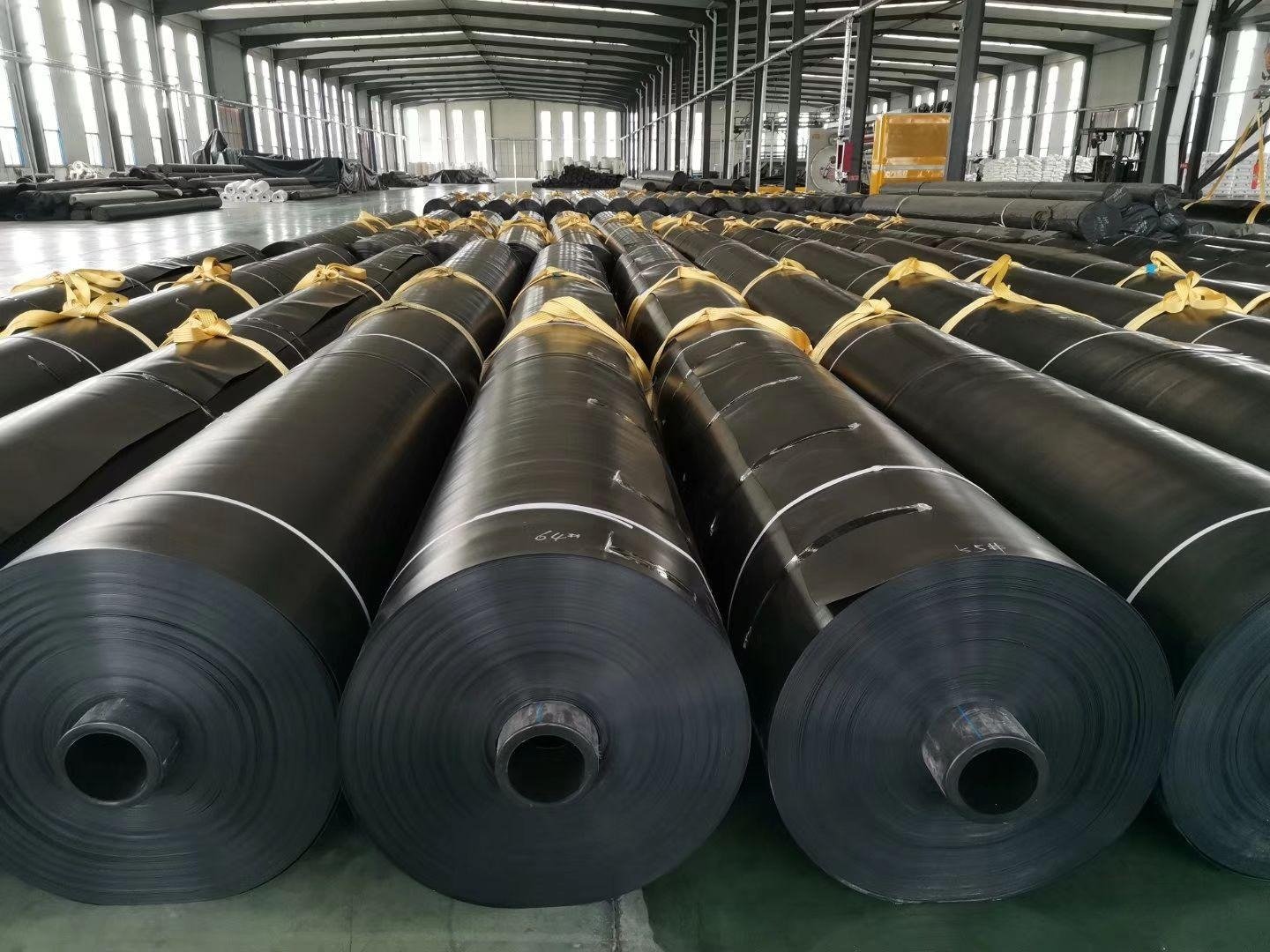
Step 8: Roll Formation and Packaging

The finished geomembrane is wound into rolls, labeled, packaged, and prepared for shipment.

9. Why Quality Control Matters for Pond Liners

An HDPE pond liner can have excellent laboratory properties but still perform poorly if manufacturing consistency or installation quality is inadequate.

A reliable manufacturer should control the entire process from raw material to finished roll.

Important QC considerations include:

Raw Material → Extrusion → Thickness → Physical Properties → Surface Quality → Roll Inspection → Packaging

Buyers should request:

  • Product technical data sheet
  • Factory test reports
  • Third-party test reports when required
  • Certificate of conformity
  • Raw-material information
  • Roll identification
  • Quality-control documentation

For large projects, independent testing before shipment can provide additional assurance.

10. HDPE Pond Liner Installation Considerations

Selecting a good manufacturer is only one part of successful pond construction.

Installation quality is equally important.

Typical installation steps include:

  1. Prepare and compact the subgrade
  2. Remove sharp rocks and debris
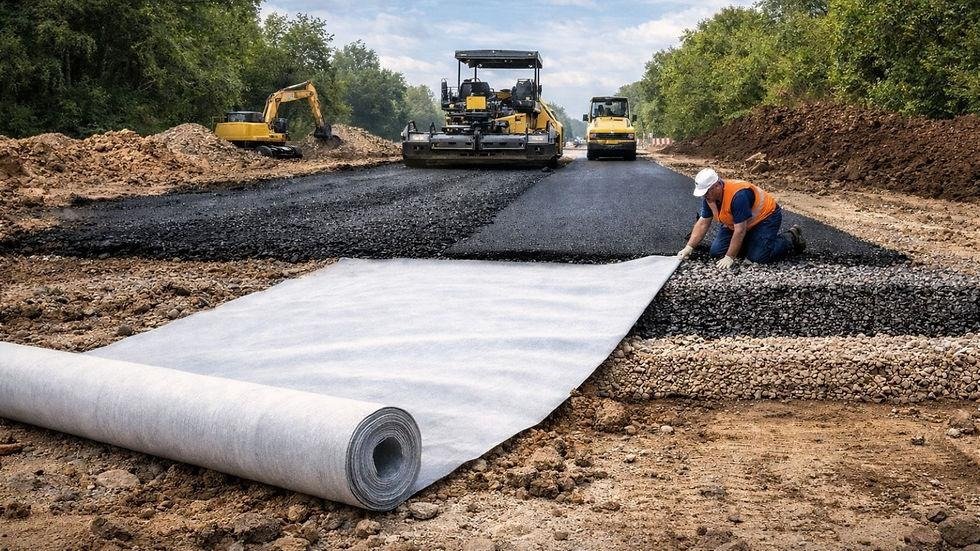
  3. Install protective geotextile where required
  4. Deploy the HDPE geomembrane
  5. Allow appropriate overlap
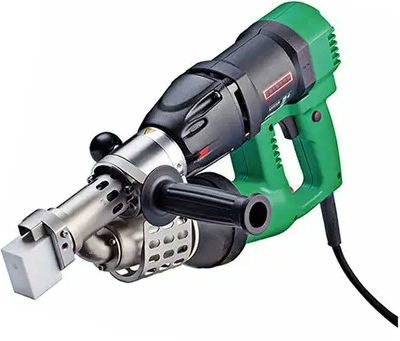
  6. Perform thermal welding
  7. Inspect seams
  8. Conduct non-destructive and destructive seam testing where required
  9. Repair defects
  10. Complete final inspection

For difficult terrain or large containment projects, professional installation and quality assurance are strongly recommended.

11. HDPE Pond Liner Manufacturer vs Local Supplier

Should you purchase directly from a manufacturer or through a local supplier?

Direct Manufacturer

Advantages may include:

  • Factory-direct pricing
  • Custom manufacturing
  • Direct technical communication
  • Better control over specifications
  • OEM/private-label options
  • Large-volume purchasing

Local Supplier

Advantages may include:

  • Local inventory
  • Faster small-order delivery
  • Local technical support
  • Easier communication during installation
  • Reduced inland transportation

For large projects, buying directly from the manufacturer may be attractive.

For small projects, local inventory and installation support may be more important than the lowest factory price.

12. Questions to Ask an HDPE Pond Liner Manufacturer

Before placing an order, consider asking:

Product

  • What HDPE resin is used?
  • What thicknesses are available?
  • Is the liner smooth or textured?
  • What roll widths are available?
  • What are the standard roll lengths?

Performance

  • What is the tensile strength?
  • What is the puncture resistance?
  • What is the tear resistance?
  • What is the carbon black content?
  • What testing standards are used?

Quality

  • Do you have an in-house laboratory?
  • Can you provide factory test reports?
  • Can you provide third-party test reports?
  • How is batch traceability managed?

Manufacturing

  • What is your production capacity?
  • How long is the lead time?
  • Can you manufacture custom dimensions?
  • Can you provide OEM packaging?

Logistics

  • How are the rolls packaged?
  • What is the loading quantity per container?
  • Can you arrange sea freight?
  • What shipping documents can you provide?

Asking these questions before purchasing can make supplier comparison much easier.

13. HDPE Pond Liner Industry Trends

The HDPE geomembrane market continues to develop alongside demand for water conservation, environmental protection, mining containment, and sustainable infrastructure.

Several trends are becoming increasingly important.

Sustainable Materials

Manufacturers and project owners are paying more attention to:

  • Material efficiency
  • Manufacturing energy consumption
  • Recycled content where technically appropriate
  • Product durability
  • Lifecycle environmental impact

However, recycled content should not be evaluated separately from the performance requirements of the project.

Advanced Leak Detection

Large containment systems are increasingly incorporating leak-detection and monitoring technologies.

These systems can help operators identify potential leakage and improve maintenance planning.

Higher-Performance Geomembranes

Demand for thicker and more specialized geomembranes is increasing in applications involving:

  • Mining
  • Industrial wastewater
  • Landfills
  • Tailings containment
  • Large reservoirs

Integrated Geosynthetic Systems

Instead of purchasing a geomembrane alone, many projects require a complete system involving:

  • HDPE geomembrane
  • Geotextile
  • GCL
  • Drainage composite
  • Geonet
  • Geogrid
  • Other geosynthetic components

A manufacturer capable of supplying multiple compatible geosynthetics can simplify procurement and technical coordination.

14. Frequently Asked Questions

What is the best HDPE pond liner manufacturer?

There is no single manufacturer that is best for every project.

The right choice depends on product specifications, project size, location, certifications, technical support, delivery time, and budget.

What thickness of HDPE pond liner is best for a pond?

The required thickness depends on the pond design and site conditions.

Common options range from approximately 0.5 mm to 3.0 mm, but the correct thickness should be determined based on subgrade conditions, mechanical loading, installation requirements, and project specifications.

Is HDPE better than PVC for pond liners?

HDPE offers strong chemical resistance, durability, and low permeability and is widely used in demanding containment applications.

However, the best liner material depends on the pond type, installation method, environmental conditions, and project requirements.

Is a 1 mm HDPE pond liner enough?

It can be suitable for some applications, but thickness should not be selected based solely on pond size.

Subgrade conditions, puncture risk, installation method, exposure, and required service life should also be considered.

Should I choose smooth or textured HDPE?

Smooth HDPE is commonly used for relatively flat containment surfaces.

Textured HDPE can provide higher interface friction and may be beneficial on slopes.

The selection should be based on the engineering design and required interface properties.

Can HDPE pond liners be customized?

Yes.

Depending on the manufacturer, HDPE geomembranes can be customized in areas such as thickness, roll width, roll length, surface texture, packaging, labeling, and other project requirements.

Can geotextile be installed beneath an HDPE pond liner?

Yes.

A properly selected geotextile can be used as a protective layer beneath or above the geomembrane to reduce the risk of mechanical damage.

The need for geotextile protection depends on the subgrade and project design.

15. Final Thoughts

Choosing an HDPE pond liner manufacturer is not simply about finding the lowest price per square meter.

A reliable supplier should be evaluated based on:

  • Raw-material quality
  • Manufacturing capacity
  • Product consistency
  • Technical performance
  • Quality control
  • Testing and certification
  • Customization capability
  • Delivery reliability
  • Technical support
  • Overall project cost

The most suitable manufacturer will depend on your specific application.

For a small agricultural pond, price and local availability may be important.

For a large aquaculture facility, water reservoir, wastewater lagoon, mining project, or environmental containment system, quality control, technical specifications, durability, and installation support may be much more important.

Looking for an HDPE Pond Liner Manufacturer?

Tinhy Geosynthetics provides HDPE geomembranes and a broad range of complementary geosynthetic products for water containment, aquaculture, mining, wastewater, landfill, and infrastructure applications.

If you have a project specification, required thickness, pond dimensions, quantity, or delivery destination, our technical team can help you evaluate the appropriate HDPE geomembrane solution.

Knowledge Base
Share:
info@tinhygeosynthetics.com Bai Jinxi
Consultation

    Get The Latest Product Prices

    Your inquiries are welcomed at any time and please feel free to contact us via email, phone calls, and online chatbox on our site.

    We will definitely give you a reply ASAP after we receive your messages.

      0/180