Resources
Company News
Industry News
Knowledge Base
Project Cases
Innovation
Team Power Fuels TINHY’s Global Geosynthetics Solutions
Tinhy and University of Jinan Celebrate Six Years of Industry–University Collaboration
Empowering New Talent, Building the Future: Tinhy Successfully Conducts New Employee Orientation Training
Tinhy Conducts Comprehensive Emergency Drill to Strengthen Workplace Safety Defenses
Company Mid – Year Summary and Team – Building Activity Report
Is geomembrane a geotechnical engineering material?
What are the application scenarios of geomembrane?
What are the functions of geotextiles?
Cómo elegir geomembrana de hdpe en proyectos de ingeniería
How to choose hdpe geomembrane in engineering projects
China’s Geotechnical Construction Materials Embrace New Opportunities
Tips for Moisture-Proof Storage of Geotextiles
Key Construction Points and Precautions for High-Density Polyethylene Geomembrane
what is pond lining material ?
What is geomembrane?
HDPE geomembrane construction plans and technical measures

What quality tests do HDPE geomembranes need to do?
Tinhy’s MDS® Drainage Solution
Installation Robots
Geomembrane Roll Width and Panel Layout: How to Reduce Seams and Installation Waste
Geocell Specifications and Technical Data Sheet Guide
Geocell vs Geogrid: Key Differences, Applications and Selection Guide
Geocell Retaining Walls: Design Principles, Applications and Installation Guide
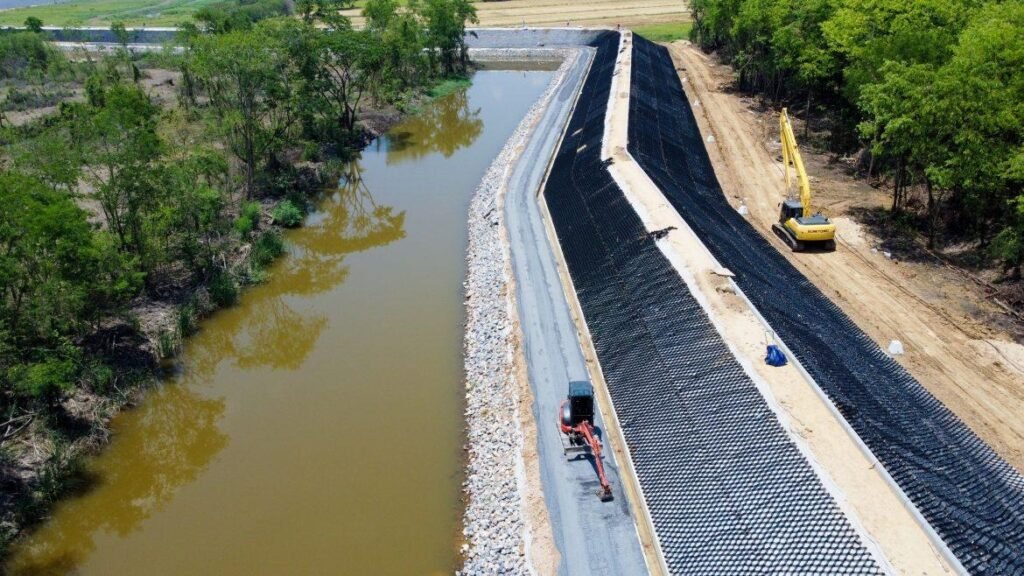
Geocell for Channel Protection: Applications, Hydraulic Design Factors and Installation Guide
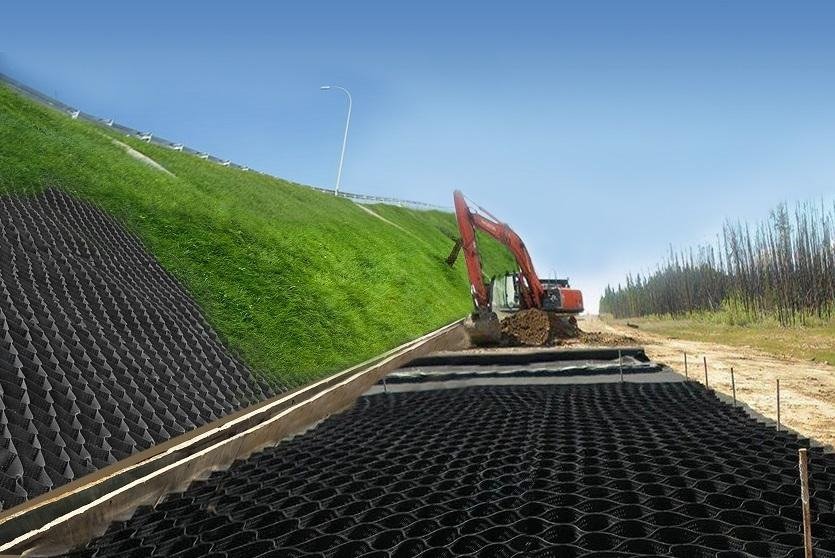
Geocell for Slope Protection: Design Factors, Applications and Installation Guide
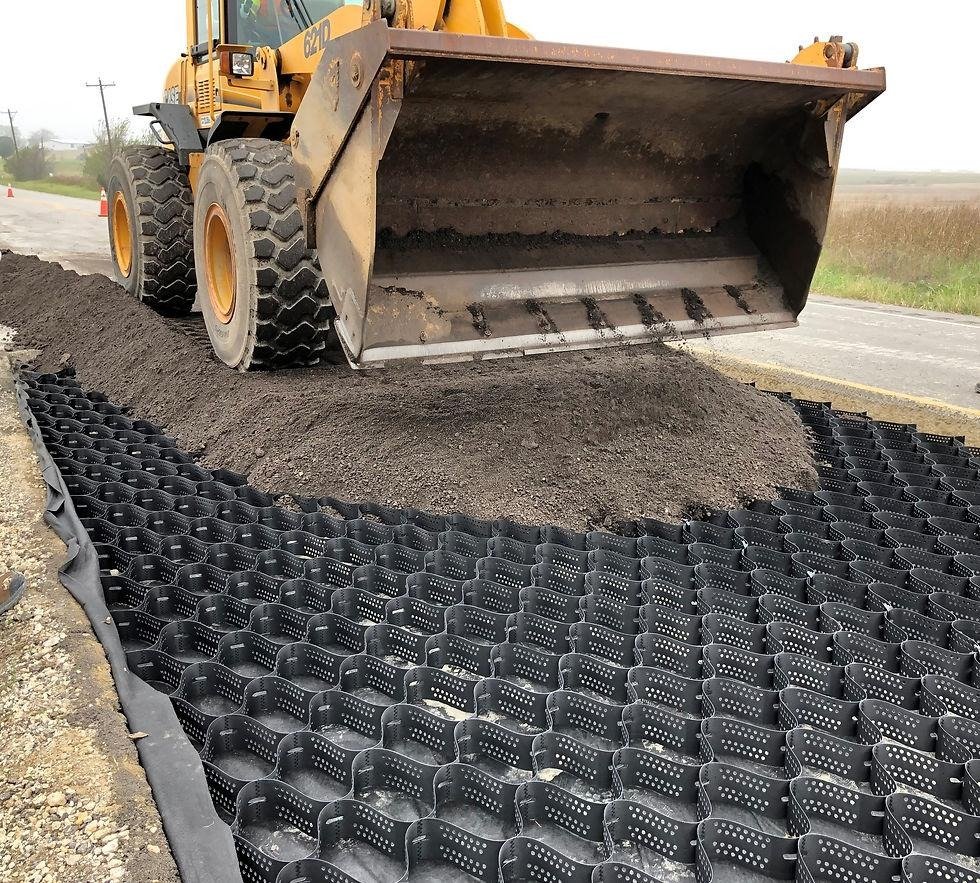
Geocell for Road Construction: Applications, Benefits and Selection Guide
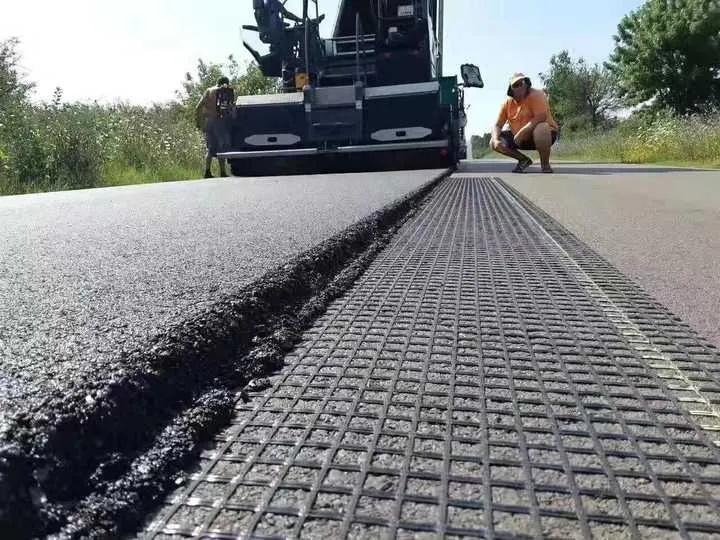
Geogrid for Road Construction: Types, Applications and Selection Guide
Geotextile for Road Construction: Functions, Types and Selection Guide
Nonwoven Geotextile Weight Selection Guide: How to Choose the Right GSM
Should HDPE or PVC be used to install geomembrane in reservoirs?
What is the price of geomembrane?
Material characteristics of three different geomembranes
Esquema de construcción de geomembrana de HDPE y medidas técnicas
hdpe geomembrane pond liner in Congo (DRC)
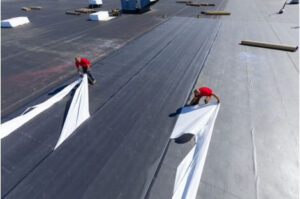
How to lay and weld HDPE geomembrane?
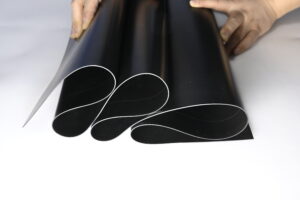
HDPE geomembrane 0.2-4.0mm
HOME ABOUT PRODUCTS APPLICATION CONTENTUS RESOURCES
Home Resources Knowledge Base Geomembrane Roll Width and Panel Layout: How to Reduce Seams and Installation Waste

Geomembrane Roll Width and Panel Layout: How to Reduce Seams and Installation Waste

time:November 23, 2026 Views:12

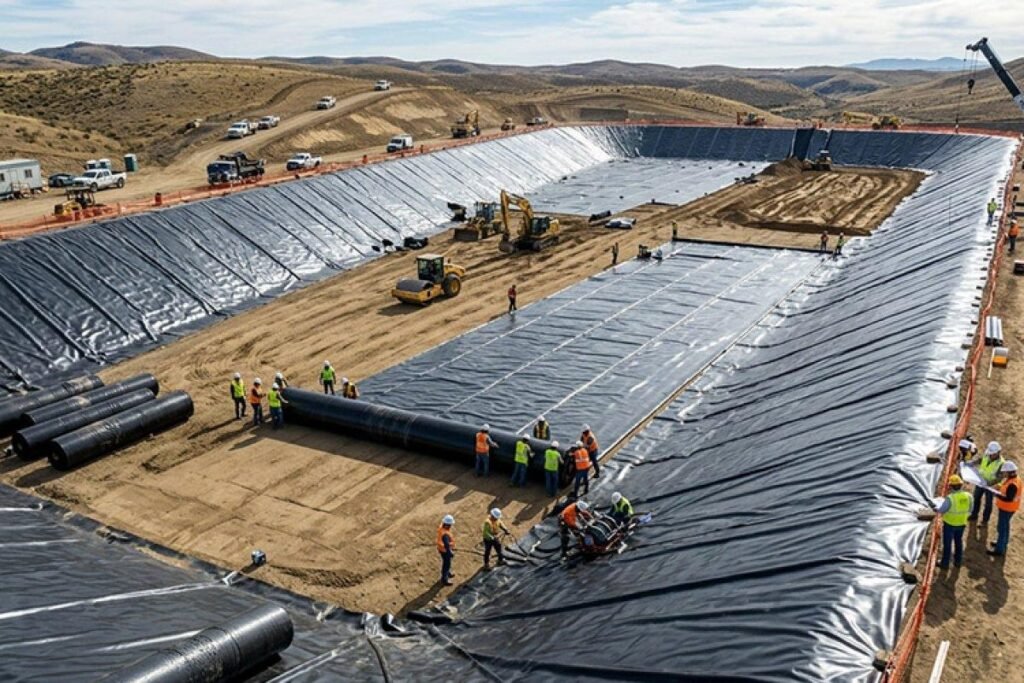
Selecting the right geomembrane roll dimensions is an important part of planning a lining project. While liner thickness, material properties and surface type are often the main focus during procurement, roll width and panel layout can also affect installation efficiency, welding workload, material utilization and project cost.

For large containment projects, an inefficient panel layout may result in unnecessary field seams, excessive trimming, difficult handling, and additional installation time. Conversely, a well-planned layout can help the construction team use materials more efficiently while maintaining the required installation and quality-control procedures.

However, the widest available geomembrane roll is not automatically the best option. Roll dimensions must be matched to the project geometry, site access, deployment equipment, welding conditions, slope configuration and installation requirements.

This guide explains how to select geomembrane roll width, plan panel layouts, manage field seams and reduce unnecessary material waste during HDPE geomembrane installation.

Table of Contents

1. What Is Geomembrane Roll Width?

Geomembrane roll width refers to the width of the liner material supplied in a roll before deployment.

HDPE geomembranes are manufactured in different widths and lengths depending on the product specification, production equipment, material thickness and manufacturer capability.

A roll may be suitable for one project but difficult to handle on another because of differences in:

  • Installation area dimensions
  • Pond or reservoir geometry
  • Slope length
  • Access roads
  • Lifting equipment
  • Deployment space
  • Welding equipment
  • Construction sequence

For this reason, roll width should be evaluated during the project planning stage rather than after the liner has arrived at the site.

2. Why Roll Width Matters in Geomembrane Installation

2.1 Number of Field Seams

When panels are placed next to each other, their overlapping edges must be joined according to the approved welding procedure.

In general, wider panels may reduce the number of longitudinal field seams required across a given installation area, provided the panel dimensions and layout are suitable.

Fewer seams may reduce:

  • Welding workload
  • Seam inspection workload
  • Number of seam locations requiring testing
  • Potential installation bottlenecks

However, reducing seam quantity should not compromise access, welding quality, panel positioning, anchorage or construction safety.

A seam that is difficult to weld or inspect may create more risk than a layout with a slightly greater number of accessible seams.

2.2 Material Utilization

Roll width also affects how much material is lost during cutting and trimming.

For rectangular areas, panel dimensions can often be planned around the site dimensions to reduce offcuts.

For irregular ponds, channels, corners, penetrations and slope transitions, the layout becomes more complex.

Potential sources of geomembrane waste include:

  • Excessive trimming
  • Poor panel orientation
  • Incorrect roll dimension selection
  • Unplanned overlaps
  • Rework after damage
  • Inaccurate site measurements
  • Irregular geometry
  • Poor coordination between installation sections

A panel layout drawing helps identify these issues before materials are ordered.

2.3 Handling and Deployment

Wider geomembrane panels may be heavier and more difficult to move, position and deploy.

The construction team should consider:

  • Roll weight
  • Lifting equipment capacity
  • Site access
  • Wind conditions
  • Available working space
  • Number of workers
  • Deployment method
  • Temporary anchoring requirements

A roll dimension that minimizes seams on paper may not be practical if the site cannot safely handle the roll.

The installation plan should balance material efficiency with practical deployment conditions.

3. How to Select the Appropriate Geomembrane Roll Width

3.1 Review the Project Dimensions

Before ordering, obtain accurate measurements of the lining area.

For a rectangular pond or reservoir, the layout should consider:

  • Bottom length
  • Bottom width
  • Side slope dimensions
  • Top perimeter
  • Anchor trench dimensions
  • Corner transitions
  • Pipe penetrations
  • Structural details

For a landfill cell, mining containment facility or irregular reservoir, the project may require separate measurements for the bottom, slopes, benches, anchor trenches and transition areas.

Do not use the overall project area alone to determine roll dimensions.

3.2 Consider the Installation Direction

Panel orientation should be determined by the geometry and installation requirements.

For a rectangular basin, panels may be oriented parallel or perpendicular to the longer dimension depending on the design and construction sequence.

For slopes, panel direction may affect:

  • Panel stability during deployment
  • Seam location
  • Welding access
  • Anchorage
  • Drainage and temporary water management
  • Construction sequence

Panel orientation should be planned together with the installation team.

For steep slopes, panel placement, temporary anchoring and seam orientation must be evaluated according to the project design and approved installation procedures.

3.3 Match Roll Dimensions to Site Conditions

The selected roll width should be compatible with the actual installation area.

Consider the following:

Project Condition Roll Width Consideration
Large open reservoir Wider panels may improve installation efficiency if equipment and access allow
Small pond Manageable roll dimensions may simplify handling
Narrow channels Panel dimensions should suit channel geometry and deployment space
Steep slopes Panel orientation and anchorage requirements may govern
Irregular containment areas Custom panel planning may reduce offcuts
Restricted-access site Smaller rolls may be easier to transport and deploy

The final roll dimensions should be confirmed by the manufacturer and installation contractor before production.

4. How to Plan a Geomembrane Panel Layout

A panel layout is a drawing that identifies the position, dimensions and orientation of each geomembrane panel in the installation area.

A typical layout should include:

  • Project boundaries
  • Bottom liner panels
  • Slope panels
  • Panel identification numbers
  • Seam locations
  • Overlap or welding allowances
  • Anchor trenches
  • Corners and transitions
  • Penetrations and structures
  • Installation sequence
  • Material roll dimensions

Step 1: Divide the Project into Installation Zones

Large projects should be divided into manageable zones.

For example, a lined reservoir may include:

  1. Reservoir bottom
  2. Side slopes
  3. Upper perimeter
  4. Anchor trench
  5. Inlet and outlet structures
  6. Special transition areas

Each zone can be planned separately before the entire layout is coordinated.

This helps avoid panel conflicts and simplifies installation sequencing.

Step 2: Establish Panel Orientation

Determine the direction in which each panel will be deployed.

The layout should account for the site’s dimensions, slopes, access routes and welding requirements.

Panel orientation should be coordinated with the field welding team so that seams remain accessible for welding, testing and inspection.

Step 3: Identify Seam Locations

Seam locations should be planned before deployment.

Avoid placing seams in locations that may be difficult to access, inspect or repair.

Where project design and installation requirements allow, panel layout may help reduce unnecessary seam intersections and complicated junctions.

The final seam arrangement must be consistent with the approved construction drawings and QA/QC plan.

Step 4: Calculate Material Requirements

After panel dimensions are established, calculate the required material area.

The calculation should include:

  • Actual lined surface area
  • Panel overlap or welding allowance
  • Anchor trench allowance
  • Corner and transition allowance
  • Penetration details
  • Installation waste allowance
  • Repair or contingency material, if specified

The quantity should not be based only on the horizontal footprint of a pond or reservoir.

For sloped structures, actual surface area is greater than the horizontal projected area.

Step 5: Review the Layout Before Ordering

Before confirming production, review the layout with the manufacturer and installation contractor.

Check whether:

  • Panel dimensions are practical
  • Roll widths match the planned layout
  • The deployment sequence is clear
  • Seam locations are accessible
  • Welding and testing can be completed
  • Required material allowances are included
  • Site equipment can handle the rolls

This review can help reduce dimensional errors and unnecessary changes after delivery.

5. How to Reduce Geomembrane Installation Waste

5.1 Use Accurate Site Measurements

Accurate measurements are the foundation of efficient panel planning.

Measurements should include the actual lined surface, not just the project’s footprint.

For slopes, measure the slope surface length and width. Include benches, anchor trenches, transitions and other details as required.

If the site is irregular, a survey or CAD drawing may help improve material calculations.

5.2 Optimize Panel Dimensions

Panel dimensions should be selected to fit the installation geometry as closely as practical.

The goal is to reduce unnecessary trimming while retaining sufficient material for welding, anchorage, detailing and installation tolerances.

Do not eliminate required welding allowances simply to reduce offcuts.

5.3 Coordinate Roll Width and Panel Length

Both roll width and length affect material utilization.

A layout that uses the roll width efficiently may still create excessive waste if panel lengths are poorly planned.

For large projects, a panel schedule can help coordinate:

  • Roll width
  • Panel length
  • Panel number
  • Installation zone
  • Deployment order
  • Material quantity

5.4 Reuse Offcuts Where Appropriate

Usable offcuts may be suitable for smaller details, patches or specific areas, depending on the project requirements.

However, reuse must follow the approved construction and quality procedures.

Offcuts should be inspected for damage, contamination, dimensions and suitability before use.

They should not be used in critical areas simply to reduce material cost.

5.5 Avoid Unnecessary Rework

Installation damage, incorrect panel placement and unsuitable welding conditions may result in additional material consumption.

A controlled installation process can help reduce rework.

Before deployment, confirm:

  • Subgrade acceptance
  • Panel identification
  • Roll dimensions
  • Weather conditions
  • Equipment readiness
  • Welding procedure
  • Installation sequence

6. Geomembrane Panel Layout for Different Applications

6.1 Landfill Liner Systems

Landfill projects may include bottom areas, side slopes, benches, drainage layers, anchor trenches and complex transitions.

Panel layout should be coordinated with the complete liner system, including geotextile protection, drainage components, GCL and other materials where specified.

The seam layout should support installation access, inspection and quality-control testing.

6.2 Mining Containment Facilities

Mining containment projects often involve large areas, steep slopes, irregular geometry and demanding construction schedules.

Panel planning should consider:

  • Bottom and slope sections
  • Slope anchorage
  • Interface materials
  • Drainage arrangements
  • Construction access
  • Welding and testing zones
  • Exposure conditions

The layout should be coordinated with the project engineer and installation contractor.

6.3 Reservoirs and Irrigation Ponds

For reservoirs and irrigation ponds, roll width selection may depend on basin geometry, water depth, slope configuration and site access.

Panel layouts should consider the bottom, side slopes, corners, inlet and outlet details, and perimeter anchorage.

For large water-storage projects, efficient panel orientation may help reduce field welding and installation time, provided the design and installation requirements are satisfied.

6.4 Wastewater Treatment Ponds

Wastewater ponds may require additional attention to chemical exposure, liner protection, penetrations, pipe connections and maintenance access.

Panel layout should be coordinated with structures and details that may interrupt the lining surface.

The required material and layout should be based on project drawings and specifications.

7. Roll Width, Welding and Quality Control

Reducing the number of seams does not eliminate the need for seam quality control.

Every field seam must be completed and inspected according to the approved project requirements.

Quality-control procedures may include:

  • Trial welds
  • Welding parameter verification
  • Non-destructive seam testing
  • Destructive seam testing
  • Repair documentation
  • Panel and seam identification
  • Installation records

Wider panels may reduce the total seam length in some layouts, but they may also require more demanding handling and deployment.

The installation team should evaluate both the quantity and quality of seams.

For further information, read our HDPE Geomembrane Installation and Welding Quality Control Guide.

8. Information to Provide When Requesting Geomembrane Rolls

To receive a suitable quotation and roll configuration, provide the manufacturer with the following information:

Information Details
Project type Reservoir, landfill, mining, pond, canal, etc.
Lined area Total surface area in m²
Drawings Layout, cross-sections and slope dimensions
Thickness Required geomembrane thickness
Surface Smooth, textured or other specified configuration
Roll width Required width or preferred configuration
Roll length Required or preferred length
Panel layout Available layout drawing, if any
Installation method Equipment and deployment limitations
Quantity Total area and estimated roll quantity
Destination Country, port and delivery requirements
Standards Applicable project specifications

If the roll width has not been finalized, share the project drawings and installation constraints. The supplier can then review the available manufacturing dimensions and provide a preliminary roll configuration for consideration.

Frequently Asked Questions

Does wider geomembrane roll width reduce installation cost?

Wider rolls may reduce the number of field seams in some layouts and potentially lower welding workload. However, the overall cost also depends on roll handling, deployment equipment, site conditions, installation labor and material utilization.

What is the best roll width for an HDPE geomembrane project?

There is no universally best width. The suitable roll width depends on the project geometry, installation equipment, access, slope configuration, welding requirements and manufacturer capability.

How do I calculate the quantity of geomembrane needed?

Calculate the actual lined surface area, including slopes and transitions, then add allowances for overlaps, anchor trenches, details, trimming, installation and contingency material as required by the project.

Should geomembrane seams be placed on slopes?

Seam placement should follow the approved design and installation procedures. Seam orientation, location, anchorage and welding access must be considered together. Avoid making assumptions based only on slope direction.

Can geomembrane offcuts be reused?

Some offcuts may be suitable for details, patches or smaller sections if permitted by the project requirements and after inspection. Reuse should not compromise material quality or containment integrity.

Can manufacturers supply custom geomembrane roll dimensions?

Many manufacturers can offer different roll widths and lengths depending on the product, production capability, thickness and order requirements. Confirm the available dimensions before placing the order.

Why should panel layout be completed before geomembrane production?

Early layout planning helps coordinate roll dimensions, seam locations, installation sequence, site access and material quantity. It can reduce avoidable cutting, material waste and installation changes.

Conclusion

Geomembrane roll width and panel layout are important considerations in the planning of containment projects.

The appropriate roll dimensions should balance material utilization, field seam quantity, installation efficiency, handling requirements and site geometry.

A well-prepared panel layout can help contractors organize deployment, coordinate welding, reduce unnecessary offcuts and improve construction planning.

Before ordering HDPE geomembrane, review the project dimensions, panel orientation, roll configuration and installation requirements with the manufacturer and contractor.

TINHY Geosynthetics supplies HDPE geomembranes in different thicknesses, surface configurations and roll dimensions for landfill, mining, reservoir, wastewater, aquaculture and other containment applications.

Contact our team with your project drawings, required specifications and estimated quantity to discuss suitable geomembrane roll dimensions and a practical supply configuration.

Knowledge Base
Share:
info@tinhygeosynthetics.com Bai Jinxi
Consultation

    Get The Latest Product Prices

    Your inquiries are welcomed at any time and please feel free to contact us via email, phone calls, and online chatbox on our site.

    We will definitely give you a reply ASAP after we receive your messages.

      0/180