Resources
Company News
Industry News
Knowledge Base
Project Cases
Innovation
Team Power Fuels TINHY’s Global Geosynthetics Solutions
Tinhy and University of Jinan Celebrate Six Years of Industry–University Collaboration
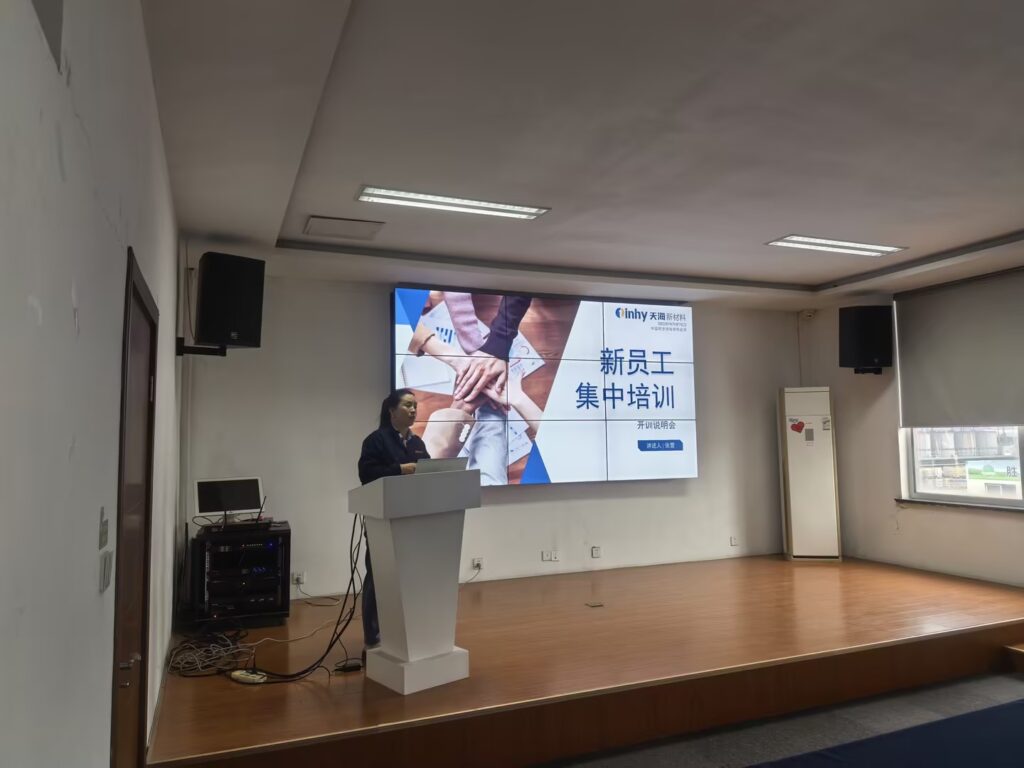
Empowering New Talent, Building the Future: Tinhy Successfully Conducts New Employee Orientation Training
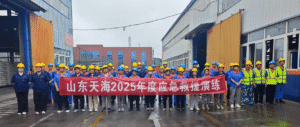
Tinhy Conducts Comprehensive Emergency Drill to Strengthen Workplace Safety Defenses
Company Mid – Year Summary and Team – Building Activity Report
Is geomembrane a geotechnical engineering material?
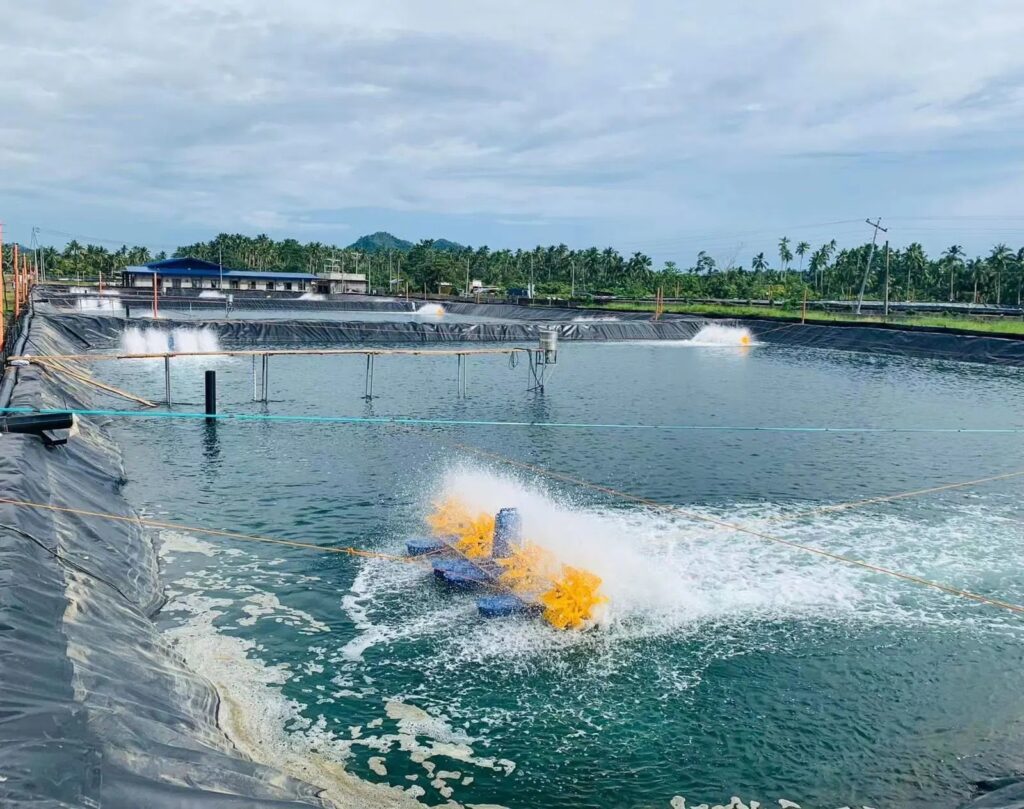
What are the application scenarios of geomembrane?
What are the functions of geotextiles?
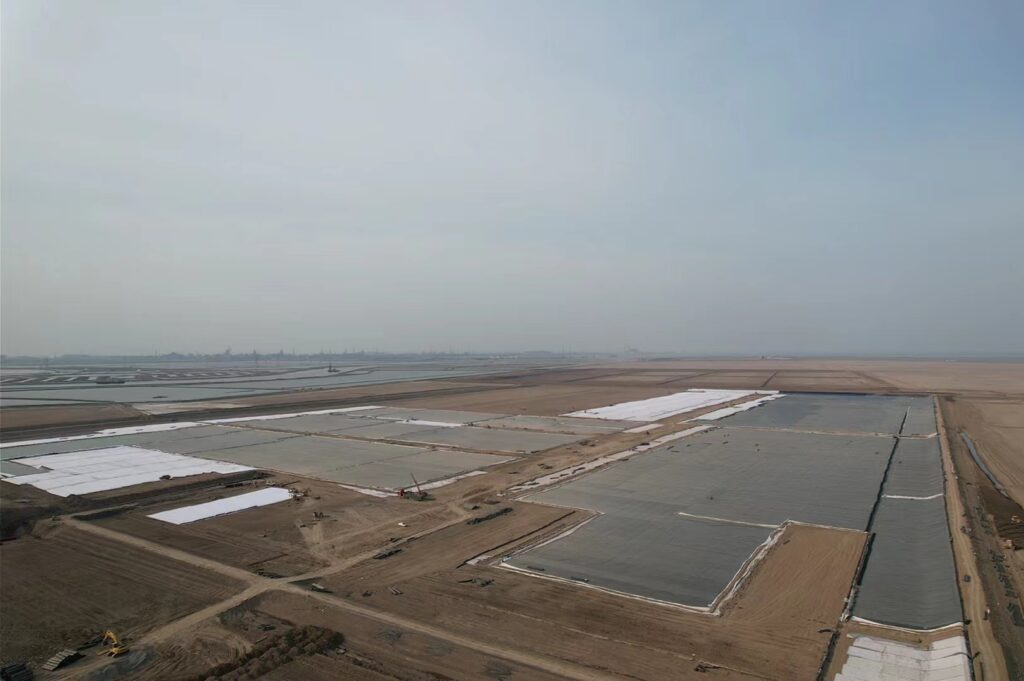
Cómo elegir geomembrana de hdpe en proyectos de ingeniería
How to choose hdpe geomembrane in engineering projects
China’s Geotechnical Construction Materials Embrace New Opportunities
Tips for Moisture-Proof Storage of Geotextiles
Key Construction Points and Precautions for High-Density Polyethylene Geomembrane
what is pond lining material ?
What is geomembrane?
HDPE geomembrane construction plans and technical measures
What quality tests do HDPE geomembranes need to do?
Tinhy’s MDS® Drainage Solution
Installation Robots
Geotextile 150g M2: The Complete Guide to Applications, Benefits, and Selection
PVC Dam Liners: The Complete Guide to Choosing the Right Waterproof Liner for Reservoirs and Irrigation Dams
Geotextile Landscape Fabric: The Complete Guide to Choosing the Right Material for Landscaping Projects
Best Geomembrane for Mining: How to Choose the Right Liner for Long-Term Containment Performance
Soil Stabilization Geotextile: 7 Proven Benefits for Stronger and Longer-Lasting Infrastructure
Geomembrane Cost Per Square Foot: The Complete 2026 Buyer’s Guide for Cost-Effective Containment Projects
Geomembrane in Road Construction: 7 Proven Benefits for Building Longer-Lasting Roads
Geocomposite Solutions for Global Infrastructure Projects | Tinhy Geosynthetics
Nonwoven Geotextile Membrane: A Practical Solution for Filtration, Drainage, Separation and Protection
How Much Does a Geomembrane Liner Cost?
Should HDPE or PVC be used to install geomembrane in reservoirs?
What is the price of geomembrane?
Material characteristics of three different geomembranes
Esquema de construcción de geomembrana de HDPE y medidas técnicas
hdpe geomembrane pond liner in Congo (DRC)
How to lay and weld HDPE geomembrane?
HDPE geomembrane 0.2-4.0mm
HOME ABOUT PRODUCTS APPLICATION CONTENTUS RESOURCES
Home Resources Knowledge Base Geotextile 150g M2: The Complete Guide to Applications, Benefits, and Selection

Geotextile 150g M2: The Complete Guide to Applications, Benefits, and Selection

time:July 25, 2026 Views:9

Introduction

Geotextile 150g M2 is one of the most widely used nonwoven geotextiles in civil engineering, landscaping, drainage, and environmental protection projects. Thanks to its excellent balance of filtration, separation, drainage, and cost-effectiveness, 150gsm geotextile has become a preferred solution for engineers and contractors seeking reliable ground stabilization without unnecessary material costs.

Whether you’re building roads, installing French drains, protecting embankments, or improving soil stability beneath landscaping projects, choosing the right geotextile specification directly impacts long-term project performance. While heavier geotextiles offer greater strength, a 150g/m² nonwoven geotextile often provides the ideal combination of permeability, durability, and installation efficiency for light to medium-duty applications.

At Tinhy Geosynthetics, we have specialized in manufacturing high-performance geotextiles since 2002. With more than 20 advanced production lines and exports to over 40 countries, we provide woven and nonwoven geotextiles that meet international quality standards for infrastructure, water conservancy, mining, transportation, and environmental engineering.

In this guide, we’ll explain what Geotextile 150g M2 is, its technical characteristics, key benefits, common applications, and how to select the right product for your project.

What Is Geotextile 150g M2?

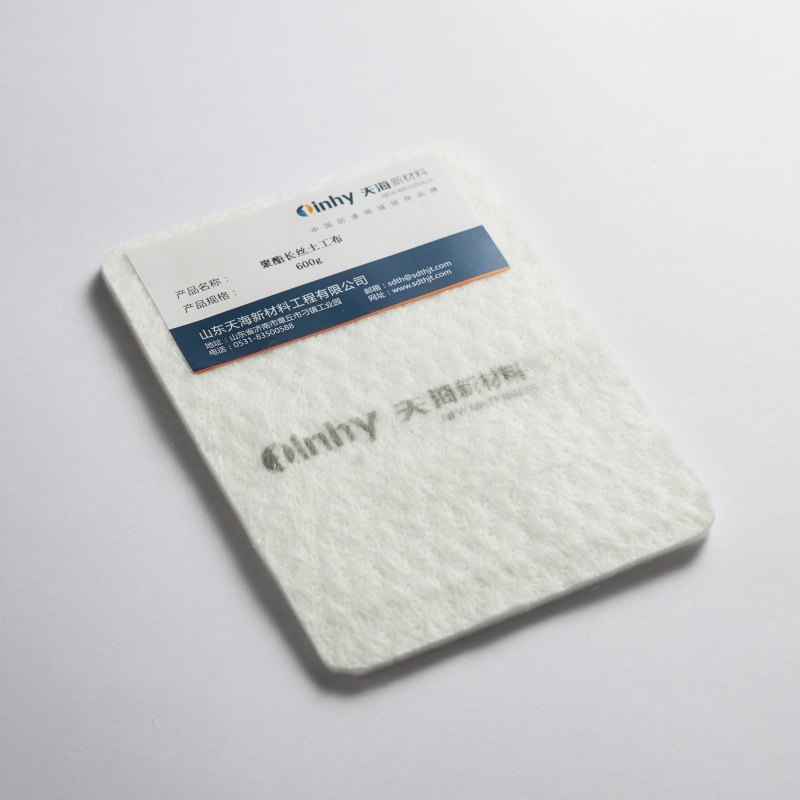
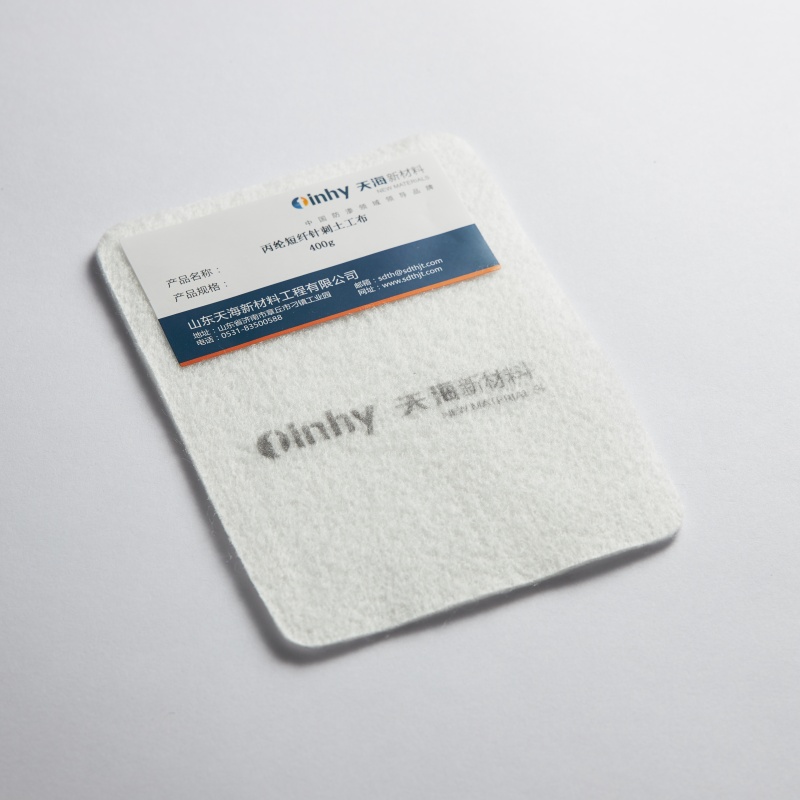
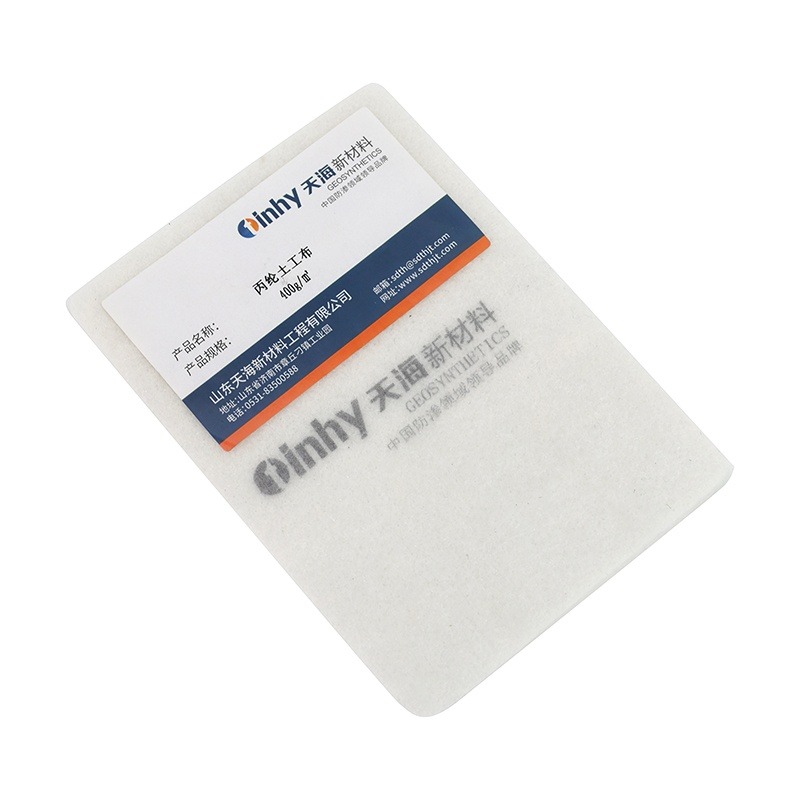
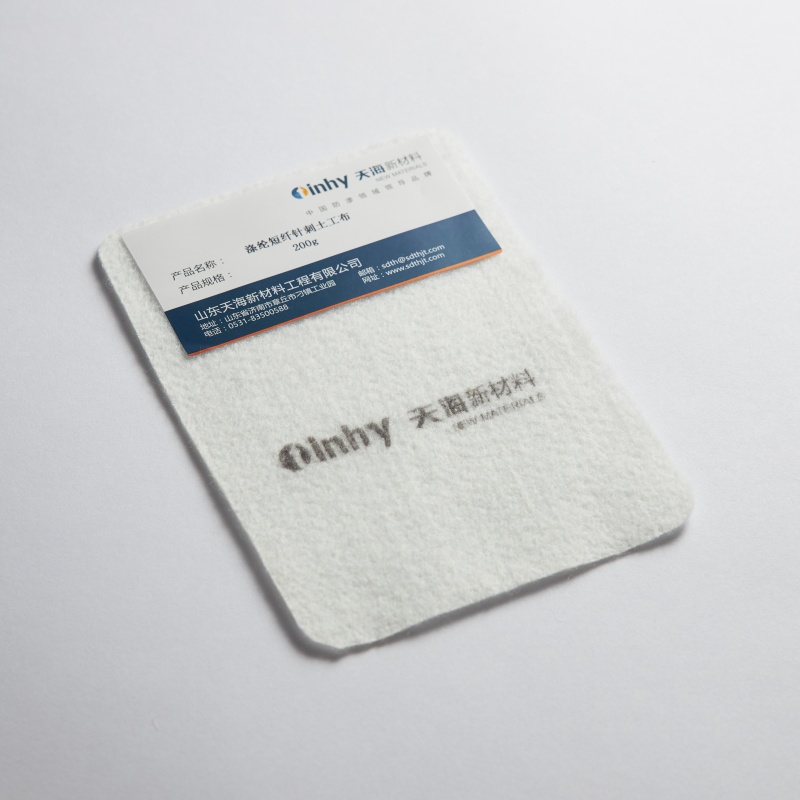
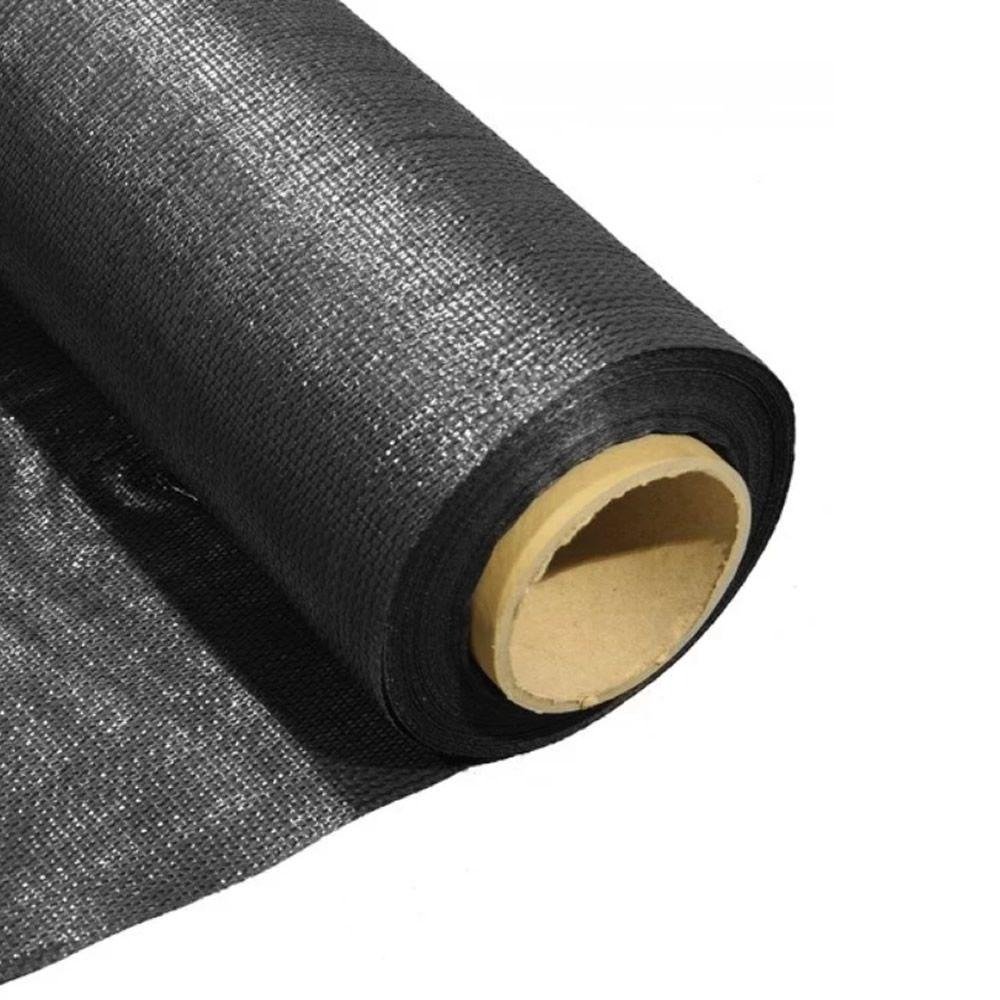
Geotextile 150g M2 refers to a nonwoven geotextile with a mass per unit area of 150 grams per square meter (150gsm).

It is typically manufactured from high-quality polypropylene (PP) or polyester (PET) fibers using a needle-punching process, creating a permeable fabric with excellent filtration and drainage capabilities.

Unlike woven geotextiles that focus on reinforcement, nonwoven 150gsm geotextiles are designed primarily for:

  • Filtration
  • Drainage
  • Soil separation
  • Erosion control
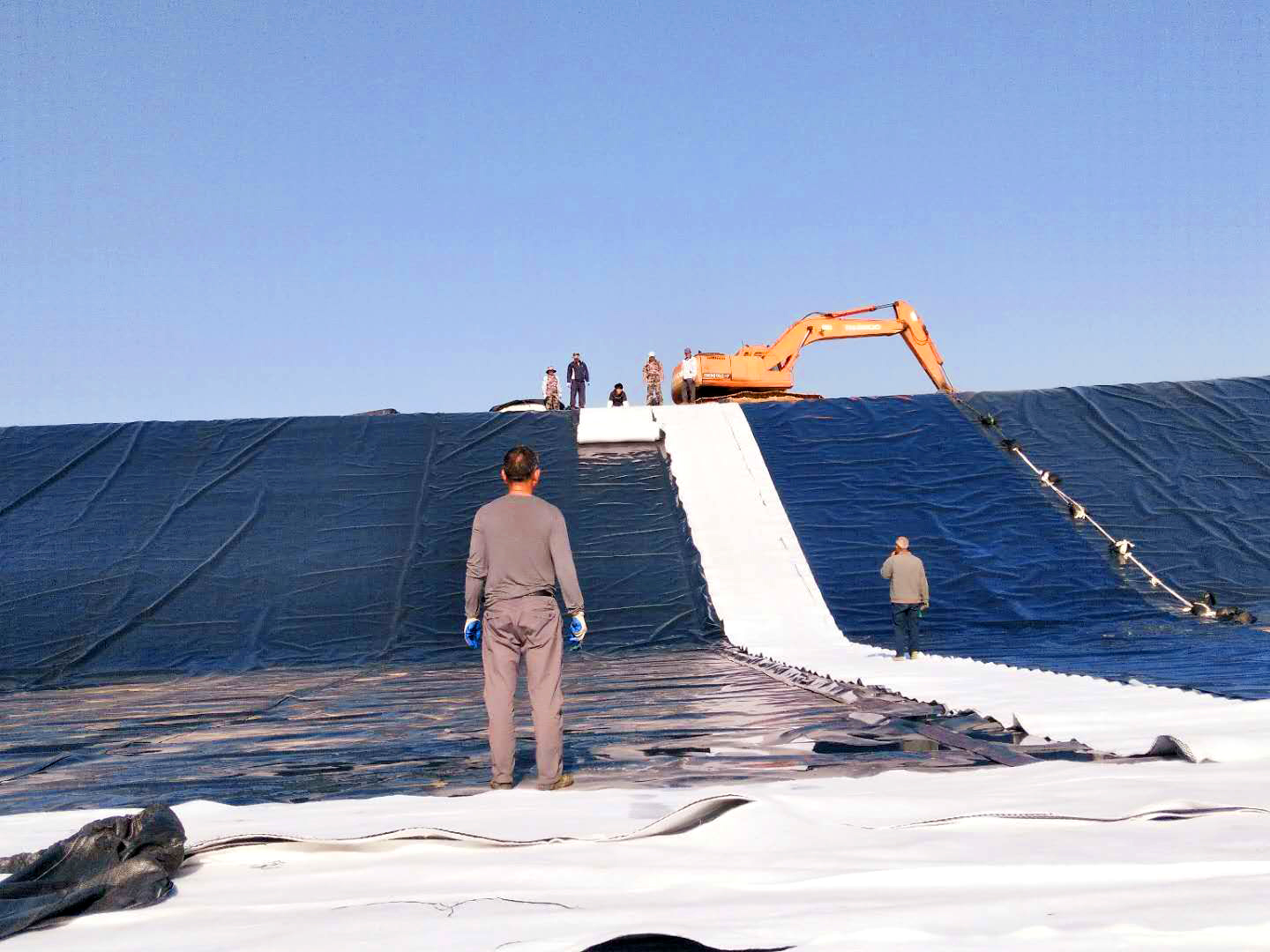
  • Protection of geomembranes

Their flexible structure allows water to pass through while preventing soil particles from migrating, making them suitable for numerous civil engineering applications.

How Is 150gsm Geotextile Manufactured?

High-quality Geotextile 150g M2 is produced through a carefully controlled manufacturing process.

Fiber Selection

Virgin polypropylene or polyester fibers are selected for their excellent durability, chemical resistance, and long-term stability.

Needle Punching

Thousands of specialized needles mechanically entangle the fibers, forming a strong yet permeable fabric without reducing water flow.

Heat Stabilization

Some products undergo heat treatment to improve dimensional stability while maintaining flexibility.

Quality Inspection

Before shipment, each production batch undergoes comprehensive quality testing to verify:

  • Mass per unit area
  • Tensile strength
  • Elongation
  • Puncture resistance
  • Water permeability
  • Thickness
  • Uniformity

Strict quality control ensures consistent performance across every roll.

Key Technical Characteristics

Although exact specifications vary depending on the manufacturer, Geotextile 150g M2 generally provides an excellent balance between mechanical strength and hydraulic performance.

Lightweight Construction

The 150gsm weight makes installation easier while reducing transportation and handling costs.

Excellent Water Permeability

Its porous structure allows water to flow freely while retaining soil particles, ensuring efficient filtration and drainage.

Reliable Filtration

The fabric effectively prevents soil migration without restricting water movement, protecting drainage systems from clogging.

Good Puncture Resistance

Despite its relatively light weight, 150gsm geotextile offers sufficient puncture resistance for many landscaping and civil engineering applications when installed over properly prepared subgrades.

Chemical Resistance

Polypropylene and polyester fibers resist most naturally occurring acids, alkalis, and microorganisms found in soil.

Long-Term Durability

When properly installed and protected from prolonged UV exposure, 150gsm geotextile can deliver reliable performance for many years.

7 Benefits of Geotextile 150g M2

1. Excellent Filtration Performance

One of the most important functions of Geotextile 150g M2 is filtration.

The fabric allows water to pass while preventing soil particles from entering drainage systems.

This helps maintain long-term drainage efficiency and minimizes maintenance requirements.

2. Reliable Drainage

Water accumulation is a major cause of soil instability and pavement deterioration.

The permeable structure of 150gsm geotextile rapidly transfers water away from structures while maintaining soil stability.

This makes it ideal for:

  • French drains
  • Retaining walls
  • Drainage trenches
  • Roadside drainage systems

3. Effective Soil Separation

Without proper separation, aggregate layers gradually mix with underlying soil, reducing structural performance.

Geotextile 150g M2 creates a stable separation layer that maintains the integrity of both materials, extending the service life of roads, pathways, and landscaping projects.

4. Erosion Control

Rainfall and surface runoff can wash away valuable topsoil.

Installing geotextile beneath riprap, vegetation, or erosion control systems helps stabilize soil while allowing natural drainage.

This significantly reduces erosion on slopes, embankments, and riverbanks.

5. Lightweight and Easy to Install

Compared with heavier geotextiles, 150gsm products are easier to transport, cut, position, and install.

This reduces labor requirements and shortens construction schedules, making them a cost-effective choice for many medium-sized projects.

6. Cost-Effective Solution

For projects that do not require heavy reinforcement, Geotextile 150g M2 provides excellent performance at a competitive cost.

Its balance of filtration, durability, and affordability makes it one of the most economical geotextile specifications available.

7. Long Service Life

Manufactured from high-quality synthetic fibers, professional-grade 150gsm geotextiles resist biological degradation, moisture, and most soil chemicals.

When installed correctly beneath soil, gravel, or other protective layers, they continue performing effectively for many years with minimal maintenance.

Common Applications of Geotextile 150g M2

Thanks to its excellent balance of filtration, drainage, and separation, Geotextile 150g M2 is widely used in both civil engineering and landscaping projects.

Road Construction

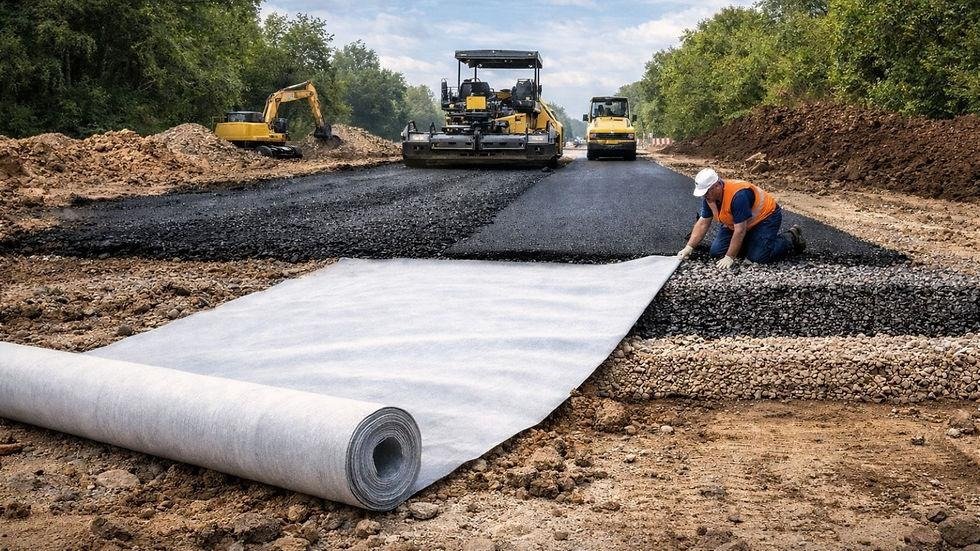
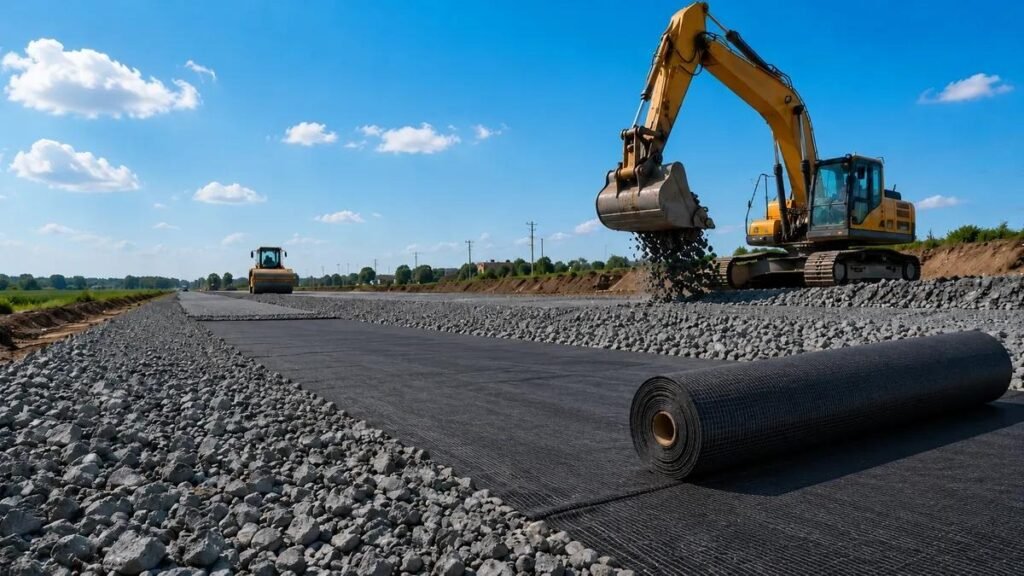
One of the most common applications is beneath roads and highways.

Placed between the subgrade and aggregate base, the geotextile prevents soil from mixing with crushed stone while allowing groundwater to drain naturally. This improves load distribution, reduces rutting, and extends pavement service life.

Drainage Systems

Drainage systems require a material that can maintain water flow while preventing soil particles from clogging pipes and gravel.

Geotextile 150g M2 is commonly installed in:

  • French drains
  • Drainage trenches
  • Collector drains
  • Foundation drainage systems
  • Roadside drainage channels

Its excellent permeability helps maintain long-term drainage efficiency with minimal maintenance.

Landscaping Projects

Landscape architects frequently specify 150gsm geotextile beneath decorative gravel, garden pathways, and artificial turf.

Benefits include:

  • Weed suppression
  • Soil separation
  • Cleaner decorative stone
  • Improved drainage
  • Reduced maintenance

Retaining Walls

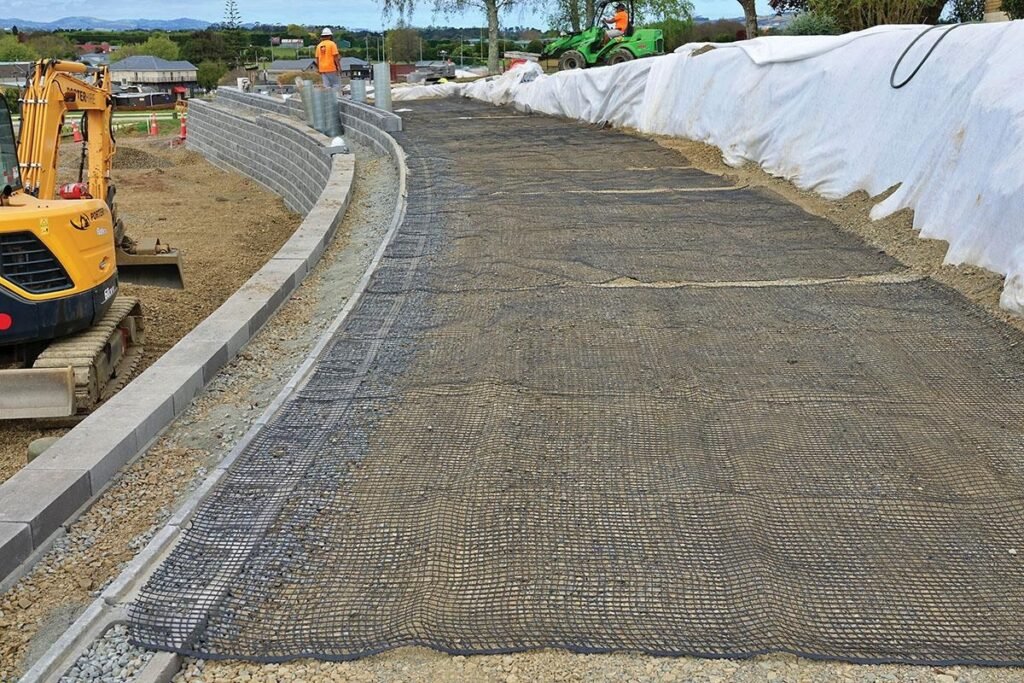
Behind retaining walls, nonwoven geotextiles function as a filtration layer.

They allow water to escape while preventing backfill soil from washing into drainage aggregates, reducing hydrostatic pressure and improving wall stability.

Erosion Control

Geotextile 150g M2 is an effective solution for controlling erosion on:

  • Riverbanks
  • Embankments
  • Highway slopes
  • Canal banks
  • Coastal protection projects

Combined with vegetation or riprap, it helps stabilize soil while maintaining natural water flow.

Railway Construction

Railway engineers use geotextiles to separate ballast from soft subgrades, reducing contamination and maintaining track stability.

The separation function improves drainage and reduces long-term maintenance requirements.

Agriculture

Agricultural projects use 150gsm geotextile in irrigation channels, farm roads, drainage ditches, and water management systems.

Its durability and permeability make it well suited for long-term outdoor applications.

Geotextile 150g M2 vs. 200g M2 vs. 300g M2

Choosing the right geotextile weight depends on project requirements rather than selecting the heaviest product available.

Property 150g M2 200g M2 300g M2
Weight Light Medium Heavy
Water Permeability Excellent Excellent Very Good
Filtration Excellent Excellent Excellent
Separation Good Better Excellent
Puncture Resistance Good Better High
Installation Easy Moderate More Labor Required
Typical Applications Landscaping, drainage Roads, railways Heavy civil engineering

For most landscaping and drainage projects, Geotextile 150g M2 offers sufficient performance while reducing material costs and simplifying installation.

How to Choose the Right Geotextile 150g M2

Selecting the correct geotextile requires evaluating several engineering factors.

Determine the Application

Different applications require different performance characteristics.

For example:

  • Drainage projects prioritize permeability.
  • Road construction emphasizes separation.
  • Slope protection requires erosion resistance.
  • Landscaping focuses on filtration and weed control.

Evaluate Soil Conditions

Soft clay, sand, gravel, and rocky foundations each influence geotextile selection.

For rocky subgrades, combining a 150gsm geotextile with proper subgrade preparation improves durability and puncture resistance.

Consider Water Flow Requirements

Drainage applications require geotextiles with high permeability and effective filtration.

Choosing a product with appropriate hydraulic properties helps prevent clogging while maintaining efficient water flow.

Review Mechanical Properties

Before purchasing, verify technical specifications such as:

  • Tensile strength
  • Elongation
  • Puncture resistance
  • Thickness
  • Apparent Opening Size (AOS)
  • Water permeability

A reputable manufacturer should provide complete laboratory test reports.

Installation Best Practices

Proper installation maximizes the performance of Geotextile 150g M2.

Recommended procedures include:

  1. Remove sharp stones, roots, and debris.
  2. Grade and compact the subgrade.
  3. Unroll the geotextile without excessive tension.
  4. Overlap adjacent sheets according to project specifications.
  5. Secure the fabric before placing aggregate or soil.
  6. Cover the geotextile promptly to minimize prolonged UV exposure.

Correct installation significantly improves long-term durability.

Common Mistakes to Avoid

Many failures result from improper installation rather than poor product quality.

Avoid these common mistakes:

  • Selecting lightweight fabric for heavy-load applications
  • Installing over unprepared rocky ground
  • Insufficient overlap between adjacent rolls
  • Leaving geotextiles exposed for extended periods
  • Using woven fabric where filtration is required
  • Purchasing low-quality recycled products without verified performance data

Proper design and installation are essential for long-term project success.

Why Choose Tinhy Geosynthetics?

Since 2002, Tinhy Geosynthetics has supplied premium geosynthetic materials for infrastructure, environmental protection, mining, transportation, water conservancy, and landscaping projects worldwide.

Our strengths include:

  • Over 20 years of manufacturing experience
  • More than 20 automated production lines
  • Comprehensive woven and nonwoven geotextile product range
  • ISO 9001, ISO 14001, and ISO 45001 certified manufacturing
  • Advanced in-house laboratory testing
  • OEM and customized specifications
  • Fast production and global delivery
  • Export experience in over 40 countries

Our technical team works closely with engineers, contractors, and distributors to recommend the most suitable geotextile solution for each project.

Frequently Asked Questions

What is Geotextile 150g M2 used for?

Geotextile 150g M2 is commonly used for filtration, drainage, soil separation, erosion control, landscaping, road construction, and retaining wall drainage systems.

Is 150gsm geotextile suitable for drainage?

Yes. Its high permeability allows water to pass through while preventing soil migration, making it ideal for drainage applications.

What is the difference between 150gsm and 200gsm geotextile?

A 200gsm geotextile generally provides higher puncture resistance and tensile strength, while a 150gsm product is lighter, easier to install, and more economical for light to medium-duty applications.

Is Geotextile 150g M2 woven or nonwoven?

Although woven versions are available, Geotextile 150g M2 typically refers to a needle-punched nonwoven geotextile used for filtration and drainage.

How long does Geotextile 150g M2 last?

When manufactured from high-quality polypropylene or polyester fibers and installed correctly, Geotextile 150g M2 can provide reliable performance for many years in buried applications.

Conclusion

Geotextile 150g M2 is an economical and versatile solution for filtration, drainage, separation, and erosion control. Its excellent permeability, lightweight construction, and dependable mechanical properties make it suitable for landscaping, road construction, drainage systems, railways, retaining walls, and agricultural infrastructure.

Choosing the right geotextile involves more than selecting a weight specification. Engineers should evaluate soil conditions, hydraulic requirements, mechanical performance, and installation practices to ensure long-term project success.

At Tinhy Geosynthetics, we combine over two decades of manufacturing expertise with advanced production technology and rigorous quality control to provide high-performance woven and nonwoven geotextiles for projects worldwide. Whether you require standard specifications or customized solutions, our team is committed to helping you build durable, efficient, and sustainable infrastructure.

Knowledge Base
Share:
info@tinhygeosynthetics.com Bai Jinxi
Consultation

    Get The Latest Product Prices

    Your inquiries are welcomed at any time and please feel free to contact us via email, phone calls, and online chatbox on our site.

    We will definitely give you a reply ASAP after we receive your messages.

      0/180