Resources
Company News
Industry News
Knowledge Base
Project Cases
Innovation
Team Power Fuels TINHY’s Global Geosynthetics Solutions
Tinhy and University of Jinan Celebrate Six Years of Industry–University Collaboration
Empowering New Talent, Building the Future: Tinhy Successfully Conducts New Employee Orientation Training
Tinhy Conducts Comprehensive Emergency Drill to Strengthen Workplace Safety Defenses
Company Mid – Year Summary and Team – Building Activity Report
Is geomembrane a geotechnical engineering material?
What are the application scenarios of geomembrane?
What are the functions of geotextiles?
Cómo elegir geomembrana de hdpe en proyectos de ingeniería
How to choose hdpe geomembrane in engineering projects
China’s Geotechnical Construction Materials Embrace New Opportunities
Tips for Moisture-Proof Storage of Geotextiles
Key Construction Points and Precautions for High-Density Polyethylene Geomembrane
what is pond lining material ?
What is geomembrane?
HDPE geomembrane construction plans and technical measures
What quality tests do HDPE geomembranes need to do?
Tinhy’s MDS® Drainage Solution
Installation Robots
7 Best Geotextile Manufacturers: Products, Quality & Buying Guide
Woven Geotextile Fabric Price: Cost Guide & Buying Factors
The 10 Best Film Geotextiles Review: Types, Specifications & Buying Guide
The 10 Best 500 Micron Geomembrane Options: Properties, Applications & Buying Guide
The 10 Best Film Geotextiles Review: Types, Performance & Buying Guide
Geotextile Installation: Step-by-Step Guide for Construction Projects
The 7 Best Non Woven Filter Fabric: Properties, Applications & Buying Guide
HDPE Liner Installation: A Step-by-Step Guide for Geomembrane Projects
The 10 Best Geotextile 200g Review: Properties, Applications & Buying Guide
The 8 Best Black Pond Liners Review: Materials, Performance & Selection Guide
Should HDPE or PVC be used to install geomembrane in reservoirs?
What is the price of geomembrane?
Material characteristics of three different geomembranes
Esquema de construcción de geomembrana de HDPE y medidas técnicas
hdpe geomembrane pond liner in Congo (DRC)
How to lay and weld HDPE geomembrane?
HDPE geomembrane 0.2-4.0mm
HOME ABOUT PRODUCTS APPLICATION CONTENTUS RESOURCES
Home Resources Knowledge Base 7 Best Geotextile Manufacturers: Products, Quality & Buying Guide
7 Best Geotextile Manufacturers: Products, Quality & Buying Guide

time:September 18, 2026 Views:4

Selecting a geotextile manufacturer is about more than comparing the price per roll. For road construction, drainage systems, landfills, erosion control, retaining structures, and soil reinforcement, the right geotextile must meet the project’s functional and technical requirements.

Buyers typically need to evaluate material type, mass per unit area, tensile strength, puncture resistance, apparent opening size, permeability, quality consistency, technical documentation, and supply capability.

This guide reviews seven established geotextile manufacturers and brands and explains what buyers should consider before placing an order.

Note: There is no single best geotextile manufacturer for every project. The appropriate supplier depends on the required geotextile function, design parameters, applicable standards, certifications, testing requirements, and delivery conditions. Always verify the manufacturer’s product data and test reports against your project specification.

Table of Contents

What Is a Geotextile?

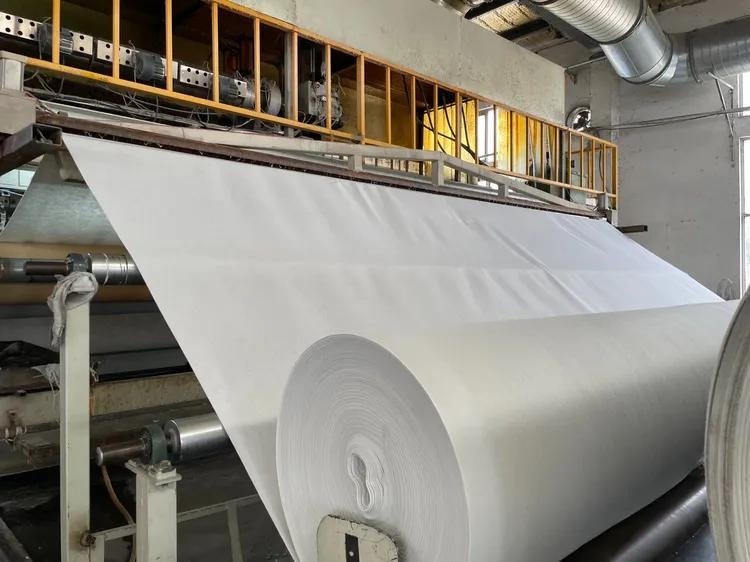
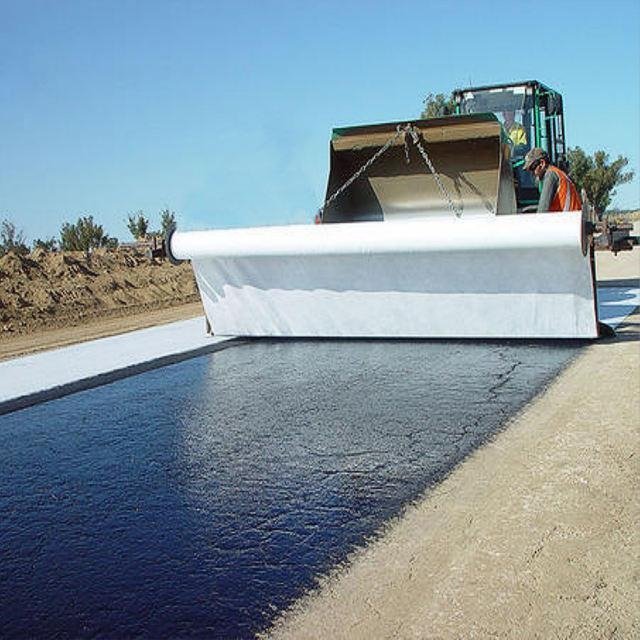
A geotextile is a permeable geosynthetic material used in contact with soil or other geotechnical materials. Depending on its structure and properties, a geotextile can provide separation, filtration, drainage, reinforcement, or protection.

The two most common types are:

  • Nonwoven geotextile – commonly used for filtration, drainage, separation, and protection.
  • Woven geotextile – commonly selected where higher tensile strength and soil stabilization are required.

Geotextiles are manufactured from polymers such as polypropylene (PP) and polyester (PET), with product properties varying according to the raw material, manufacturing process, mass per unit area, and intended application.

What to Look for in a Top Geotextile Manufacturer

Before comparing manufacturers, buyers should establish the technical requirements of the project.

1. Product Performance Consistency

A reliable manufacturer should maintain consistent product properties from roll to roll and batch to batch.

Important parameters may include:

  • Mass per unit area
  • Thickness
  • Grab tensile strength
  • Elongation
  • Tear strength
  • CBR puncture resistance
  • Apparent opening size (AOS)
  • Permittivity
  • Water flow rate
  • UV resistance
  • Chemical resistance

Not every project requires every parameter. The relevant properties should be determined by the design specification.

2. Quality Control and Traceability

Quality control is particularly important for large infrastructure and environmental projects.

Before purchasing, ask whether the manufacturer can provide:

  • Product datasheets
  • Factory test reports
  • Third-party test reports when required
  • Batch or production records
  • Applicable certifications
  • Test methods and standards

Clear documentation makes technical approval and procurement easier.

3. Manufacturing Capability

A manufacturer’s production capability affects its ability to maintain consistent specifications and fulfill large orders.

Buyers can evaluate:

  • Production lines
  • Raw material control
  • In-house testing
  • Quality inspection procedures
  • Available product widths and lengths
  • Customization capability
  • Production capacity

4. Application Knowledge

A geotextile should be selected according to its function rather than simply its GSM.

For example:

Separation: focus on mechanical survivability and soil interaction.

Filtration: focus on AOS, permeability, and water flow.

Drainage: evaluate hydraulic performance together with long-term compressive conditions.

Reinforcement: tensile strength, elongation, and interface behavior become particularly important.

Protection: puncture and impact resistance may be critical when the geotextile is installed beneath a geomembrane.

5. Supply and Logistics

For international construction projects, technical performance is only part of the purchasing decision.

Also confirm:

  • Available roll width
  • Roll length
  • Packaging
  • Minimum order quantity
  • Production lead time
  • Shipping arrangements
  • Export experience
  • Documentation requirements

7 Geotextile Manufacturers and Brands to Consider

The following companies represent different approaches to geosynthetic manufacturing and supply. Their product portfolios and regional availability vary, so buyers should verify current product information before procurement.

1. TenCate Geosynthetics

TenCate is a recognized name in engineered geosynthetics, with products associated with transportation, soil stabilization, reinforcement, drainage, and other civil engineering applications.

Its portfolio and technical approach make it relevant to projects where geosynthetic performance needs to be considered as part of a broader engineering system.

Typical applications: Roads, soil stabilization, reinforcement, drainage, and infrastructure projects.

Consider when: Your project requires established geosynthetic products together with engineering-oriented technical information.

2. HUESKER Geosynthetics

HUESKER is an established geosynthetics company with a broad range of products for reinforcement, separation, filtration, drainage, and other geotechnical applications.

Its portfolio includes geotextiles and other geosynthetic systems designed for civil engineering and infrastructure projects.

Typical applications: Road construction, soil reinforcement, separation, filtration, and stabilization.

Consider when: Your project requires specialized geosynthetic solutions and detailed technical documentation.

3. Fibertex Nonwovens

Fibertex is particularly associated with nonwoven geotextiles and technical textiles.

Nonwoven geotextiles are widely used where filtration, drainage, separation, and protection are important. The product structure allows water to pass through while helping control the migration of soil particles.

Typical applications: Drainage systems, filtration, roads, landscaping, and civil engineering.

Consider when: Filtration and drainage are major design functions.

4. GSE Environmental

GSE Environmental has a strong association with environmental geosynthetics and containment systems.

Environmental projects often require multiple geosynthetic products working together, including geomembranes, geotextiles, drainage geocomposites, and other containment components.

Typical applications: Landfills, environmental containment, mining, wastewater, and related projects.

Consider when: Geotextiles form part of a larger environmental containment or drainage system.

5. CETCO

CETCO is known for products and systems used in environmental and geotechnical applications.

For projects involving liners, containment, waterproofing, drainage, and environmental protection, buyers may evaluate manufacturers with experience across multiple components of the system rather than considering geotextiles as an isolated material.

Typical applications: Environmental containment, waterproofing, drainage, and geotechnical systems.

Consider when: Your project requires an integrated approach to geosynthetic and containment systems.

6. DuPont

DuPont is a globally recognized materials and technology company with a broad history in engineered materials and polymer technologies.

Because product portfolios can differ by region and application, buyers interested in DuPont-related materials should verify the specific product line, manufacturer, and current availability for their project.

Typical applications: Application-dependent engineered material systems.

Consider when: Material technology, brand recognition, and regional availability are important procurement considerations.

7. Tinhy Geosynthetics

Tinhy Geosynthetics focuses on the manufacturing and supply of geosynthetic products for civil engineering, environmental, mining, water management, and infrastructure projects.

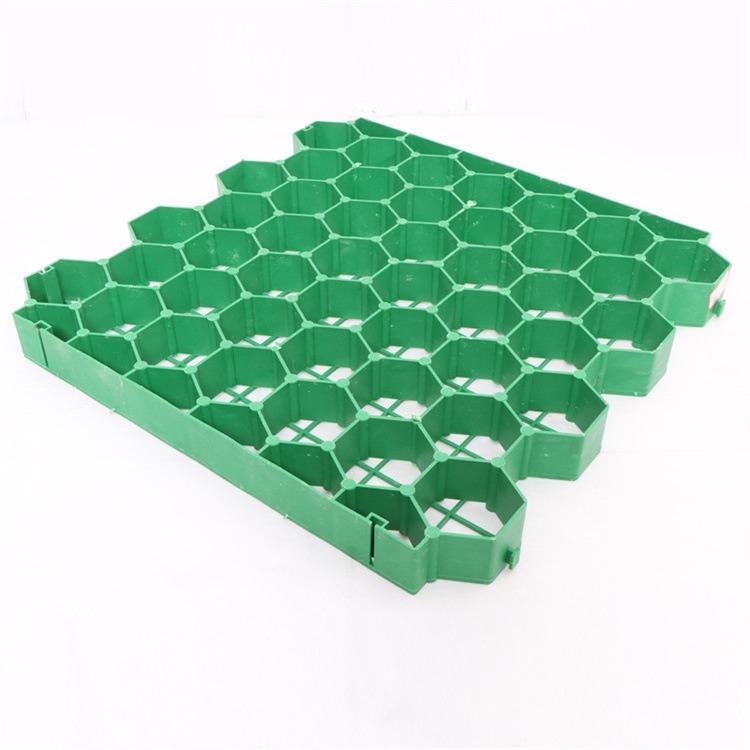
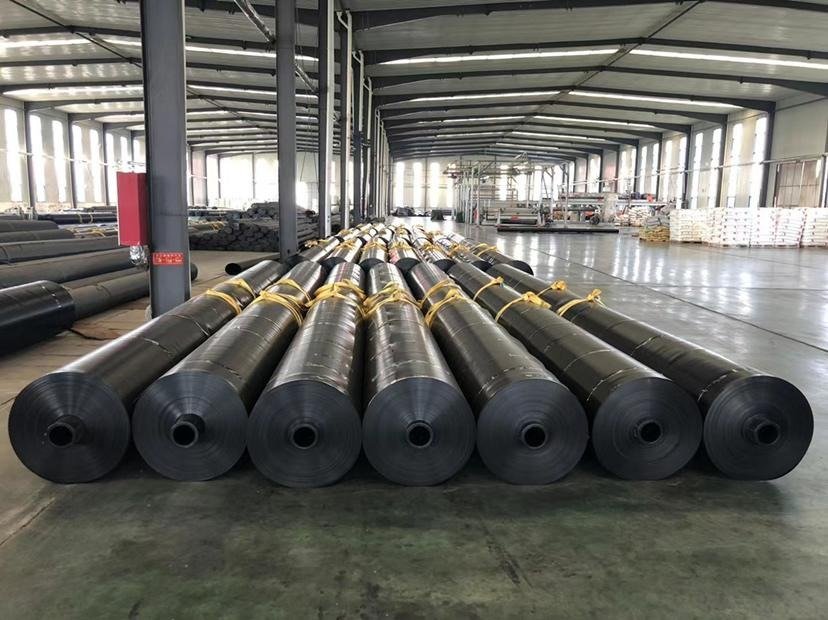
Its geosynthetic portfolio includes woven geotextiles, nonwoven geotextiles, geomembranes, geosynthetic clay liners (GCL), drainage geocomposites, geogrids, geocells, and related products.

For buyers, the value of working with a manufacturer is not only the product itself. It also includes specification communication, production consistency, testing, documentation, customization, and export coordination.

Geotextile Product Range

Depending on project requirements, Tinhy can supply different geotextile structures and specifications, including:

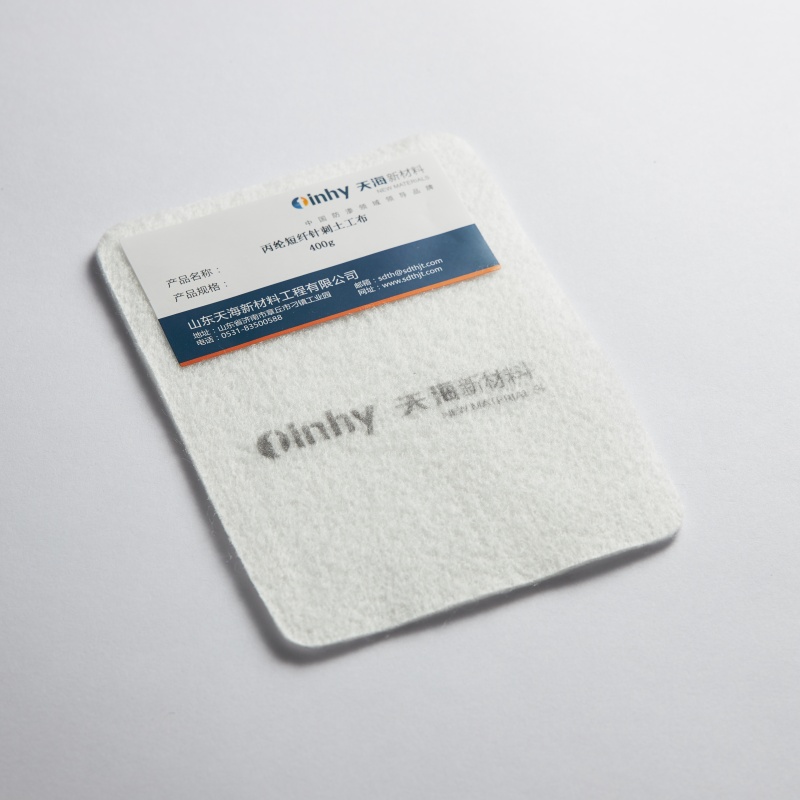
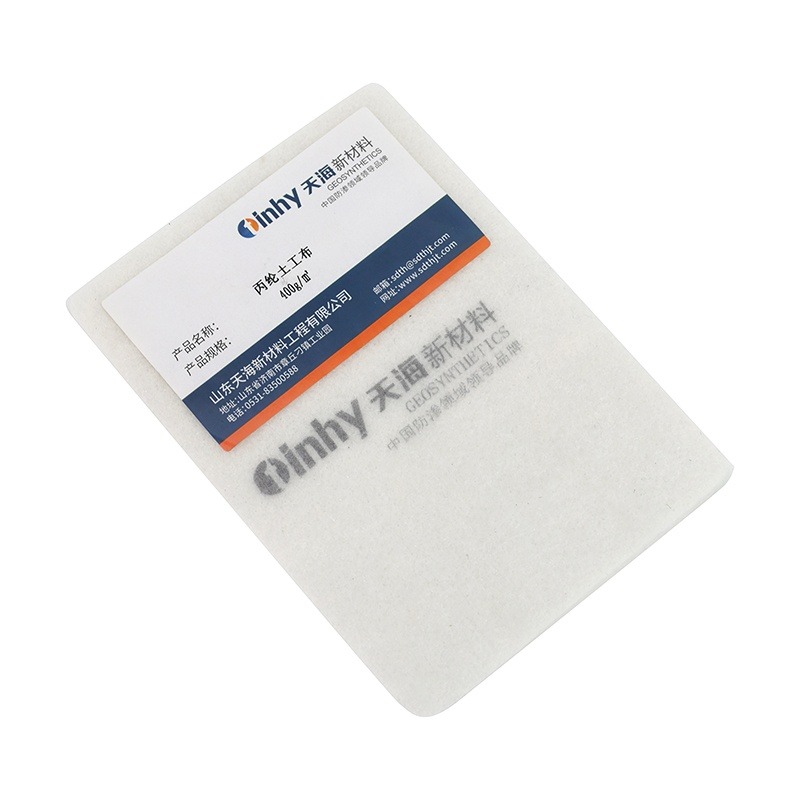
  • PP nonwoven geotextile
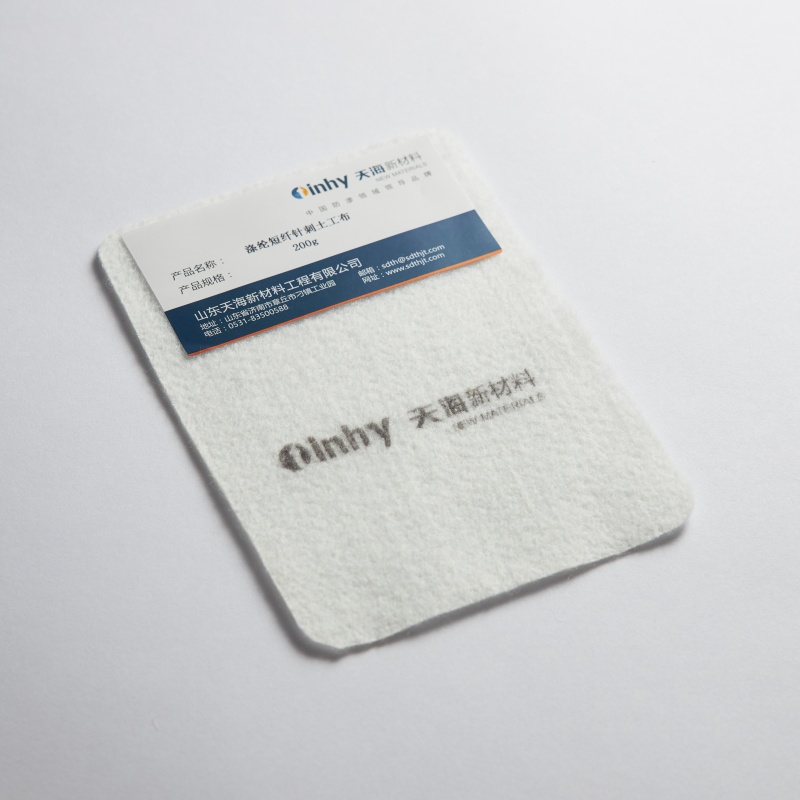
  • PET nonwoven geotextile
  • Woven geotextile
  • Filament geotextile
  • Staple-fiber geotextile
  • Customized mass per unit area
  • Customized roll dimensions

The appropriate product should be selected according to the required function and project specification rather than GSM alone.

Specification-Driven Product Selection

Different projects require different geotextile characteristics.

For example, a drainage project may place greater emphasis on hydraulic properties, while a road separation application may require a combination of tensile strength, puncture resistance, and filtration performance.

Tinhy can work with buyers to review requirements such as:

  • Geotextile type
  • Polymer material
  • Mass per unit area
  • Tensile strength
  • Elongation
  • Puncture resistance
  • AOS
  • Permittivity
  • Water flow
  • Roll dimensions

This helps buyers match the product to the actual engineering requirement.

Quality Control and Testing

Geotextile quality should be verified through measurable product properties and appropriate testing.

For procurement projects, buyers can request relevant product data, factory testing information, and third-party test documentation where required.

Tinhy’s manufacturing and testing processes are designed to support quality control from raw materials through production and finished-product inspection.

Customized Supply for International Projects

Geotextile procurement often involves requirements that differ from standard catalog products.

Depending on the project, buyers may require:

  • Specific GSM
  • Specific width
  • Specific roll length
  • Special packaging
  • Private labeling
  • Project-specific documentation
  • Container loading requirements

Customization can be particularly useful for distributors, contractors, and overseas infrastructure projects.

Best for

International buyers looking for specification-based geotextile supply, customized product configurations, technical documentation, and long-term export cooperation.

Quick Comparison of 7 Geotextile Manufacturers

Manufacturer / Brand Product Focus Common Applications Procurement Consideration
TenCate Engineered geosynthetics Roads, stabilization, reinforcement Technical and engineering support
HUESKER Geotextiles and reinforcement Roads, filtration, stabilization Specialized geosynthetic solutions
Fibertex Nonwoven geotextiles Drainage, filtration Nonwoven product expertise
GSE Environmental Environmental geosynthetics Landfills, containment Environmental system applications
CETCO Environmental and geotechnical systems Containment, drainage, waterproofing Integrated system approach
DuPont Engineered materials Application-dependent Materials expertise and regional availability
Tinhy Geosynthetics Woven & nonwoven geotextiles and other geosynthetics Roads, drainage, filtration, protection Customized supply and export support

Important: This table is a practical comparison framework rather than an independent laboratory ranking. Actual product suitability should be determined from the specific product datasheet, test reports, design requirements, and applicable standards.

How to Choose the Right Geotextile Manufacturer

Choosing a manufacturer becomes easier when the purchasing process starts with the project specification.

Step 1: Define the Main Function

Determine whether the geotextile is primarily required for:

  • Separation
  • Filtration
  • Drainage
  • Reinforcement
  • Protection
  • Erosion control

A product designed for one function may not automatically be suitable for another.

Step 2: Define the Required Material

Common options include:

PP geotextile: Frequently used for general civil engineering, drainage, filtration, and separation applications.

PET geotextile: Often selected when particular mechanical or dimensional characteristics are required.

The choice should be based on the project’s environmental and engineering conditions.

Step 3: Establish the Technical Requirements

Instead of asking only:

“How much is 200g geotextile?”

A professional RFQ should provide the required properties where possible.

For example:

  • Mass per unit area
  • Tensile strength
  • Puncture resistance
  • AOS
  • Permittivity
  • Water flow rate
  • Roll width
  • Roll length
  • Applicable test standards

This allows manufacturers to quote comparable products.

Step 4: Request Technical Documentation

Before placing a large order, request the relevant:

  • Technical datasheet
  • Test reports
  • Quality certificates
  • Product specifications
  • Packaging information
  • Sample, when appropriate

Compare the documentation with the project specification rather than comparing price alone.

Step 5: Evaluate Production and Delivery

For international procurement, confirm:

  • Production lead time
  • Available capacity
  • Packaging
  • Container loading
  • Shipping port
  • Export documentation
  • Communication during production

A technically suitable product is only useful if it can arrive according to the construction schedule.

Woven vs. Nonwoven Geotextile

Property Woven Geotextile Nonwoven Geotextile
Structure Interlaced yarns Random fiber structure
Typical strength Higher in many grades Varies by product
Filtration Application-dependent Commonly used
Drainage Application-dependent Commonly used
Separation Yes Yes
Reinforcement Common application Limited/application-dependent
Protection Depends on grade Common application
Typical materials PP, PET PP, PET

The right choice depends on the required mechanical and hydraulic properties rather than simply whether the product is woven or nonwoven.

What Documents Should You Request From a Geotextile Manufacturer?

For a construction or infrastructure project, consider requesting:

  1. Product datasheet
  2. Factory test report
  3. Relevant third-party test report
  4. Applicable certifications
  5. Test methods
  6. Roll dimensions
  7. Packaging details
  8. Quality-control information
  9. Sample, if required
  10. Declaration or compliance documentation required by the project

For large projects, the technical submittal should be reviewed before mass production.

Common Mistakes When Buying Geotextile

Choosing by GSM Alone

A 200 g/m² geotextile from two different products may have different mechanical and hydraulic properties.

GSM should be treated as one specification, not the complete product specification.

Using the Same Geotextile for Every Application

A drainage filter, road separation layer, reinforcement product, and geomembrane protection layer may require different properties.

Ignoring AOS and Permeability

For filtration applications, hydraulic properties are often just as important as tensile strength.

Not Checking Test Methods

Performance values should always be reviewed together with the relevant test method.

Comparing Only Price

The lowest price per square meter may not represent the lowest total procurement cost if the product does not meet the design specification or causes installation and replacement problems.

Frequently Asked Questions

What is a geotextile manufacturer?

A geotextile manufacturer produces geotextile materials and controls processes such as raw material preparation, fiber or yarn production, fabric formation, finishing, testing, and quality inspection.

How do I choose a geotextile manufacturer?

Start with your project function and technical specification. Then compare product performance, quality control, documentation, manufacturing capability, customization, lead time, and logistics.

What is the difference between woven and nonwoven geotextile?

Woven geotextiles are made by interlacing yarns and are commonly used where mechanical strength and stabilization are important. Nonwoven geotextiles are formed from fibers and are widely used for filtration, drainage, separation, and protection.

Can geotextile manufacturers provide customized products?

Many manufacturers can customize parameters such as mass per unit area, roll width, roll length, material, packaging, and other product configurations, depending on production capability.

What information should I provide when requesting a geotextile quotation?

Provide the application, required geotextile function, material preference, GSM, required mechanical or hydraulic properties, roll dimensions, total quantity, destination, and applicable standards.

What certifications should I check?

The appropriate certifications depend on the project and market. Instead of looking for a single universal certification, confirm which standards, test methods, and compliance documents are required by the project specification.

Is a cheaper geotextile always better for procurement?

Not necessarily. A meaningful comparison should consider whether the products have equivalent specifications, test methods, quality documentation, roll dimensions, and delivery conditions.

Conclusion

The right geotextile manufacturer should be selected according to the requirements of the project—not simply by brand name or price per roll.

TenCate, HUESKER, Fibertex, GSE Environmental, CETCO, and DuPont represent established names across different areas of the geosynthetics and engineered-materials market. Tinhy Geosynthetics provides another option for buyers looking for woven and nonwoven geotextiles, customized specifications, technical documentation, and international supply.

For a procurement comparison, start with the required function—separation, filtration, drainage, reinforcement, or protection—and then compare the technical properties, testing documentation, production capability, and delivery conditions of each supplier.

Need help selecting a geotextile for your project? Share your application, required GSM, roll dimensions, quantity, and technical specification. Tinhy Geosynthetics can help you identify the appropriate geotextile configuration for your project requirements.

Knowledge Base
Share:
info@tinhygeosynthetics.com Bai Jinxi
Consultation

    Get The Latest Product Prices

    Your inquiries are welcomed at any time and please feel free to contact us via email, phone calls, and online chatbox on our site.

    We will definitely give you a reply ASAP after we receive your messages.

      0/180