Resources
Company News
Industry News
Knowledge Base
Project Cases
Innovation
Team Power Fuels TINHY’s Global Geosynthetics Solutions
Tinhy and University of Jinan Celebrate Six Years of Industry–University Collaboration
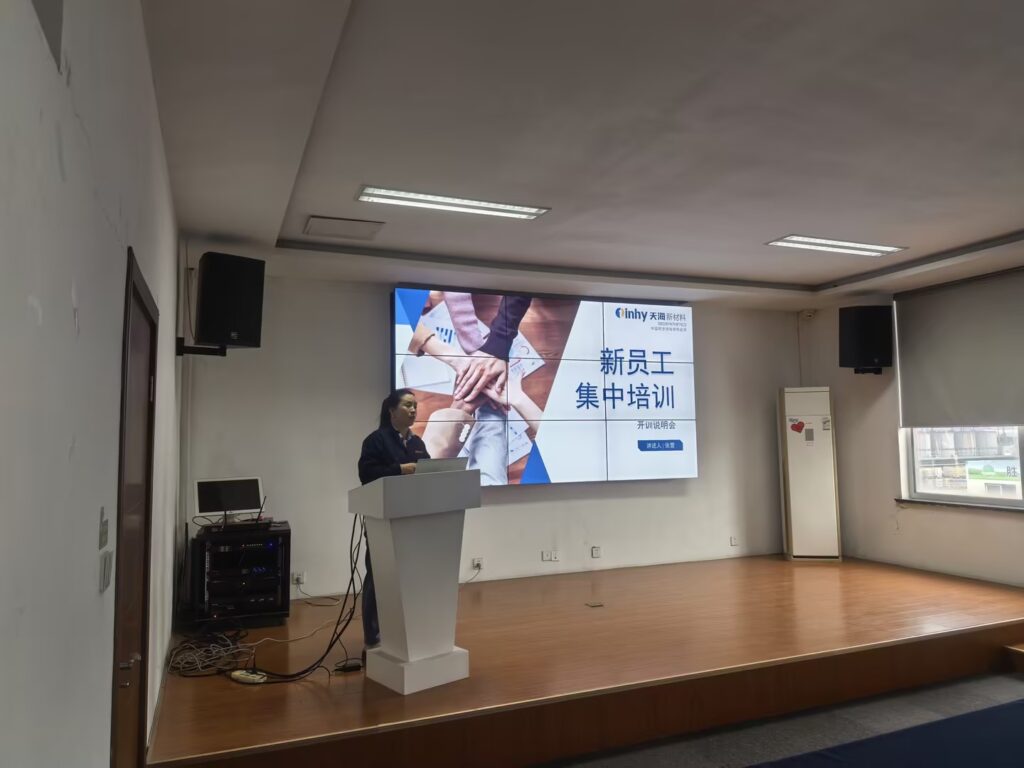
Empowering New Talent, Building the Future: Tinhy Successfully Conducts New Employee Orientation Training
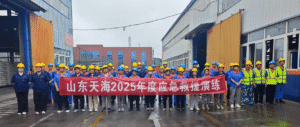
Tinhy Conducts Comprehensive Emergency Drill to Strengthen Workplace Safety Defenses
Company Mid – Year Summary and Team – Building Activity Report
Is geomembrane a geotechnical engineering material?
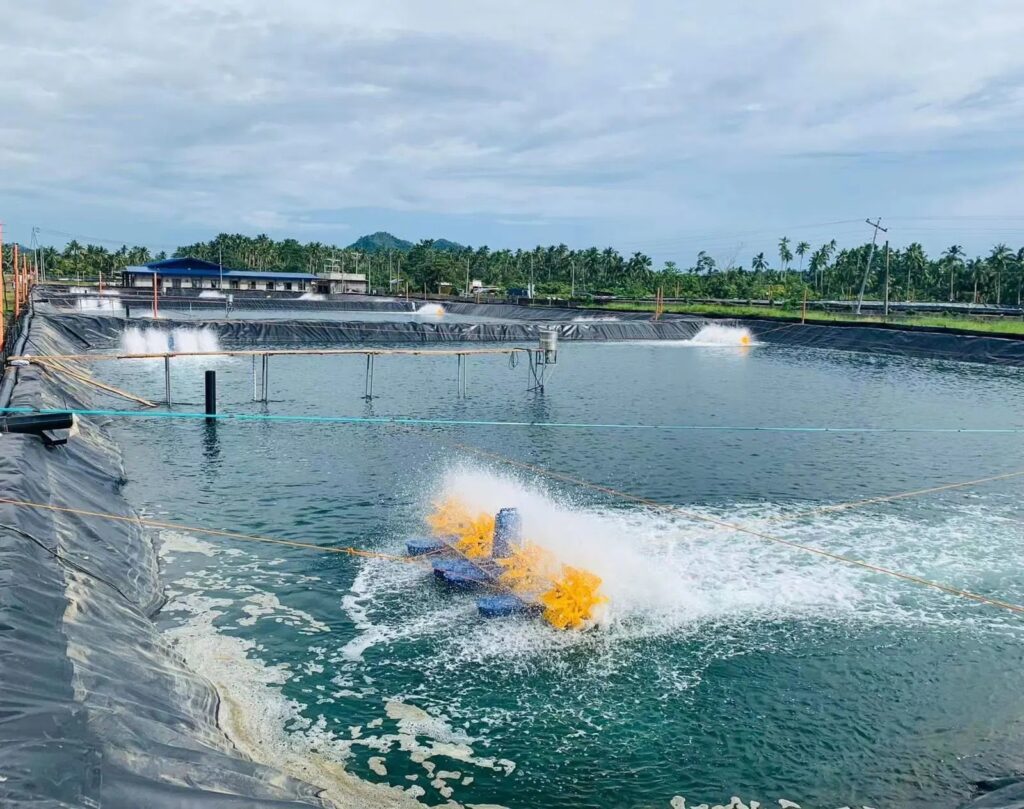
What are the application scenarios of geomembrane?
What are the functions of geotextiles?
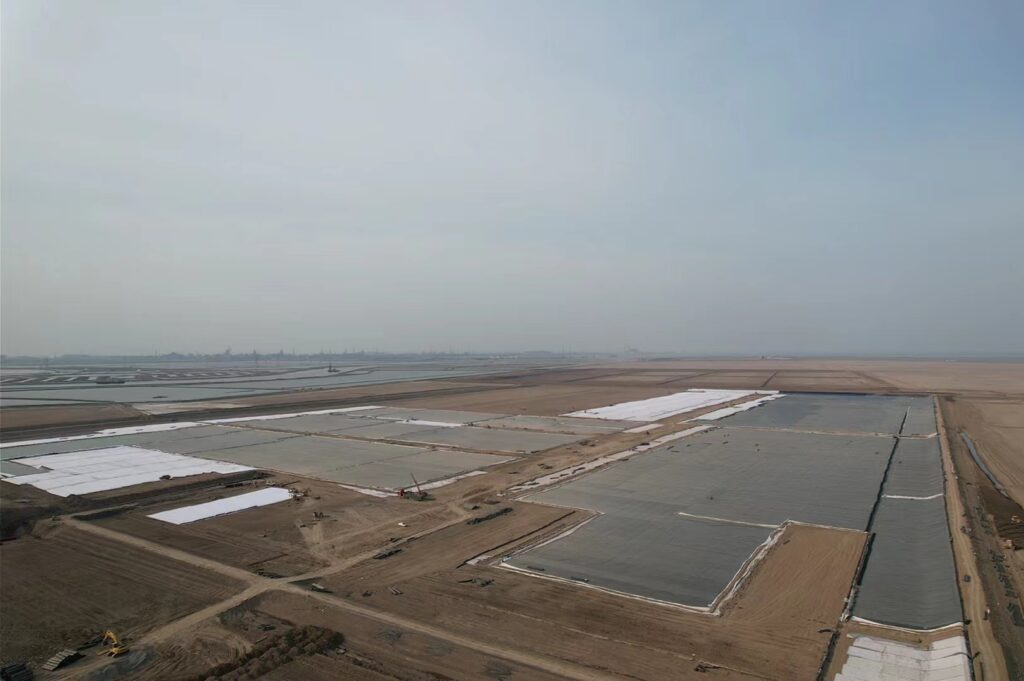
Cómo elegir geomembrana de hdpe en proyectos de ingeniería
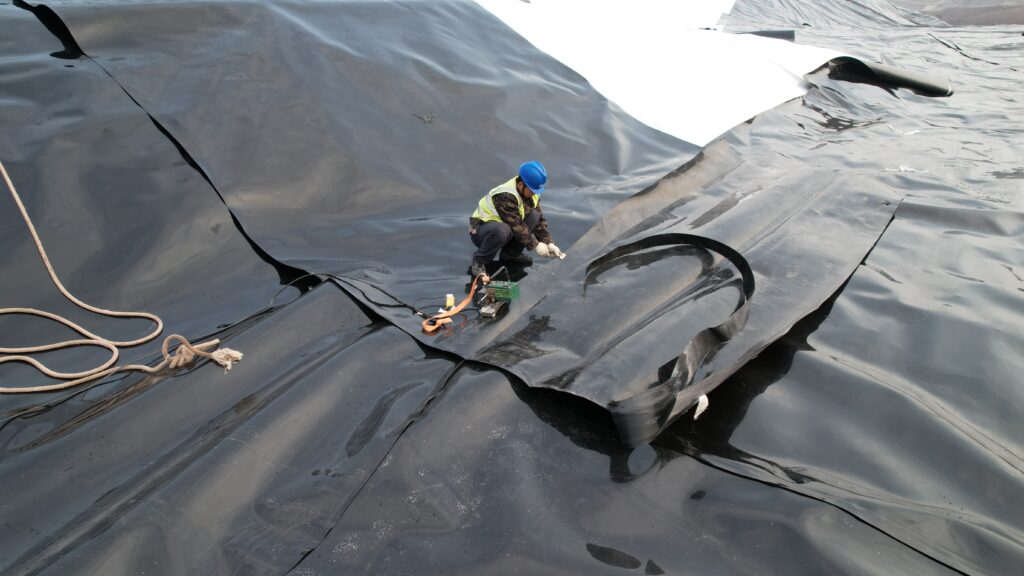
How to choose hdpe geomembrane in engineering projects
China’s Geotechnical Construction Materials Embrace New Opportunities
Tips for Moisture-Proof Storage of Geotextiles
Key Construction Points and Precautions for High-Density Polyethylene Geomembrane
what is pond lining material ?
What is geomembrane?
HDPE geomembrane construction plans and technical measures
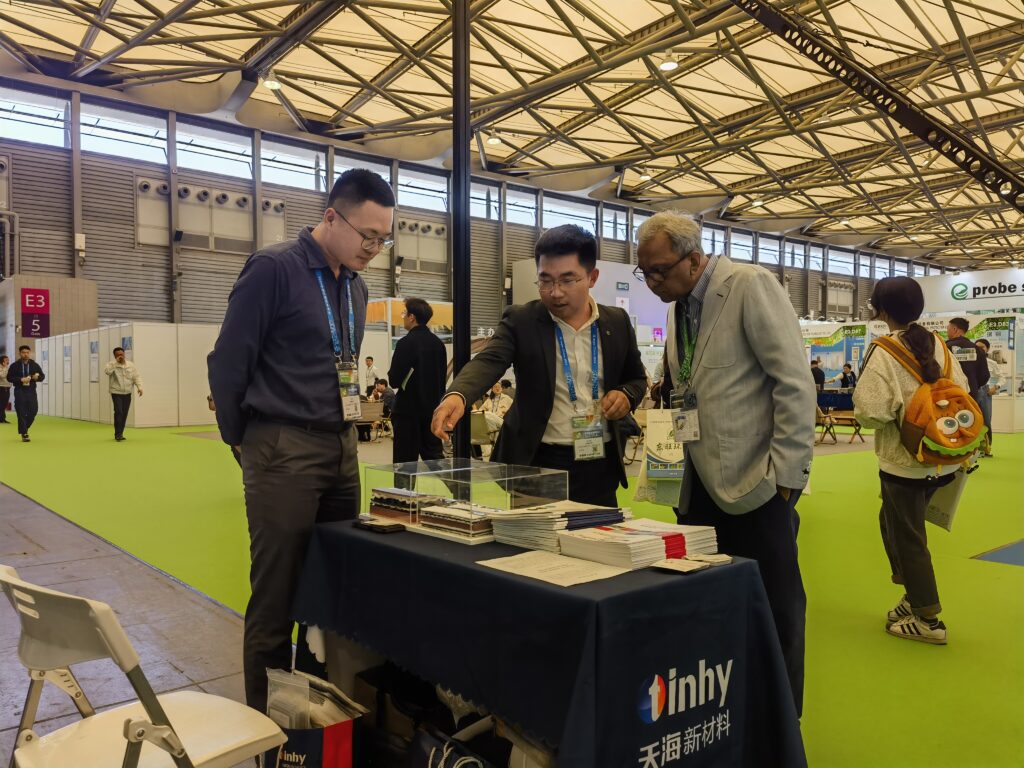
What quality tests do HDPE geomembranes need to do?
Tinhy’s MDS® Drainage Solution
Installation Robots
7 PVC Geomembrane Manufacturers: Products, Quality & Buying Guide
6 HDPE Pond Liner Suppliers: Products, Quality & Buying Guide
10 Geomembrane Options: Types, Manufacturers & Buying Guide
6 LLDPE Geomembrane Manufacturers: Products, Quality & Buying Guide
7 Best Geotextile Manufacturers: Products, Quality & Buying Guide
Woven Geotextile Fabric Price: Cost Guide & Buying Factors
The 10 Best Film Geotextiles Review: Types, Specifications & Buying Guide
The 10 Best 500 Micron Geomembrane Options: Properties, Applications & Buying Guide
The 10 Best Film Geotextiles Review: Types, Performance & Buying Guide
Geotextile Installation: Step-by-Step Guide for Construction Projects
Should HDPE or PVC be used to install geomembrane in reservoirs?
What is the price of geomembrane?
Material characteristics of three different geomembranes
Esquema de construcción de geomembrana de HDPE y medidas técnicas
hdpe geomembrane pond liner in Congo (DRC)
How to lay and weld HDPE geomembrane?
HDPE geomembrane 0.2-4.0mm
HOME ABOUT PRODUCTS APPLICATION CONTENTUS RESOURCES
Home Resources Knowledge Base 7 PVC Geomembrane Manufacturers: Products, Quality & Buying Guide

7 PVC Geomembrane Manufacturers: Products, Quality & Buying Guide

time:September 23, 2026 Views:3

Choosing the right PVC geomembrane manufacturer is an important step for water containment, pond lining, canal lining, environmental protection, wastewater management, and other civil engineering projects.

PVC geomembranes are known for their flexibility, conformability, and relatively easy handling compared with more rigid geomembrane materials. However, manufacturers differ in material formulation, reinforcement options, fabrication capability, available thicknesses, testing, and technical support.

This guide reviews 7 PVC geomembrane manufacturers to consider when sourcing PVC liner products for commercial and engineering projects.

Note: The manufacturers below are presented as a practical industry guide rather than an independent laboratory ranking. Product specifications and availability can change, so buyers should confirm current technical data sheets and project-specific requirements directly with each manufacturer.

Table of Contents

What Is a PVC Geomembrane?

A PVC geomembrane is a flexible, low-permeability synthetic membrane made primarily from polyvinyl chloride and formulated with plasticizers and stabilizers.

Compared with relatively rigid polyethylene geomembranes, PVC is generally easier to fold, handle, and conform to irregular surfaces. This makes flexible PVC geomembrane liners useful for projects where site geometry and installation flexibility are important.

PVC geomembranes may be supplied as:

  • Non-reinforced PVC geomembranes
  • Reinforced PVC geomembranes
  • Factory-fabricated panels
  • Roll-stock membranes
  • Custom-fabricated liners

The appropriate material depends on the project, including the required thickness, chemical environment, exposure conditions, subgrade, installation method, and expected service conditions.

Key Features of PVC Geomembrane Liners

When comparing PVC geomembrane suppliers, buyers should look beyond the polymer name and evaluate the complete product specification.

1. Flexibility

PVC is widely used where the liner needs to conform to curves, corners, slopes, and irregular surfaces.

2. Weldability and Seaming

PVC liners can be joined using appropriate welding or bonding methods depending on the product formulation and project requirements.

The seam method should be confirmed with the manufacturer before installation.

3. Custom Fabrication

Some PVC geomembrane manufacturers can fabricate large panels before shipment.

Factory fabrication can reduce the number of field seams required during installation.

4. Chemical Compatibility

PVC is compatible with many water and environmental containment applications, but chemical resistance should always be checked against the actual liquid being contained.

5. Thickness Options

PVC geomembranes are available in different thicknesses, commonly specified in millimeters or mil.

For example:

30 mil ≈ 0.76 mm

Thickness selection should be based on project conditions rather than simply choosing the thinnest or thickest available liner.

PVC Geomembrane vs. HDPE Geomembrane

PVC and HDPE are both widely used geomembrane materials, but their characteristics are different.

Factor PVC Geomembrane HDPE Geomembrane
Flexibility High Moderate
Conformability Excellent More rigid
Handling Relatively easy More demanding
Typical seaming Welding/bonding depending on product Thermal fusion welding
Chemical resistance Good, application-dependent Generally excellent
Large-scale containment Suitable for selected projects Widely used
Irregular surfaces Good conformability Requires careful deployment
Factory fabrication Available from many suppliers Available from selected suppliers/fabricators
Thickness selection Project dependent Project dependent

There is no universal winner between PVC and HDPE.

For projects with demanding chemical exposure, long-term containment requirements, or heavy mechanical loading, HDPE may be considered. For projects where flexibility and conformability are particularly important, PVC can be an appropriate option.

The final material should be selected according to the engineering specification and chemical compatibility requirements.

7 PVC Geomembrane Manufacturers to Consider

1. Solmax — Global

Solmax is a global geosynthetics manufacturer with a broad geomembrane portfolio.

Its current GSE product range includes HDPE, LLDPE, and PVC liner products. Solmax also provides custom fabrication capabilities through its manufacturing and fabrication operations.

Product Focus

  • PVC geomembranes
  • HDPE geomembranes
  • LLDPE geomembranes
  • Geotextiles
  • Drainage products
  • Composite containment systems

Why Consider Solmax?

Solmax can be relevant for buyers looking for a broad geosynthetics portfolio and access to large-scale containment products.

Its GSE PVC liner products are positioned for applications including water, environmental containment, civil engineering, and related projects.

2. Layfield Group — Canada

Layfield Group is a Canadian manufacturer and fabricator of flexible geomembrane systems.

Its PVC geomembrane products are designed for applications requiring a flexible impermeable barrier. Layfield states that its PVC materials meet ASTM D7176, the standard specification for non-reinforced PVC geomembranes.

Product Focus

  • PVC geomembranes
  • Environmental containment liners
  • Custom-fabricated panels
  • Pipe boot accessories
  • Geosynthetic containment systems

PVC Specifications

Layfield publishes technical information for several PVC thicknesses, including approximately 20, 30, and 40 mil products.

Its technical data also covers tensile strength, elongation, tear strength, dimensional stability, hydrostatic resistance, and other material properties.

Why Consider Layfield?

Layfield may be suitable for buyers who require PVC geomembrane materials together with large-panel fabrication and containment accessories.

3. Plastatech — USA

Plastatech is a U.S. manufacturer of flexible membranes, films, and geomembranes.

The company specifically develops PVC geomembranes for flexibility and ease of handling and offers both reinforced and non-reinforced membrane options.

Product Focus

  • PVC geomembranes
  • Industrial-grade membranes
  • Fish-grade membranes
  • Oil-resistant membranes
  • Reinforced PVC
  • Non-reinforced PVC
  • Custom fabrication

PVC Product Range

Plastatech lists several PVC geomembrane product families, including:

  • Plastatech IG
  • Plastatech FG
  • Plastatech OR
  • Plastatech Tech 5
  • Plastatech Tech 7

The company states that its PVC geomembranes can be factory- or field-welded by qualified fabricators and installers.

Why Consider Plastatech?

Plastatech can be considered when a project requires different PVC formulations for industrial, aquaculture, oil-resistant, or other specialized applications.

4. Environmental Protection, Inc. (EPI) — USA

Environmental Protection, Inc. (EPI) has specialized in geomembrane fabrication since 1980.

EPI focuses strongly on PVC geomembrane fabrication, seam testing, and custom-fabricated panels. The company states that it works with ASTM and industry organizations on PVC seam specifications including ASTM D7177 and ASTM D7408.

Product Focus

  • Flexible PVC geomembranes
  • PVC pond liners
  • PVC reservoir liners
  • Factory-fabricated PVC panels
  • XR reinforced geomembranes
  • Custom geomembrane fabrication

Available PVC Thicknesses

EPI lists PVC specifications ranging from approximately:

  • 10 mil
  • 20 mil
  • 30 mil
  • 40 mil
  • 50 mil
  • 60 mil

Its PVC product information also references ASTM D7176 for material specifications and ASTM D7408 for factory and field seams.

Why Consider EPI?

EPI is particularly relevant for projects where factory-fabricated PVC panels and seam quality control are important.

The company states that its PVC liners can be fabricated into large panels before shipment to the project site.

5. Titan Environmental — Canada / USA

Titan Environmental provides geomembrane products and fabricated liner systems for environmental, water, agricultural, industrial, and containment projects.

Its current PVC geomembrane range includes 20, 30, 40, 50, and 60 mil products, with the TE-PVC series covering approximately 20–60 mil.

Product Focus

  • PVC geomembranes
  • HDPE geomembranes
  • LLDPE geomembranes
  • RPP geomembranes
  • XR reinforced geomembranes
  • Prefabricated geomembrane panels

PVC Applications

Titan lists PVC geomembranes for applications including:

  • Irrigation ponds
  • Canals
  • Reservoirs
  • Aquaculture
  • Wastewater
  • Secondary containment
  • Agricultural containment
  • Potable water reservoirs
  • Industrial containment
  • Tank lining

Why Consider Titan?

Titan can be relevant when a project requires both PVC liner materials and prefabricated geomembrane panels.

6. AGRU America — USA

AGRU America is a major geosynthetics manufacturer serving civil engineering and containment projects.

Its U.S. manufacturing operations cover a broad range of geosynthetic materials and geomembrane systems for tunnels, water systems, dams, landfills, and other civil engineering applications.

Product Focus

  • Geomembranes
  • Structured geomembranes
  • Geocomposites
  • Geosynthetic clay liners
  • Geotextiles
  • Civil engineering containment systems

AGRU’s product portfolio includes structured geomembrane systems such as SUPER GRIPNET® and MICROSPIKE®, which are designed for applications where interface friction and slope stability are important.

Why Consider AGRU?

AGRU may be worth evaluating when the project requires a broader geosynthetic system rather than a standalone PVC sheet.

When specifying a PVC product, buyers should request the current PVC product data sheet and confirm the exact polymer, thickness, reinforcement, and application suitability.

7. Tinhy Geosynthetics — China

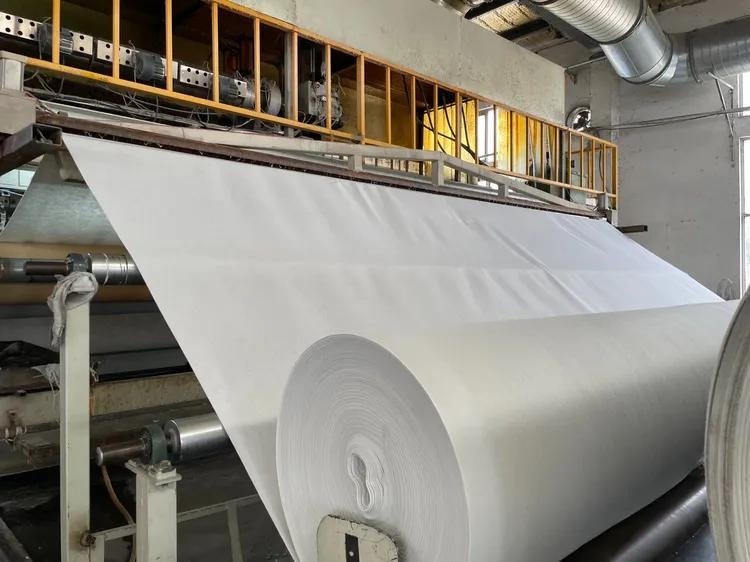
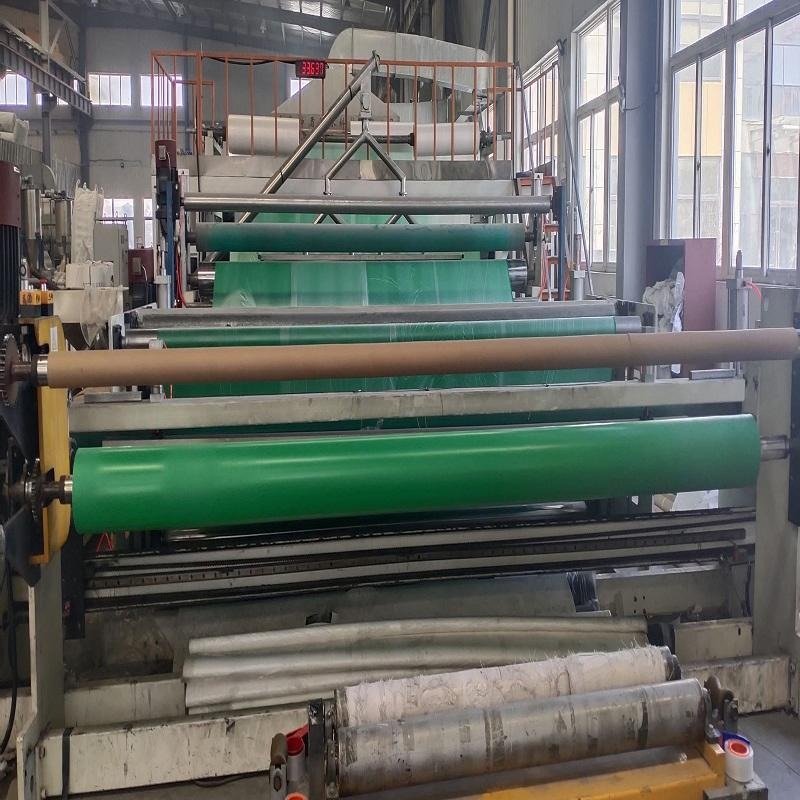
Tinhy Geosynthetics is a China-based geosynthetics manufacturer with a product portfolio covering geomembranes, geotextiles, GCL, drainage products, and related materials.

Its current PVC geomembrane product is described as a flexible PVC waterproof sheet with strong weldability and stable performance.

PVC Geomembrane Specifications

Tinhy’s current PVC geomembrane range includes:

Specification Available Range
Thickness 0.5–3.0 mm
Roll Width 1–5.8 m
Roll Length 50–150 m
Colors Black, Blue, Green, White
Test Methods ASTM, ISO, EN, GB/T, GOST, DIN

Specifications can be customized according to project requirements.

Manufacturing Capability

Tinhy was established in 2002 and has developed a large-scale geosynthetics manufacturing operation.

Its current company information highlights:

  • Large manufacturing facilities
  • Multiple production lines
  • In-house testing capability
  • International quality certifications
  • Geomembrane and geotextile production
  • Customized specifications for engineering projects

For buyers comparing PVC geomembrane suppliers in China, Tinhy can be considered when project requirements include customized dimensions, thickness, colors, testing methods, and related geosynthetic products.

Why Consider Tinhy?

One advantage of working with a full-range geosynthetics manufacturer is the ability to source complementary materials from the same supplier.

Depending on the project, this may include:

  • PVC geomembrane
  • HDPE geomembrane
  • LLDPE geomembrane
  • Geotextile
  • GCL
  • Drainage net
  • Drainage composite
  • Other geosynthetic materials

For PVC geomembrane projects, buyers should confirm the current technical data sheet, required standards, chemical compatibility, roll dimensions, and testing requirements before ordering.

PVC Geomembrane Manufacturer Comparison

Manufacturer Country / Region PVC Geomembrane Custom Fabrication Main Strength
Solmax Global Large geosynthetics portfolio
Layfield Group Canada PVC containment and fabrication
Plastatech USA Flexible PVC formulations
EPI USA PVC fabrication and seam QC
Titan Environmental Canada / USA PVC + prefabricated panels
AGRU America USA ✓* Integrated geosynthetic systems
Tinhy Geosynthetics China PVC + broad geosynthetic portfolio

*Product availability should be confirmed against the current project-specific AGRU product range.

How to Choose a PVC Geomembrane Manufacturer

Selecting a manufacturer should be based on project requirements rather than brand name alone.

1. Confirm the Polymer

Ask whether the material is:

  • PVC
  • Reinforced PVC
  • Non-reinforced PVC
  • PVC alloy or specialty formulation

Different formulations can have different mechanical and chemical properties.

2. Confirm Thickness

Common PVC liner thicknesses may include:

  • 0.5 mm
  • 0.75 mm
  • 1.0 mm
  • 1.2 mm
  • 1.5 mm
  • 2.0 mm

Thickness should be selected according to the design conditions.

Consider:

  • Subgrade condition
  • Puncture risk
  • Installation method
  • Traffic or construction loads
  • Chemical exposure
  • Exposure to sunlight
  • Required service conditions

3. Check Chemical Compatibility

Do not select PVC solely because the project is described as a “water containment” application.

If the liner will contain:

  • Industrial wastewater
  • Chemicals
  • Mining solutions
  • Oils
  • Brine
  • Agricultural chemicals
  • Process fluids

request a chemical compatibility assessment from the supplier.

4. Review Seam Requirements

Ask the manufacturer:

  • What welding method is recommended?
  • Is field welding required?
  • Can panels be factory fabricated?
  • What seam testing method is recommended?
  • What quality-control documentation is available?

Seam quality can be just as important as membrane quality.

5. Request Technical Documentation

For B2B purchasing, request:

  • Technical data sheet
  • Material specification
  • Test reports
  • Factory QC records
  • Applicable standards
  • Chemical compatibility information
  • Installation recommendations
  • Packaging details
  • Roll dimensions
  • Warranty information, where applicable

What Is a 30 Mil PVC Liner?

A 30 mil PVC liner has a nominal thickness of approximately:

30 mil ≈ 0.76 mm

30 mil is a commonly specified PVC liner thickness, but it should not automatically be considered suitable for every project.

For example, EPI publishes a dedicated 30 mil PVC specification, while Layfield’s technical data includes a PVC 30 product with a minimum thickness of approximately 28.5 mil / 0.72 mm.

When comparing 30 mil PVC liners, check more than nominal thickness.

Important parameters include:

  • Tensile strength
  • Elongation
  • Tear resistance
  • Puncture resistance
  • Dimensional stability
  • Hydrostatic resistance
  • Chemical compatibility
  • Seam performance
  • UV exposure requirements

PVC Geomembrane Installation

Proper installation is essential regardless of which manufacturer supplies the material.

A typical PVC geomembrane installation may include:

Step 1: Prepare the Subgrade

Remove rocks, sharp objects, debris, roots, and other materials that could damage the liner.

Step 2: Install Protective Layers

Where required, install a suitable geotextile or other protection layer.

Step 3: Deploy the PVC Geomembrane

Unroll the material carefully and avoid dragging it over rough surfaces.

Step 4: Position and Fix the Liner

Allow the liner to conform naturally to the prepared surface while controlling wrinkles and excessive stress.

Step 5: Weld or Seam the Panels

Use the manufacturer’s recommended equipment, temperature, pressure, and procedure.

Step 6: Inspect the Seams

Perform visual inspection and the required seam testing.

Step 7: Complete Penetrations and Details

Pay particular attention to:

  • Pipes
  • Corners
  • Anchors
  • Inlets
  • Outlets
  • Transitions
  • Edge details

Step 8: Final Inspection

Check the entire liner system before placing cover material, water, soil, or other materials over the membrane.

Common Applications of PVC Geomembranes

PVC geomembranes can be used in a wide range of containment and waterproofing projects.

Water Containment

  • Irrigation ponds
  • Reservoirs
  • Canals
  • Water features
  • Agricultural water storage

Aquaculture

  • Fish ponds
  • Aquaculture tanks
  • Hatchery systems
  • Shrimp ponds

Environmental Projects

  • Wastewater lagoons
  • Secondary containment
  • Landfill-related systems
  • Remediation projects

Industrial Applications

  • Process water
  • Tank liners
  • Industrial containment
  • Chemical containment, subject to compatibility

Civil Engineering

  • Canal lining
  • Water infrastructure
  • Foundation waterproofing
  • Containment structures

The correct material and thickness depend on the specific project conditions.

PVC Geomembrane Buying Checklist

Before placing a purchase order, confirm the following:

Material

  • PVC type
  • Reinforced or non-reinforced
  • Virgin or recycled content, if relevant
  • Color

Dimensions

  • Thickness
  • Roll width
  • Roll length
  • Panel dimensions

Performance

  • Tensile strength
  • Elongation
  • Tear resistance
  • Puncture resistance
  • Dimensional stability
  • Hydrostatic resistance

Chemical Compatibility

  • Contained liquid
  • Concentration
  • Temperature
  • Exposure duration

Installation

  • Welding method
  • Seam requirements
  • Factory fabrication
  • Field installation requirements

Quality Documentation

  • Technical data sheet
  • Factory test report
  • Third-party testing
  • Applicable standards
  • Inspection requirements

Logistics

  • Roll weight
  • Packaging
  • Container loading
  • Delivery terms
  • Production lead time

Questions to Ask PVC Geomembrane Suppliers

Before comparing quotations, ask each supplier the same questions:

  1. What PVC formulation do you use?
  2. Is the geomembrane reinforced or non-reinforced?
  3. What thicknesses are available?
  4. What are the standard roll dimensions?
  5. Can you provide a current technical data sheet?
  6. Which testing standards do you follow?
  7. Can you provide factory test reports?
  8. Can you provide third-party test reports?
  9. Can the liner be factory fabricated?
  10. What welding method do you recommend?
  11. Is geotextile protection recommended for my project?
  12. Can you provide chemical compatibility information?
  13. What packaging and container-loading options are available?
  14. Can you supply samples before bulk production?
  15. Can you customize thickness, width, length, and color?

FAQ About PVC Geomembrane Manufacturers

What is the best PVC geomembrane manufacturer?

There is no single manufacturer that is suitable for every project.

The right supplier depends on factors such as PVC formulation, thickness, fabrication capability, testing, chemical compatibility, logistics, and project requirements.

What thickness is PVC geomembrane available in?

PVC geomembranes are available in different thicknesses depending on the manufacturer.

For example, Tinhy’s current PVC geomembrane range covers approximately 0.5–3.0 mm, while other manufacturers publish products in mil-based thickness ranges.

What is 30 mil PVC geomembrane?

30 mil PVC geomembrane is approximately 0.76 mm thick.

It is a commonly specified PVC liner thickness, but suitability depends on the project conditions.

Is PVC geomembrane flexible?

Yes. Flexibility is one of the main characteristics of PVC geomembranes.

This can make PVC suitable for projects involving irregular surfaces, curves, corners, and other areas where conformability is important.

Can PVC geomembrane be welded?

Many PVC geomembrane products can be welded using appropriate methods.

However, the exact welding method depends on the membrane formulation and manufacturer’s recommendations.

Does PVC geomembrane need geotextile underneath?

Not every project requires a geotextile layer.

A protective geotextile may be appropriate when the subgrade contains stones, sharp particles, or other features that could puncture or damage the geomembrane.

The protection system should be determined based on the site conditions.

Is PVC better than HDPE geomembrane?

PVC and HDPE have different characteristics.

PVC generally offers greater flexibility and conformability, while HDPE is widely selected for demanding containment applications because of its chemical resistance, stiffness, and established fusion-welding systems.

The correct choice depends on the project.

How do I choose a PVC geomembrane supplier in China?

When evaluating a PVC geomembrane supplier in China, check:

  • Manufacturing capability
  • Current PVC product specifications
  • Production capacity
  • Quality-control system
  • Testing capability
  • Third-party reports
  • Customization
  • Factory fabrication
  • Export experience
  • Packaging and logistics
  • Technical support

Do not compare suppliers only by price per square meter.

Conclusion

PVC geomembranes remain an important option for projects where flexibility, conformability, waterproofing, and practical installation are important.

The manufacturers covered in this guide include:

  1. Solmax
  2. Layfield Group
  3. Plastatech
  4. Environmental Protection, Inc. (EPI)
  5. Titan Environmental
  6. AGRU America
  7. Tinhy Geosynthetics

The most important step is not simply choosing a well-known brand. Instead, match the PVC geomembrane to the actual project requirements.

Before purchasing, evaluate:

PVC Formulation + Thickness + Chemical Compatibility + Subgrade + Protection + Seaming + Testing + Installation

For B2B projects, buyers should request current technical documentation and confirm the exact product specification before placing a bulk order.

Tinhy Geosynthetics supplies PVC geomembranes in customized thicknesses and dimensions, with its current product range covering approximately 0.5–3.0 mm thickness and 1–5.8 m roll width.

If you are sourcing PVC geomembrane for a pond, reservoir, aquaculture project, wastewater system, mining project, or other containment application, provide the required thickness, dimensions, application, quantity, and technical standard so the appropriate specification can be evaluated.

Knowledge Base
Share:
info@tinhygeosynthetics.com Bai Jinxi
Consultation

    Get The Latest Product Prices

    Your inquiries are welcomed at any time and please feel free to contact us via email, phone calls, and online chatbox on our site.

    We will definitely give you a reply ASAP after we receive your messages.

      0/180