Resources
Company News
Industry News
Knowledge Base
Project Cases
Innovation
Team Power Fuels TINHY’s Global Geosynthetics Solutions
Tinhy and University of Jinan Celebrate Six Years of Industry–University Collaboration
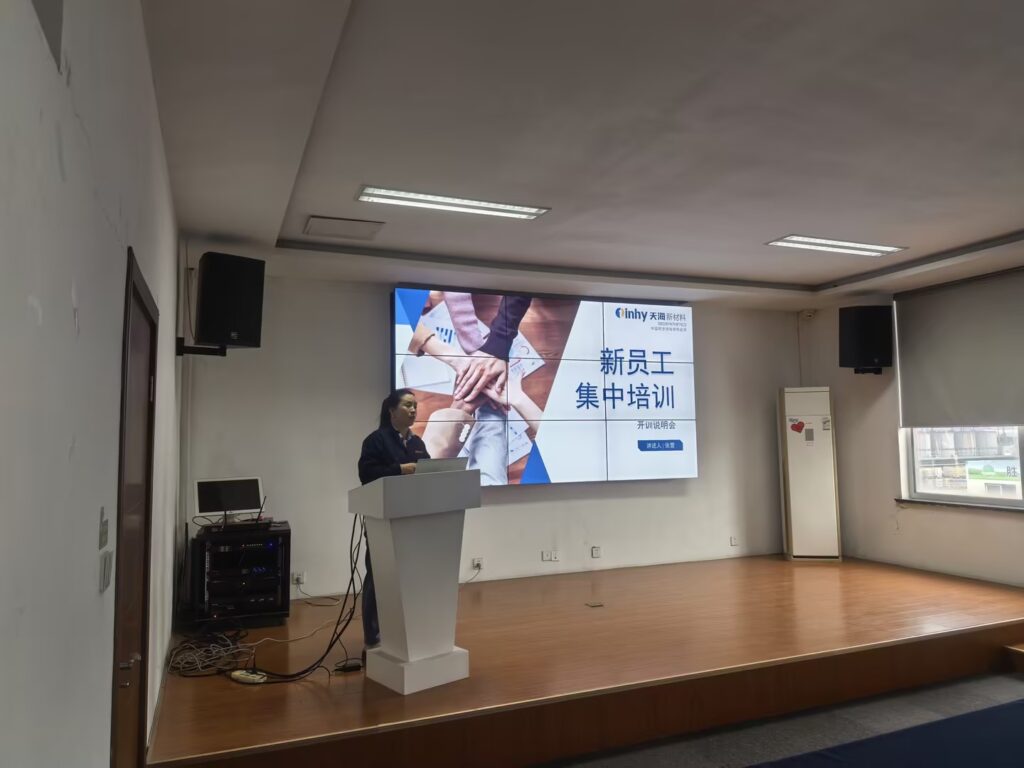
Empowering New Talent, Building the Future: Tinhy Successfully Conducts New Employee Orientation Training
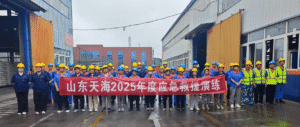
Tinhy Conducts Comprehensive Emergency Drill to Strengthen Workplace Safety Defenses
Company Mid – Year Summary and Team – Building Activity Report
Is geomembrane a geotechnical engineering material?
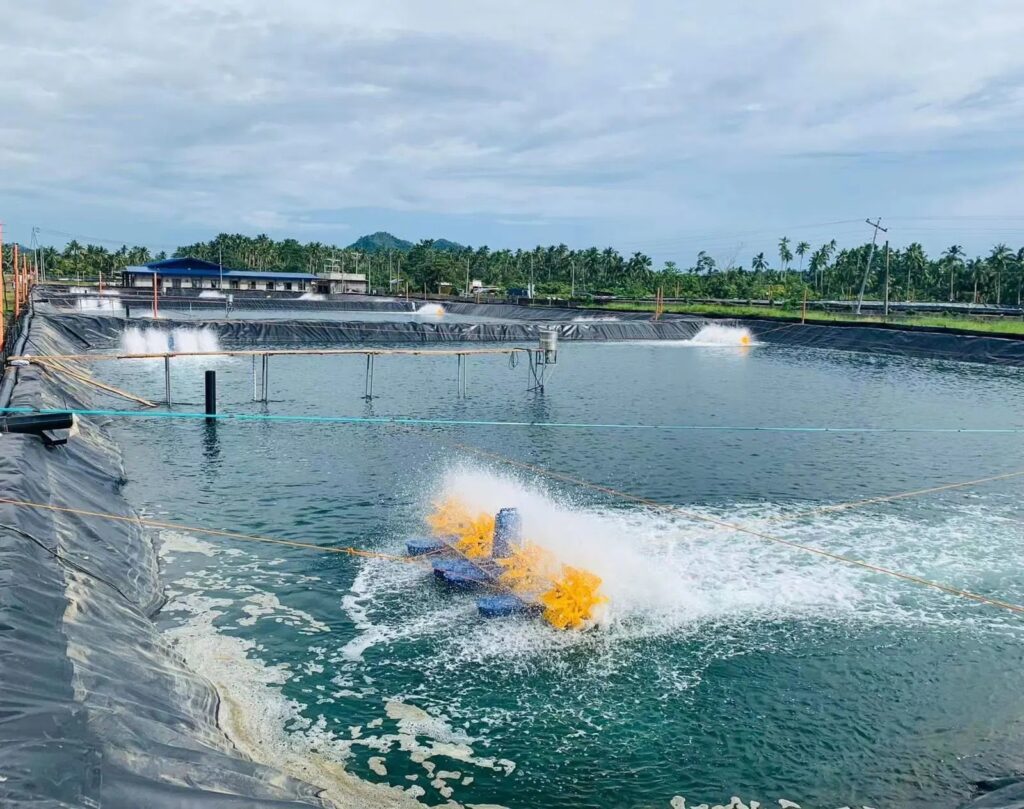
What are the application scenarios of geomembrane?
What are the functions of geotextiles?
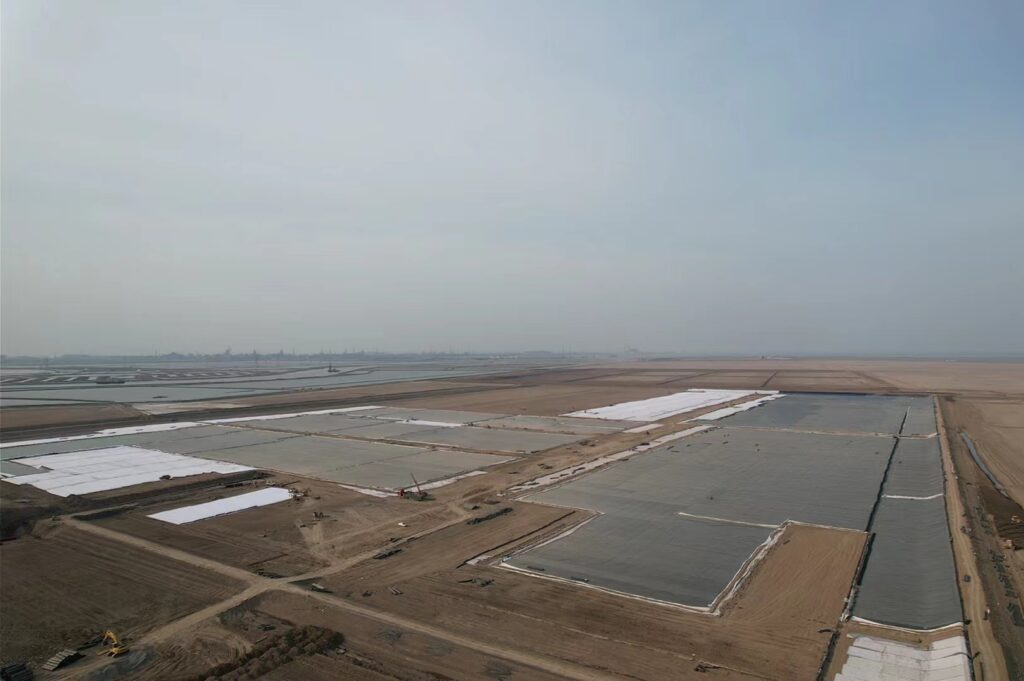
Cómo elegir geomembrana de hdpe en proyectos de ingeniería
How to choose hdpe geomembrane in engineering projects
China’s Geotechnical Construction Materials Embrace New Opportunities
Tips for Moisture-Proof Storage of Geotextiles
Key Construction Points and Precautions for High-Density Polyethylene Geomembrane
what is pond lining material ?
What is geomembrane?
HDPE geomembrane construction plans and technical measures
What quality tests do HDPE geomembranes need to do?
Tinhy’s MDS® Drainage Solution
Installation Robots
The 6 Best Geotextile 300g Review: Heavy-Duty Nonwoven Geotextile for Soil Stabilization
The 6 Best 1000 Micron HDPE Sheets Reviewed in 2026
What Is a 60 Mil Geomembrane? Complete Guide to 1.5mm HDPE Geomembrane (2026)
Top 7 Global Geocomposite Manufacturers in 2026
Top 10 Best 1.5mm HDPE Geomembrane Sheets in 2026 – Expert Review & Buying Guide
Top 7 EPDM Geomembrane Applications and Buying Guide in 2026
The 8 Best Geomembrane 1mm Solutions for Engineering Projects in 2026
How Much Does Geogrid Cost? A Complete Guide to Geogrid Pricing and Selection
Textured HDPE Geomembrane: 8 Powerful Benefits and Applications for Slope & Containment Projects
4 oz Non Woven Geotextile: 7 Powerful Benefits, Applications and Buying Guide
Should HDPE or PVC be used to install geomembrane in reservoirs?
What is the price of geomembrane?
Material characteristics of three different geomembranes
Esquema de construcción de geomembrana de HDPE y medidas técnicas
hdpe geomembrane pond liner in Congo (DRC)
How to lay and weld HDPE geomembrane?
HDPE geomembrane 0.2-4.0mm
HOME ABOUT PRODUCTS APPLICATION CONTENTUS RESOURCES
Home Resources Knowledge Base The 6 Best Geotextile 300g Review: Heavy-Duty Nonwoven Geotextile for Soil Stabilization

The 6 Best Geotextile 300g Review: Heavy-Duty Nonwoven Geotextile for Soil Stabilization

time:August 18, 2026 Views:10

Geotextile 300g, commonly referring to a nonwoven geotextile with a mass per unit area of approximately 300 g/m², is a popular heavy-duty geosynthetic for demanding separation, filtration, drainage, stabilization, and protection applications.

Compared with lighter 150–250 g/m² geotextiles, 300g geotextile provides greater puncture resistance, tensile strength, tear resistance, and construction survivability while maintaining the permeability needed for effective water drainage.

Typical applications include:

  • Heavy-duty road and haul-road stabilization
  • Construction platforms and working pads
  • Gravel roads and parking areas
  • Railway and track-bed stabilization
  • Drainage trenches and French drains
  • Landfill and geomembrane protection
  • Rip-rap and erosion-control systems
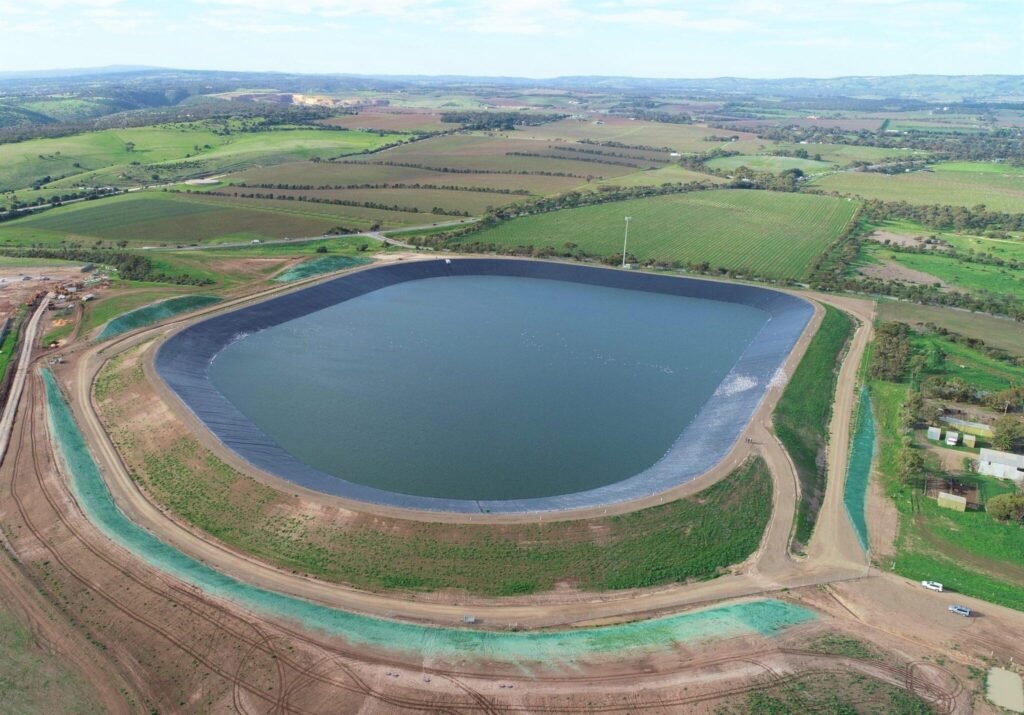
  • Reservoir and pond liner protection

However, not all 300g geotextiles offer the same performance. Fiber type, manufacturing process, tensile strength, CBR puncture resistance, apparent opening size (AOS), permittivity, and roll dimensions can significantly affect project performance.

In this guide, we review 6 widely recognized geotextile products and manufacturers, comparing their typical characteristics and applications. We also introduce Tinhy Geosynthetics’ 300 g/m² nonwoven geotextile as a cost-effective option for international projects.

Table of Contents

1. What Is Geotextile 300g?

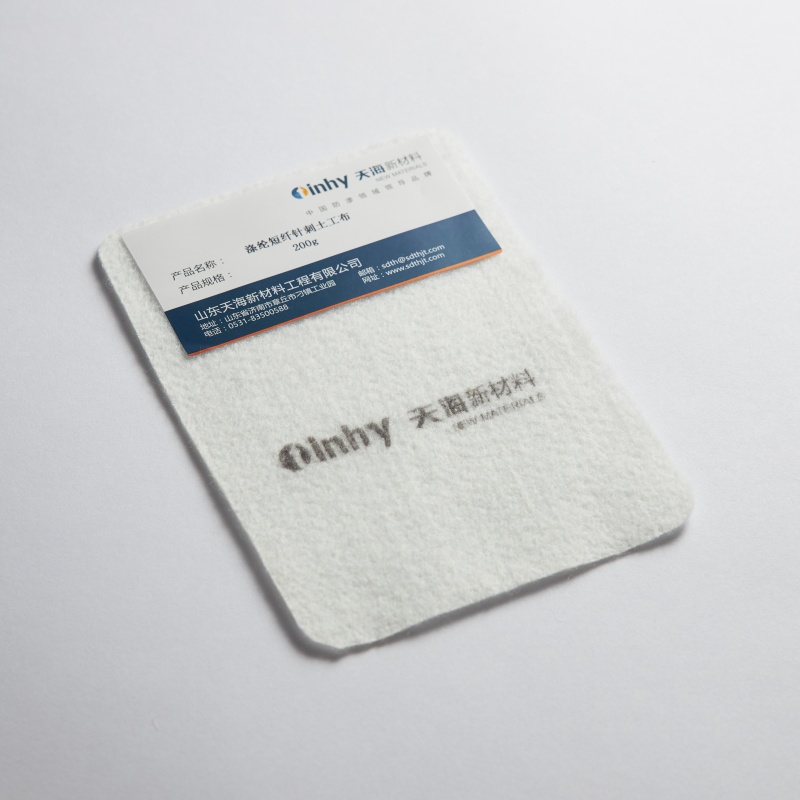
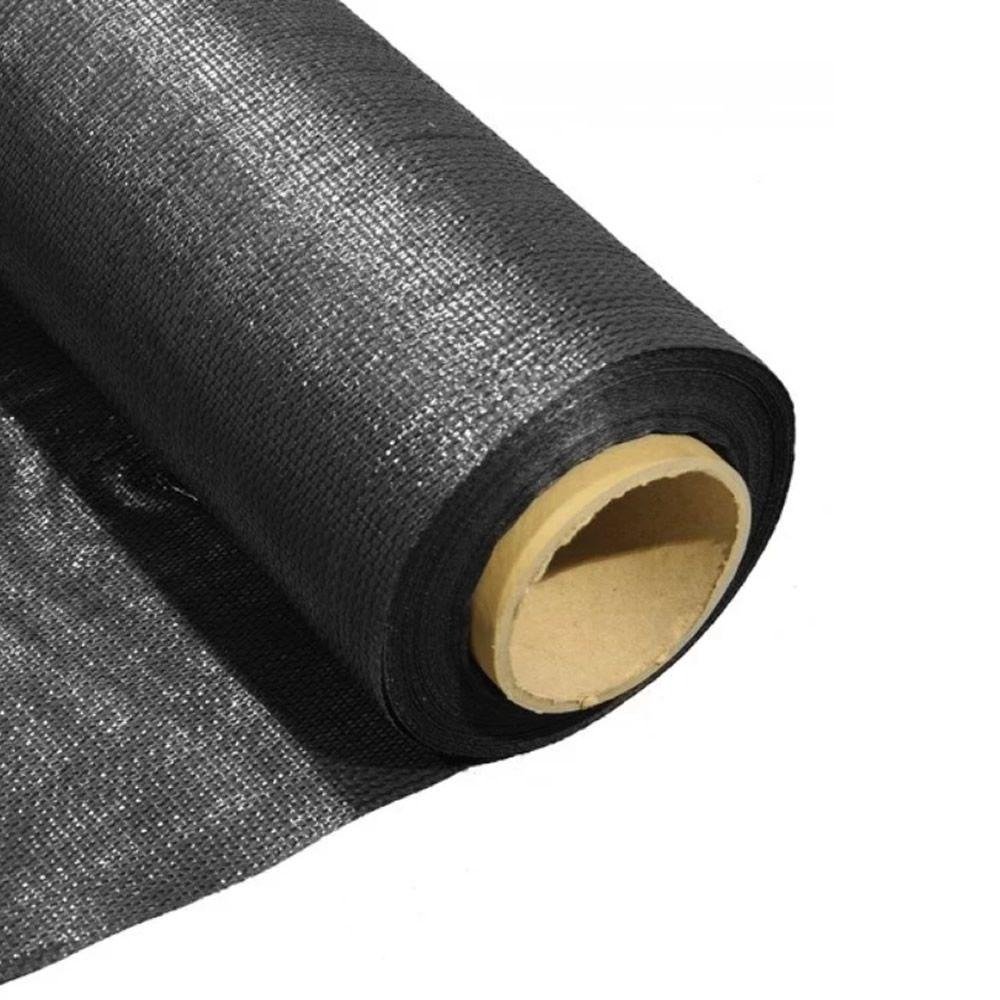
Geotextile 300g is a geotextile with a nominal mass per unit area of approximately 300 g/m². It is generally manufactured from polypropylene (PP) or polyester (PET) fibers using either a continuous-filament or staple-fiber needle-punched process.

The relatively high weight gives 300g geotextile greater mechanical resistance than lightweight geotextiles, making it suitable for projects exposed to construction traffic, aggregate placement, soil movement, and repeated loading.

Typical Characteristics of 300g Nonwoven Geotextile

Property Typical Range
Mass per unit area ~300 g/m²
Grab tensile strength 1,000–1,600 N
CBR puncture resistance 3,000–5,000 N
Trapezoid tear strength 400–650 N
Permittivity 0.8–1.5 s⁻¹
AOS 0.10–0.20 mm
Construction Needle-punched nonwoven
Main polymers PP / PET

Actual values vary according to fiber type, production method, polymer properties, and manufacturer specifications. Project-specific technical data should always be reviewed before selection.

Why Choose 300g Instead of a Lighter Geotextile?

A 300 g/m² geotextile can provide a useful balance between mechanical protection and hydraulic performance.

For example, when a geotextile is installed beneath crushed stone on a weak subgrade, it needs to survive aggregate placement and construction equipment while preventing the migration of fine soil particles.

A lighter 150 g/m² product may be appropriate for simple filtration applications, while a 300 g/m² product can be more appropriate when puncture resistance and construction survivability become important design considerations.

2. How We Selected the Best Geotextile 300g Products

Because manufacturers use different product specifications and testing methods, a meaningful comparison should not rely on weight alone.

For this review, the major evaluation factors include:

1. Mechanical Performance – 40%

Key parameters include:

  • Grab tensile strength
  • CBR puncture resistance
  • Trapezoid tear strength
  • Elongation
  • Resistance to construction damage

2. Filtration and Drainage – 20%

Important hydraulic properties include:

  • Permittivity
  • Apparent Opening Size (AOS)
  • Water flow rate
  • Long-term filtration behavior

3. Durability and Installation – 20%

Consider:

  • UV resistance
  • Chemical resistance
  • Roll dimensions
  • Handling characteristics
  • Compatibility with the installation environment

4. Field Applications – 10%

Products with experience in applications such as roads, construction platforms, drainage systems, landfill protection, and erosion control can provide additional confidence.

5. Value and Availability – 10%

The final evaluation should consider not only material price but also:

  • Roll width
  • Shipping cost
  • Lead time
  • Installation efficiency
  • Product consistency
  • Technical support

3. The 6 Best Geotextile 300g Products

3.1 TenCate Mirafi® Series – Premium Heavy-Duty Nonwoven Geotextile

TenCate Mirafi® is widely recognized in the geosynthetics industry for high-performance geotextile solutions.

Products in the heavier Mirafi® range can provide mechanical properties substantially above those of conventional lightweight nonwoven geotextiles.

Key Features

  • High CBR puncture resistance
  • Strong grab tensile properties
  • Continuous-filament nonwoven construction
  • Excellent filtration performance
  • Strong construction survivability
  • Wide range of product grades

Advantages

  • Excellent performance for weak subgrades
  • High resistance to aggregate placement damage
  • Strong industry recognition
  • Suitable for demanding transportation projects

Disadvantages

  • Premium pricing
  • Some products may be over-specified for smaller projects
  • Heavy rolls can require mechanical handling

Best For

  • Heavy haul roads
  • Construction platforms
  • Railway applications
  • Landfill protection
  • Soft-soil stabilization
  • Heavy equipment access roads

Verdict: A strong premium choice when mechanical performance and specification support are major priorities.

3.2 Propex Geotex® Series – Strong Choice for Transportation Projects

Propex Geotex® nonwoven geotextiles are designed for separation, stabilization, filtration, drainage, and protection applications.

Heavy-duty grades can provide a strong combination of tensile strength and puncture resistance for transportation infrastructure.

Key Features

  • Needle-punched nonwoven construction
  • Strong mechanical performance
  • Good water permeability
  • Suitable for soil separation
  • Multiple weight grades available

Advantages

  • Good strength-to-filtration balance
  • Suitable for road construction
  • Established product range
  • Strong presence in infrastructure applications

Disadvantages

  • Premium positioning
  • Product availability varies by region

Best For

  • Road stabilization
  • Construction access roads
  • Drainage systems
  • Railroad construction
  • Aggregate separation

Verdict: A reliable option for engineers looking for a well-established heavy-duty geotextile solution.

3.3 HUESKER – High-Performance Geotextile Solutions

HUESKER is an established geosynthetics manufacturer offering geotextiles and other engineered geosynthetic systems for civil engineering and infrastructure projects.

Its nonwoven geotextile products are designed for applications requiring filtration, separation, protection, and drainage.

Key Features

  • High mechanical strength
  • Good filtration characteristics
  • Needle-punched nonwoven structure
  • Strong durability
  • Wide range of geosynthetic solutions

Advantages

  • High-quality manufacturing
  • Good mechanical performance
  • Suitable for demanding infrastructure projects
  • Strong engineering support

Disadvantages

  • Premium pricing
  • Availability can differ between markets

Best For

  • Roads
  • Railway projects
  • Drainage
  • Erosion control
  • Infrastructure construction

Verdict: A high-end option for projects where product quality and engineering support are important.

3.4 Carthage Mills – Reliable Heavy-Duty Geotextile

Carthage Mills provides a broad range of geotextile products for transportation, drainage, stabilization, erosion control, and environmental applications.

Its heavier nonwoven products are designed to provide the mechanical protection required during aggregate placement and construction.

Key Features

  • Strong tensile performance
  • Good puncture resistance
  • Filtration and separation capability
  • Multiple roll widths
  • Suitable for heavy construction

Advantages

  • Good balance of mechanical and hydraulic properties
  • Suitable for transportation infrastructure
  • Multiple product options

Disadvantages

  • Availability varies by region
  • Premium products may have higher material costs

Best For

  • Construction platforms
  • Haul roads
  • Drainage
  • Landfill protection
  • Rip-rap protection

Verdict: A dependable choice for medium- to heavy-duty geotextile applications.

3.5 Thrace Nonwovens – Good Value for Large Projects

Thrace Nonwovens manufactures nonwoven geotextiles for filtration, separation, drainage, protection, and reinforcement-related applications.

Its 300 g/m² products can offer an attractive balance between mechanical properties and project cost.

Key Features

  • Approximately 300 g/m² options
  • Needle-punched nonwoven structure
  • Good filtration performance
  • Wide roll options
  • Competitive international pricing

Advantages

  • Good price-to-performance ratio
  • Wide roll widths can reduce seams
  • Suitable for large-area projects
  • Good chemical and environmental resistance

Disadvantages

  • Product availability differs by market
  • Mechanical performance may vary by specific grade

Best For

  • Road stabilization
  • Construction platforms
  • Rip-rap protection
  • Drainage
  • Large-area separation projects

Verdict: A practical option when project economics and large-area installation are important.

3.6 Tinhy Geosynthetics – Cost-Effective 300 g/m² Nonwoven Geotextile

Tinhy Geosynthetics Co., Ltd. offers nonwoven geotextiles for infrastructure, environmental, drainage, landfill, water-management, and soil-stabilization applications.

Tinhy’s 300 g/m² nonwoven geotextile is designed to provide a balance between mechanical strength, filtration performance, durability, and cost.

Unlike lightweight geotextiles intended primarily for basic filtration, the 300 g/m² grade is suitable for projects where the geotextile may experience greater construction stress and aggregate loading.

Key Features

  • Approximately 300 g/m² mass per unit area
  • PP nonwoven construction
  • Needle-punched manufacturing
  • Good puncture resistance
  • Good tensile and tear strength
  • Effective filtration and separation
  • Available in different roll widths
  • Suitable for customized specifications

Typical Applications

Tinhy 300 g/m² geotextile can be considered for:

  • Road and highway stabilization
  • Unpaved roads
  • Construction platforms
  • Railway subgrade separation
  • Drainage systems
  • Landfill protection
  • Geomembrane cushioning
  • Reservoir and pond liner protection
  • Rip-rap and erosion control

Why Consider Tinhy Geosynthetics?

Balanced mechanical performance

A 300 g/m² nonwoven geotextile provides substantially more protection than many lightweight products while remaining relatively easy to transport and install.

Filtration and separation

The needle-punched structure allows water to pass through while helping prevent the migration of fine soil particles between different material layers.

Flexible product specifications

Depending on project requirements, geotextiles can be supplied in different weights, widths, lengths, and packaging configurations.

Factory-direct supply

Direct manufacturer sourcing can provide advantages in product customization, production coordination, and bulk-order pricing.

Global project support

Tinhy Geosynthetics supplies geosynthetic products for international infrastructure and environmental applications, with product selection based on project requirements rather than simply choosing the lowest-cost material.

For projects requiring 300 g/m² nonwoven geotextile, buyers should request the latest technical datasheet and test report for the exact product grade being quoted.

4. Geotextile 300g Comparison Table

Manufacturer / Product Typical Weight Main Strength Filtration Best Application Market Position
TenCate Mirafi® 300–600 g/m²+ Very high mechanical strength Excellent Heavy-duty stabilization Premium
Propex Geotex® 300–450 g/m² Strong mechanical performance Excellent Roads & infrastructure Premium
HUESKER 300–400 g/m² Strength & durability Excellent Infrastructure Premium
Carthage Mills 300–400 g/m² Balanced performance Good–Excellent Roads & construction Mid–Premium
Thrace Nonwovens ~300 g/m² Value & roll options Good Large-area projects Value
Tinhy Geosynthetics ~300 g/m² Strength-to-cost balance Good–Excellent Roads, drainage & protection Value

Note: The actual properties of a geotextile vary by product grade. Buyers should compare manufacturer technical datasheets rather than assuming that products with the same nominal weight have identical performance.

5. What Is 300g Geotextile Used For?

5.1 Road Stabilization

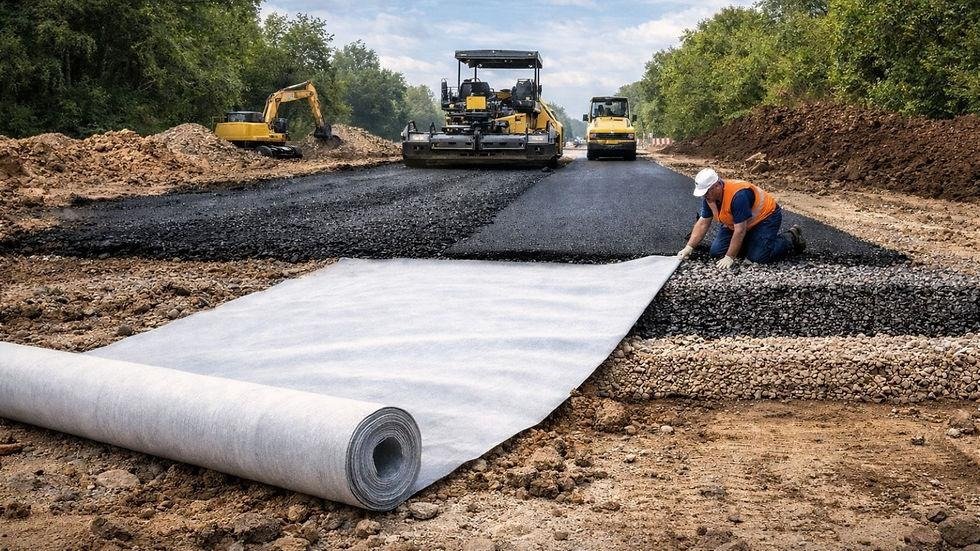
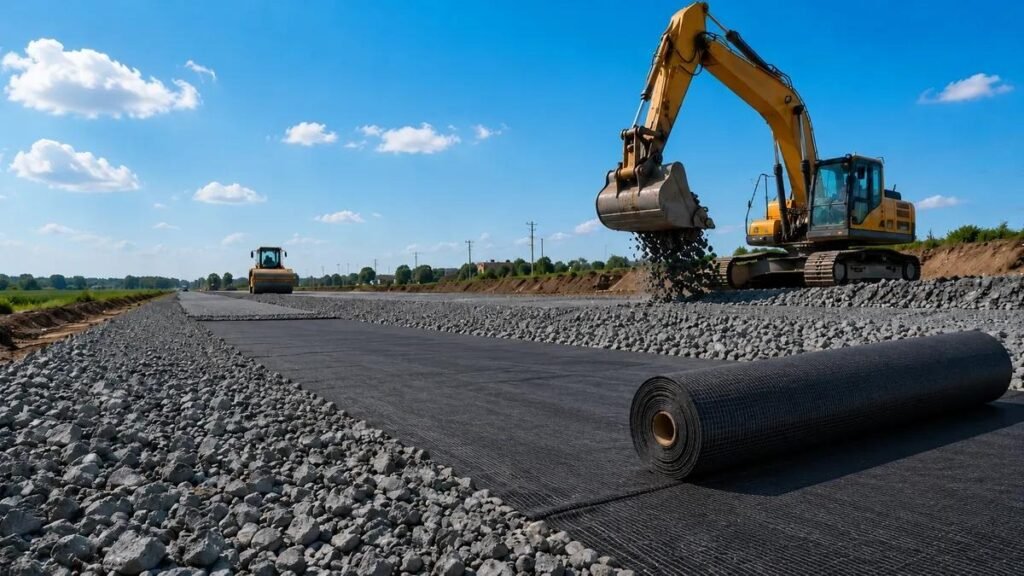
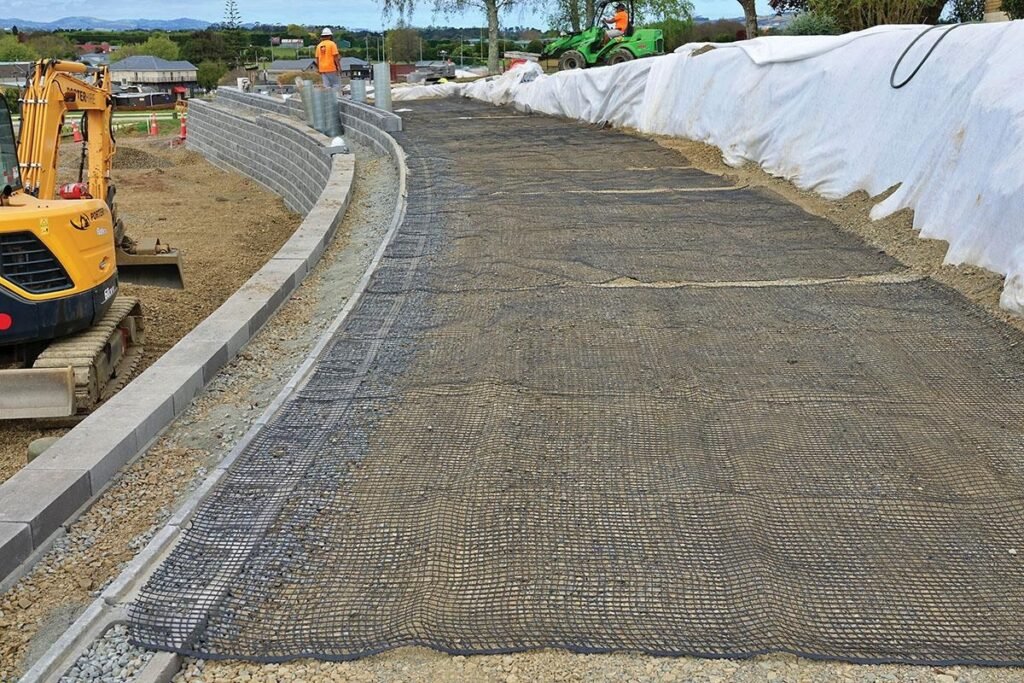
One of the most common applications is placing 300g geotextile between weak subgrade soil and aggregate.

The geotextile helps:

  1. Separate soil and aggregate
  2. Reduce intermixing
  3. Improve aggregate confinement
  4. Maintain drainage
  5. Reduce rutting caused by subgrade contamination

For roads constructed over soft soils, the appropriate geotextile should be selected based on subgrade strength, traffic loading, aggregate thickness, and drainage conditions.

5.2 Construction Platforms

Temporary construction platforms for cranes, excavators, dump trucks, and other heavy equipment can experience significant loading.

A 300 g/m² geotextile can provide a protective separation layer beneath aggregate, helping maintain the integrity of the working platform.

5.3 Geomembrane Protection

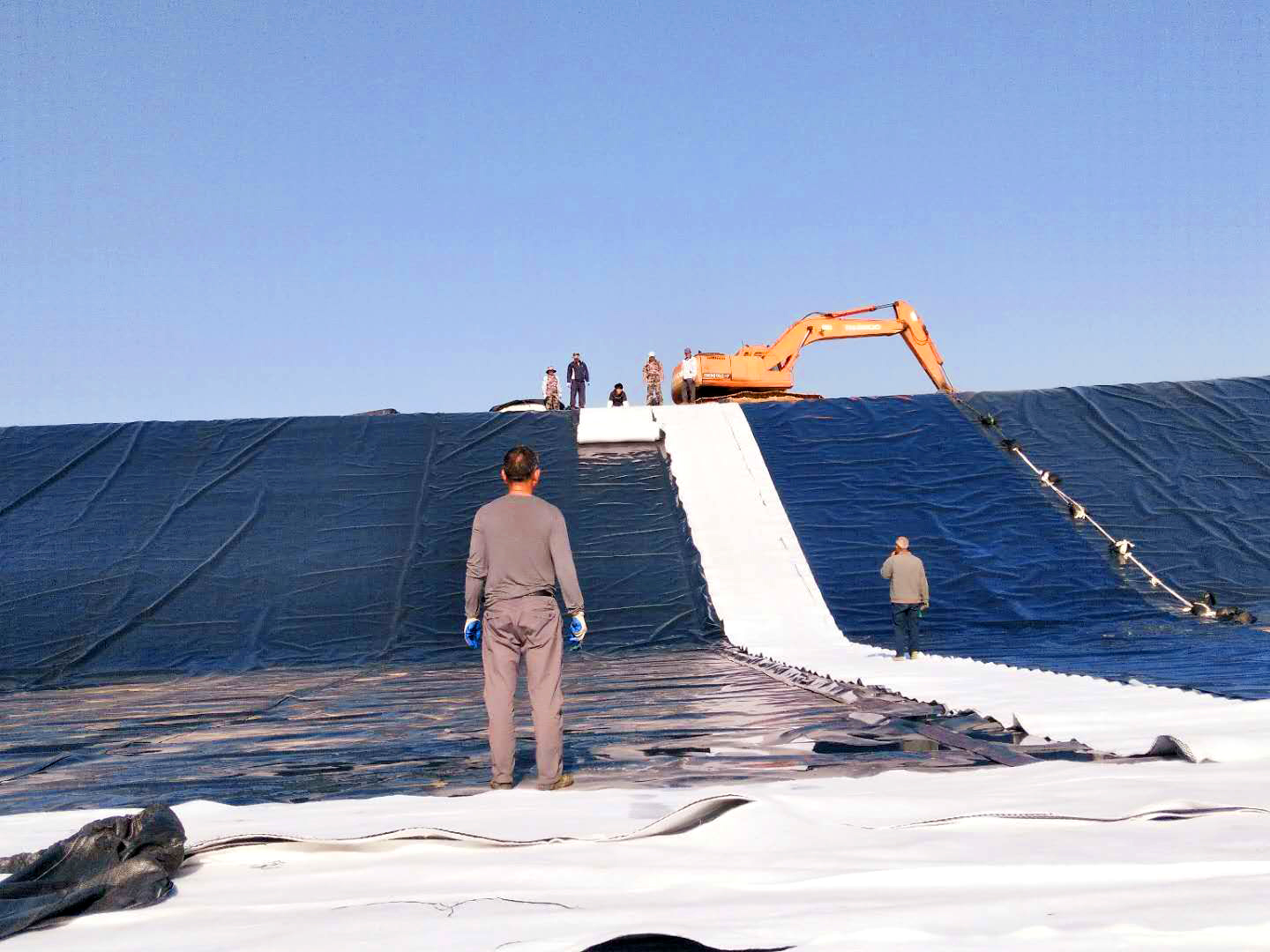
When installed beneath or above a geomembrane, nonwoven geotextile can act as a cushioning and protection layer.

This is particularly important where the geomembrane could otherwise be damaged by:

  • Sharp aggregate
  • Stones
  • Uneven subgrade
  • Construction traffic

The appropriate geotextile weight should be determined according to the geomembrane thickness, subgrade conditions, aggregate characteristics, and project design.

5.4 Drainage Systems

300g nonwoven geotextile can also be used as a filter around:

  • French drains
  • Perforated drainage pipes
  • Gravel drainage layers
  • Subsurface drainage systems

The geotextile allows water to pass while limiting the movement of surrounding soil fines.

5.5 Rip-Rap and Erosion Control

A nonwoven geotextile installed below rip-rap can provide separation and filtration.

It helps prevent underlying soil from migrating through the rock layer while allowing water movement.

Typical applications include:

  • Riverbanks
  • Drainage channels
  • Slopes
  • Spillways
  • Culverts
  • Coastal protection

6. 300g Geotextile vs. 200g Geotextile

The main difference is the mass per unit area, but the higher weight generally corresponds to greater mechanical resistance.

Property 200g Geotextile 300g Geotextile
Weight ~200 g/m² ~300 g/m²
Puncture resistance Moderate Higher
Tensile strength Moderate Higher
Construction survivability Good Better
Filtration Good Good
Handling Easier Heavier
Material cost Lower Higher
Heavy-duty applications Limited Better suited

If the primary requirement is simple filtration, 200g may be sufficient.

If the project involves heavy aggregate, construction traffic, weak subgrade, or geomembrane protection, 300g can provide additional mechanical protection.

7. Continuous Filament vs. Staple Fiber 300g Geotextile

Not every 300g geotextile is manufactured in the same way.

Continuous Filament Nonwoven

Continuous-filament geotextiles are manufactured using continuous polymer fibers that are bonded into a nonwoven structure.

Potential advantages include:

  • Uniform fiber distribution
  • Consistent filtration characteristics
  • Good tensile properties
  • Good puncture resistance
  • Strong dimensional stability

Staple Fiber Nonwoven

Staple-fiber geotextiles use shorter polymer fibers that are mechanically entangled, typically through needle punching.

Potential advantages include:

  • Good flexibility
  • Excellent cushioning properties
  • Good filtration
  • Wide range of available weights
  • Cost-effective production

The better option depends on the application’s mechanical and hydraulic requirements rather than simply the manufacturing method.

8. How to Choose the Right 300g Geotextile

Before purchasing 300g geotextile, consider the following factors.

1. Check CBR Puncture Resistance

For applications involving sharp aggregate or heavy construction equipment, CBR puncture resistance is an important indicator of survivability.

2. Check Grab Tensile Strength

Higher tensile strength can improve resistance to installation stresses and construction loads.

3. Check AOS

The apparent opening size should be compatible with the site’s soil gradation and filtration requirements.

4. Check Permittivity

Adequate permittivity is important where the geotextile must allow water to pass through efficiently.

5. Consider Roll Width

Wider rolls can reduce the number of overlaps and potentially lower installation labor.

6. Request Test Reports

Do not select a product based only on “300g” printed on the quotation.

Ask the supplier for:

  • Technical datasheet
  • ASTM/ISO test results
  • Mass per unit area
  • Grab tensile strength
  • CBR puncture resistance
  • Tear strength
  • AOS
  • Permittivity
  • Roll dimensions

9. Why Geotextile Quality Matters

A geotextile may look similar from supplier to supplier, but manufacturing consistency can significantly affect field performance.

Important quality-control factors include:

  • Polymer quality
  • Fiber uniformity
  • Needle-punching density
  • Mass consistency
  • Tensile strength
  • Puncture resistance
  • Filtration properties
  • Roll winding quality
  • Packaging and transportation protection

For large infrastructure projects, buyers should request product-specific test reports rather than relying solely on generic manufacturer specifications.

10. Frequently Asked Questions About Geotextile 300g

Is 300g geotextile suitable for roads?

Yes. 300 g/m² nonwoven geotextile is commonly considered for road stabilization, separation, and drainage applications, particularly where the subgrade is weak or construction loading is significant.

Is 300g geotextile waterproof?

No. Nonwoven geotextile is generally permeable, allowing water to pass through. It is designed for filtration, separation, drainage, and protection rather than waterproofing.

For waterproof containment, a geomembrane should normally be used.

How thick is 300g geotextile?

There is no single thickness corresponding to 300 g/m². Thickness depends on fiber type, manufacturing process, needle-punching density, and testing pressure.

Therefore, buyers should compare thickness together with mechanical and hydraulic properties.

Is 300g geotextile good for geomembrane protection?

It can be. A 300 g/m² nonwoven geotextile may provide effective cushioning and protection, but the correct weight should be determined based on the geomembrane, subgrade, aggregate, and project conditions.

Can 300g geotextile be used for drainage?

Yes. Its nonwoven structure can provide filtration while allowing water to pass through.

What is the difference between 300g and 300gsm?

In geotextile terminology, 300g and 300 GSM generally refer to approximately 300 grams per square meter (300 g/m²).

11. Conclusion

Geotextile 300g occupies an important position in the heavy-duty nonwoven geotextile market. It provides a practical balance between mechanical protection, filtration, drainage, installation efficiency, and cost.

Premium products such as TenCate Mirafi®, Propex Geotex®, and HUESKER offer strong performance and established market recognition, while other manufacturers provide competitive alternatives for different regional markets and project budgets.

For buyers, however, the best 300g geotextile is not necessarily the most expensive product.

The right choice should be based on:

  • CBR puncture resistance
  • Grab tensile strength
  • Tear resistance
  • AOS
  • Permittivity
  • Soil conditions
  • Construction loading
  • Required design life
  • Roll dimensions
  • Total installed cost

Tinhy Geosynthetics provides 300 g/m² nonwoven geotextile solutions for road construction, soil stabilization, drainage, landfill protection, geomembrane protection, and erosion-control applications. For project-specific requirements, buyers can request the latest technical datasheet, test reports, roll specifications, and quotation before placing an order.

Need 300g geotextile for your project? Contact Tinhy Geosynthetics for product specifications and a project-based quotation.

Knowledge Base
Share:
info@tinhygeosynthetics.com Bai Jinxi
Consultation

    Get The Latest Product Prices

    Your inquiries are welcomed at any time and please feel free to contact us via email, phone calls, and online chatbox on our site.

    We will definitely give you a reply ASAP after we receive your messages.

      0/180