Resources
Company News
Industry News
Knowledge Base
Project Cases
Innovation
Team Power Fuels TINHY’s Global Geosynthetics Solutions
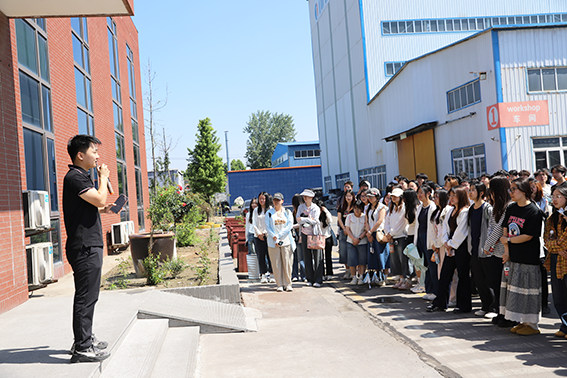
Tinhy and University of Jinan Celebrate Six Years of Industry–University Collaboration
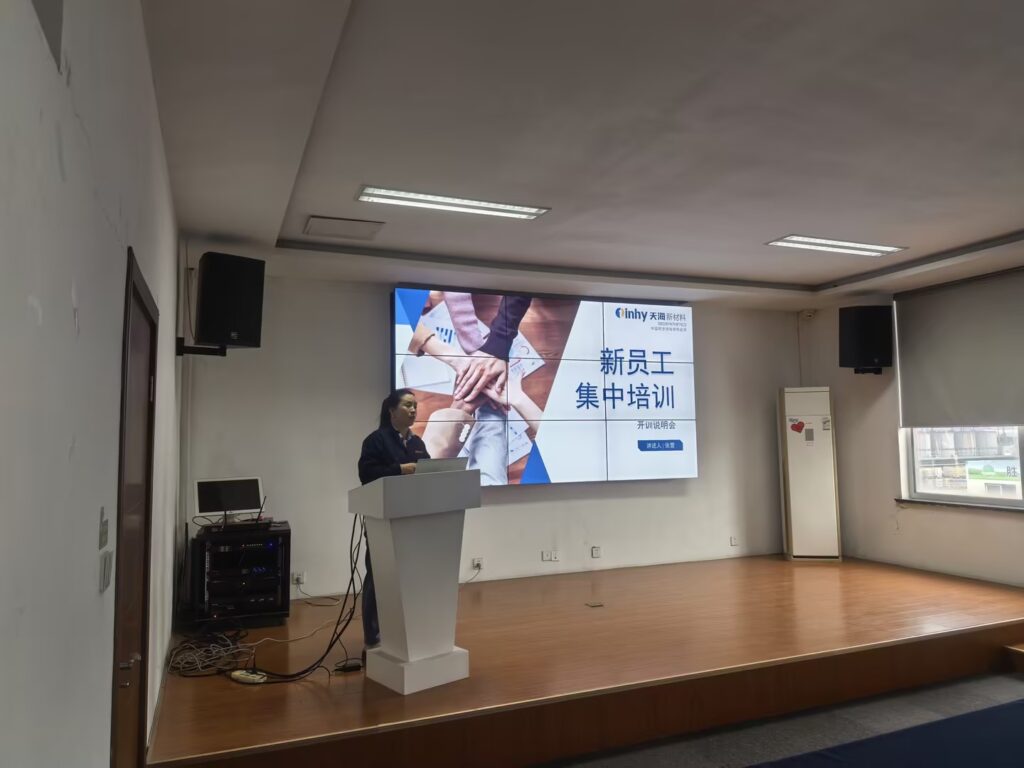
Empowering New Talent, Building the Future: Tinhy Successfully Conducts New Employee Orientation Training
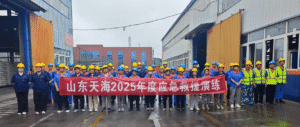
Tinhy Conducts Comprehensive Emergency Drill to Strengthen Workplace Safety Defenses
Company Mid – Year Summary and Team – Building Activity Report
Is geomembrane a geotechnical engineering material?
What are the application scenarios of geomembrane?
What are the functions of geotextiles?
Cómo elegir geomembrana de hdpe en proyectos de ingeniería
How to choose hdpe geomembrane in engineering projects
China’s Geotechnical Construction Materials Embrace New Opportunities
Tips for Moisture-Proof Storage of Geotextiles
Key Construction Points and Precautions for High-Density Polyethylene Geomembrane
what is pond lining material ?
What is geomembrane?
HDPE geomembrane construction plans and technical measures

What quality tests do HDPE geomembranes need to do?
Tinhy’s MDS® Drainage Solution
Installation Robots
Geotextile Installation: Step-by-Step Guide for Construction Projects
The 7 Best Non Woven Filter Fabric: Properties, Applications & Buying Guide
HDPE Liner Installation: A Step-by-Step Guide for Geomembrane Projects
The 10 Best Geotextile 200g Review: Properties, Applications & Buying Guide
The 8 Best Black Pond Liners Review: Materials, Performance & Selection Guide
How to Choose the Right HDPE Liner for Tailings Dams
The 7 Best Reservoir Liner Materials for Water Containment Projects
Top 8 HDPE Pond Liner Manufacturers in the World
Geogrid vs Geotextile: Differences, Applications & How to Choose
Filament Geotextile vs Staple Fiber Geotextile: Key Differences and Applications
Should HDPE or PVC be used to install geomembrane in reservoirs?
What is the price of geomembrane?
Material characteristics of three different geomembranes
Esquema de construcción de geomembrana de HDPE y medidas técnicas
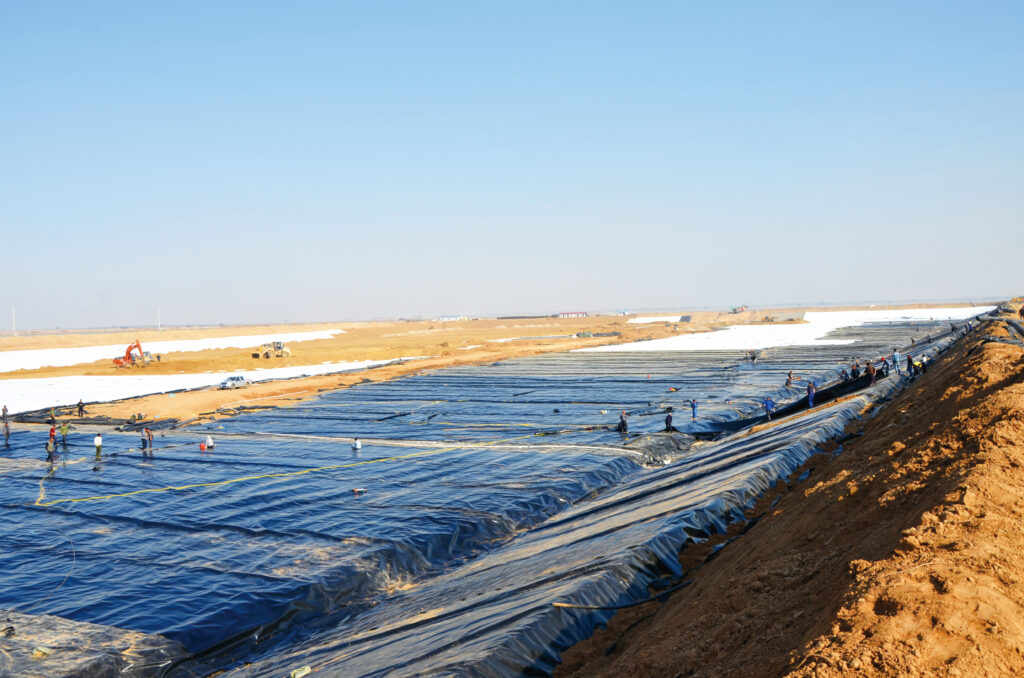
hdpe geomembrane pond liner in Congo (DRC)
How to lay and weld HDPE geomembrane?
HDPE geomembrane 0.2-4.0mm
HOME ABOUT PRODUCTS APPLICATION CONTENTUS RESOURCES
Home Resources Knowledge Base Geotextile Installation: Step-by-Step Guide for Construction Projects

Geotextile Installation: Step-by-Step Guide for Construction Projects

time:September 11, 2026 Views:8

Geotextile installation is an important part of road construction, drainage systems, retaining walls, erosion control, landscaping, and environmental engineering. Even when the correct geotextile has been selected, poor installation can reduce its effectiveness by causing wrinkles, displacement, inadequate overlaps, punctures, or damage during backfilling.

A successful geotextile installation starts before the roll is deployed. Proper material selection, subgrade preparation, panel layout, anchoring, joining, covering, and inspection all contribute to the performance of the finished system.

This guide from Tinhy Geosynthetics explains the basic geotextile installation process, from site preparation to final inspection, and highlights common installation mistakes to avoid.

What Is Geotextile Fabric?

Geotextile is a permeable synthetic textile used in contact with soil or other construction materials. Common raw materials include polypropylene (PP) and polyester (PET).

Depending on its structure and specifications, geotextile can provide several functions:

  • Separation – preventing different soil or aggregate layers from mixing
  • Filtration – allowing water to pass while retaining soil particles
  • Drainage – facilitating water movement through the system
  • Reinforcement – contributing tensile resistance in selected applications
  • Protection – cushioning and protecting geomembranes or other materials
  • Erosion control – helping reduce soil movement in suitable applications

Geotextiles are commonly used in:

  • Roads and highways
  • Railways
  • Drainage systems
  • Retaining walls
  • Landfills
  • Reservoirs and ponds
  • Coastal and erosion-control projects
  • Landscaping
  • Foundation drainage

The required geotextile type should always be determined according to the project’s design requirements rather than by fabric weight alone.

Woven vs. Nonwoven Geotextile for Installation

Before installation, it is important to understand the difference between woven and nonwoven geotextiles.

Geotextile Type Typical Characteristics Common Functions
Woven Geotextile High tensile strength, relatively low elongation Separation, stabilization, reinforcement
Nonwoven Geotextile Permeable, flexible, good filtration characteristics Filtration, drainage, separation, protection
PET Filament Nonwoven Continuous filament structure with good mechanical properties Filtration, drainage, protection, reinforcement
PP Staple Fiber Nonwoven Flexible needle-punched structure Drainage, filtration, separation, protection

There is no single geotextile that is best for every project. Selection should consider soil conditions, hydraulic requirements, loading, installation conditions, and the intended function of the geotextile.

Step-by-Step Geotextile Installation

Step 1: Site Assessment and Installation Planning

Before the geotextile is installed, evaluate the site and review the project drawings and specifications.

Important factors include:

  • Existing soil conditions
  • Groundwater and drainage conditions
  • Terrain and slope
  • Expected construction loads
  • Type and thickness of aggregate or cover material
  • Required geotextile function
  • Roll width and installation layout
  • Overlap or seam requirements

For road projects, for example, the geotextile may need to separate a granular base from a weaker subgrade. For drainage projects, filtration and hydraulic performance may be more important.

The installation method should therefore be established before the rolls arrive at the site.

Step 2: Prepare the Subgrade

Subgrade preparation is one of the most important stages of geotextile installation.

The installation surface should be:

  • Properly graded
  • Stable enough for the intended installation
  • Free of sharp rocks and debris
  • Free of unnecessary vegetation and roots
  • Free of objects that could puncture the fabric

Soft or unsuitable areas should be addressed according to the project specifications before the geotextile is deployed.

A reasonably smooth and stable surface helps reduce the risk of puncture, excessive deformation, and displacement during installation.

Installation tip: Do not use the geotextile as a substitute for correcting a severely unsuitable subgrade.

Step 3: Measure and Plan the Geotextile Layout

Before cutting or deploying the fabric, determine how the rolls will be arranged.

The layout should consider:

  • Roll width
  • Roll length
  • Installation direction
  • Slopes
  • Overlap areas
  • Drainage direction
  • Anchoring locations
  • Areas requiring seams or special connections

Planning the layout in advance can reduce unnecessary cutting and minimize the number of joints.

For large projects, a panel layout drawing can help the installation team identify each roll and its position.

Step 4: Cut the Geotextile to Size

Once the layout has been established, cut the geotextile according to the required dimensions.

Allow sufficient material for:

  • Required overlaps
  • Anchor trenches
  • Edges and transitions
  • Slopes and irregular surfaces
  • Connections to drainage structures

Avoid cutting panels too tightly. Insufficient material around edges or joints can create installation problems later.

Step 5: Deploy the Geotextile

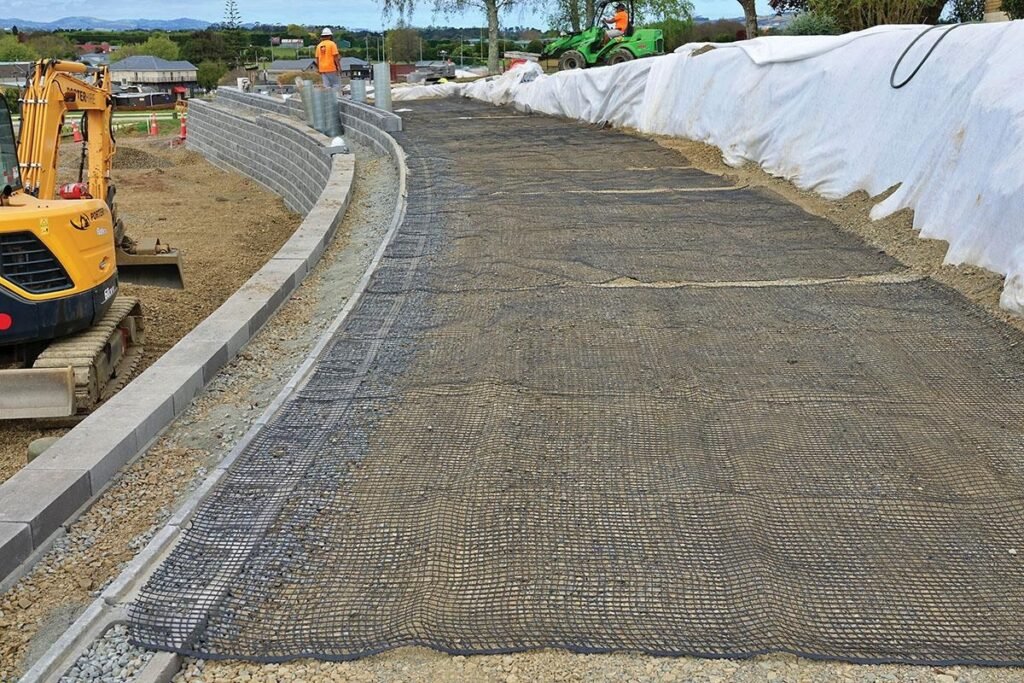
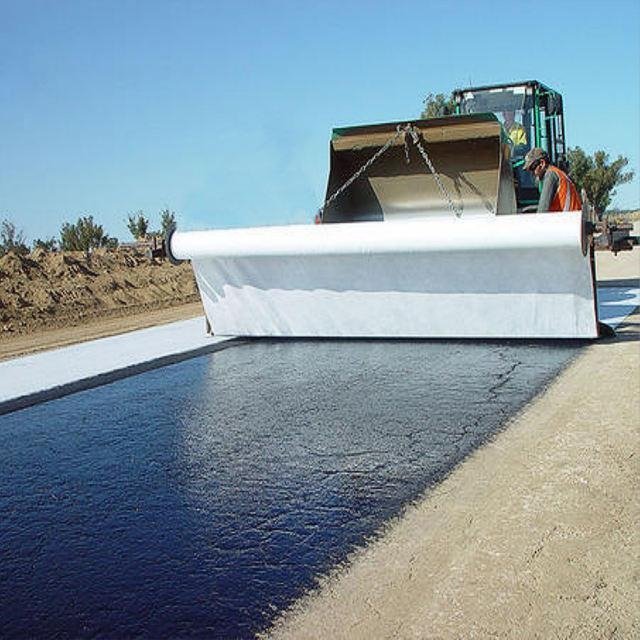
Roll the geotextile onto the prepared surface in accordance with the approved layout.

The fabric should generally be installed:

  • Flat against the subgrade
  • Without excessive wrinkles or folds
  • Without unnecessary stretching
  • With sufficient conformity to the ground surface
  • In the specified direction of installation

Temporary weights such as sandbags or small amounts of aggregate can be used to prevent movement caused by wind.

On slopes, the installation sequence should follow the project design and anchoring requirements.

The objective is not to stretch the geotextile as tightly as possible. Instead, the fabric should remain properly positioned and conform to the prepared surface without large folds.

Step 6: Secure the Geotextile

Geotextile can move before it is covered, particularly under windy conditions or on sloped surfaces.

Depending on the project, installers may use:

  • Landscape staples
  • Pins
  • Stakes
  • Temporary weights
  • Anchor trenches
  • Other approved fixing methods

Anchoring requirements vary according to site conditions, slope, wind exposure, and project specifications.

For large installations, the edges and overlaps should be secured sufficiently to prevent the fabric from shifting during aggregate placement.

Step 7: Overlap or Join Adjacent Rolls

Large projects normally require multiple rolls of geotextile.

Adjacent panels can be connected by:

  • Overlapping
  • Sewing or stitching
  • Other project-approved joining methods

For simple applications, overlapping may be sufficient. Higher-load or more demanding applications may require sewing or another specified connection method.

The required overlap should always follow the project drawings or specifications.

As a general reference, 300–450 mm overlap is commonly specified for some road and separation applications, but the required width can change according to subgrade conditions, loading, product type, and the engineering design.

Do not apply one fixed overlap value to every project.

Step 8: Place the Backfill or Cover Layer

Once the geotextile has been installed and inspected, the next step is to place the specified cover material.

Common cover materials include:

  • Gravel
  • Crushed stone
  • Sand
  • Selected soil
  • Aggregate base materials

Backfill should be placed carefully to avoid:

  • Puncturing the fabric
  • Dragging the geotextile
  • Creating large folds
  • Separating overlapping panels
  • Displacing anchors

A key installation principle is:

Do not allow construction equipment to drive directly on exposed geotextile unless the project specification specifically permits it.

Instead, place an adequate protective layer first and allow equipment to operate on the covered surface.

This is particularly important in road construction and other projects involving heavy construction machinery.

Step 9: Inspect Before Final Covering

Inspection should be carried out before the geotextile is completely covered.

Check for:

  • Tears
  • Punctures
  • Displacement
  • Excessive wrinkles
  • Incorrect overlaps
  • Open joints
  • Damaged edges
  • Contamination
  • Incorrect installation direction

Any damaged or displaced section should be repaired according to the approved project procedure before continuing with the next layer.

Good inspection at this stage is much easier than discovering a problem after the geotextile has been completely buried.

Geotextile Installation for Common Applications

Geotextile Installation in Road Construction

In road construction, geotextile is often installed between the subgrade and aggregate layers.

A typical structure may include:

Subgrade → Geotextile → Aggregate Base → Pavement

The geotextile can help separate the soil from the aggregate and, depending on the selected product and design, provide filtration, drainage, or stabilization functions.

The installation sequence generally includes:

  1. Prepare and grade the subgrade
  2. Remove sharp objects and unsuitable materials
  3. Deploy the geotextile
  4. Secure overlaps and edges
  5. Place aggregate carefully
  6. Compact the aggregate according to the project requirements

Geotextile Installation for Drainage Systems

Nonwoven geotextiles are commonly used around drainage materials because their permeable structure can allow water to pass while helping retain surrounding soil particles.

A typical drainage system may include:

Native Soil → Geotextile → Gravel → Perforated Drainage Pipe → Gravel → Geotextile

The exact structure depends on the drainage design.

The fabric should be positioned so that surrounding soil does not easily migrate into the drainage aggregate or pipe system.

Geotextile Installation Behind Retaining Walls

Geotextile can also be incorporated into retaining wall drainage systems.

A typical system may include:

Retaining Wall → Drainage Aggregate → Geotextile → Backfill Soil

The geotextile acts as a filter layer between the soil and drainage aggregate, while the drainage layer provides a path for water movement.

Correct placement is important because gaps, poor overlaps, or damaged fabric can allow soil migration into the drainage layer.

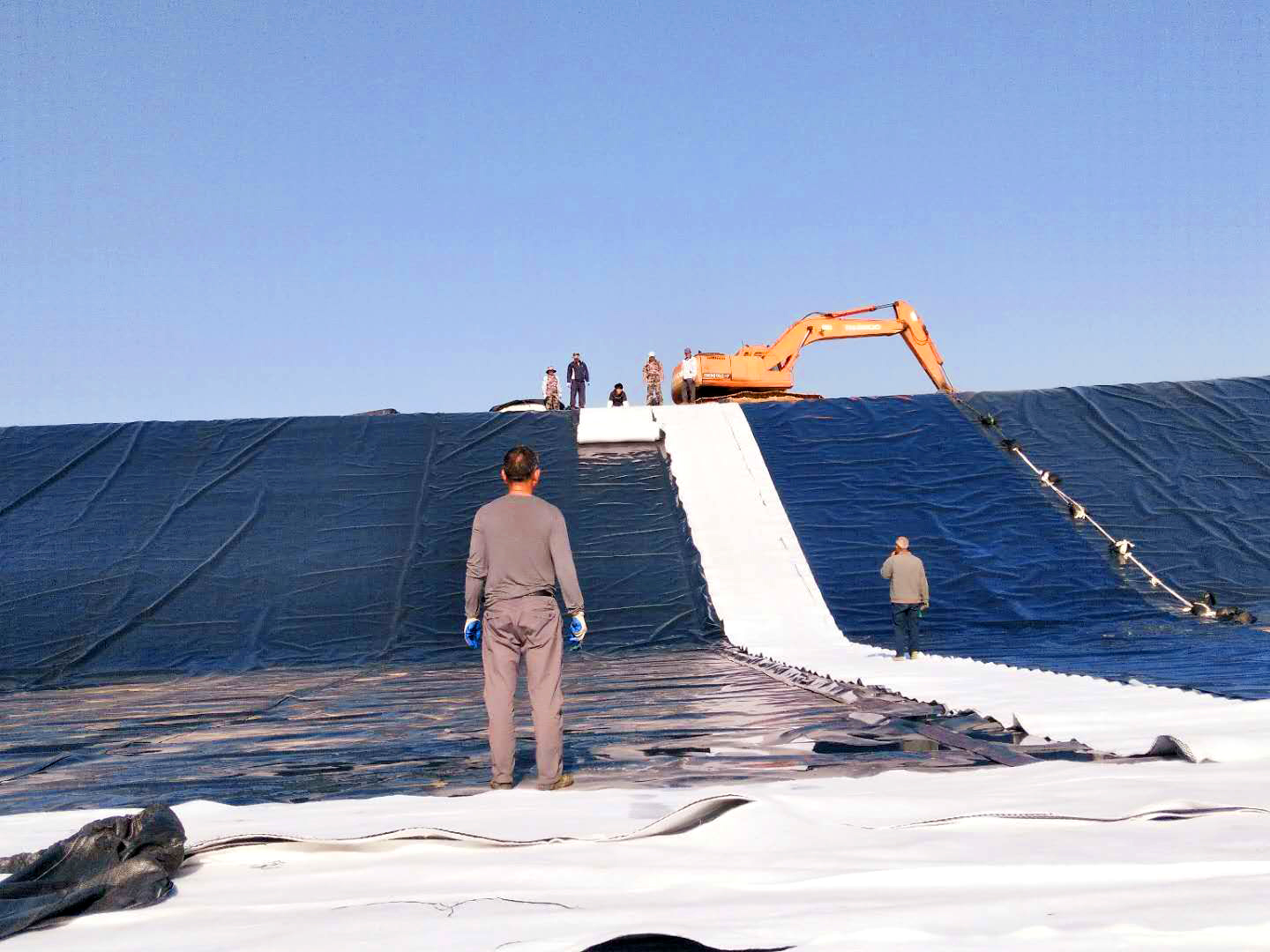
Geotextile Installation Under Geomembranes

In landfill, pond, reservoir, mining, and other containment systems, nonwoven geotextile may be used as a protective layer beneath or above a geomembrane.

A simplified structure may be:

Prepared Subgrade → Nonwoven Geotextile → HDPE Geomembrane → Protective / Drainage Layer

The geotextile can provide cushioning and help reduce the risk of damage to the geomembrane from irregularities in the underlying surface.

The required geotextile specification depends on the geomembrane thickness, subgrade condition, loading, and project design.

Common Geotextile Installation Mistakes

1. Installing on an Unprepared Surface

Sharp stones, roots and debris can damage the fabric during installation or subsequent loading.

Better approach: Inspect and prepare the subgrade before deployment.

2. Using the Wrong Geotextile

Selecting a product based only on GSM can result in poor performance.

Mechanical strength, hydraulic properties, puncture resistance, material type and intended function should also be considered.

3. Insufficient Overlap

Small overlaps or gaps between adjacent panels can allow soil migration and compromise the designed separation or filtration layer.

Better approach: Follow the project-specific overlap requirement.

4. Excessive Wrinkles and Folds

Large folds can create installation problems and prevent the fabric from following the intended system geometry.

Better approach: Deploy the fabric smoothly and correct significant folds before covering.

5. Poor Anchoring

Unsecured geotextile can move because of wind, construction traffic or aggregate placement.

Better approach: Use an appropriate temporary or permanent fixing method.

6. Driving Directly on Exposed Geotextile

Construction equipment can puncture, tear or displace uncovered fabric.

Better approach: Place the required cover layer before allowing equipment traffic.

7. Leaving the Fabric Exposed for Too Long

Synthetic geotextiles can be affected by prolonged UV exposure.

Better approach: Follow the product’s UV resistance requirements and project specifications, and cover the material within the planned construction sequence.

How to Choose the Right Geotextile for Installation

When purchasing geotextile for a construction project, consider more than the fabric weight.

Selection Factor What to Check
Material PP or PET
Structure Woven, nonwoven, continuous filament, staple fiber
Mass g/m²
Tensile Strength Machine and cross-machine direction
Puncture Resistance Required installation survivability
Tear Strength Resistance to construction damage
Permeability Hydraulic requirements
AOS Filtration compatibility
Roll Width Project layout and installation efficiency
UV Resistance Expected exposure period
Standards ASTM, ISO or project-specific requirements

For drainage and filtration applications, hydraulic properties are particularly important.

For road stabilization or reinforcement, mechanical properties and installation survivability may receive greater emphasis.

For geomembrane protection, puncture resistance, thickness, mass and compatibility with the liner system should be reviewed.

Why Tinhy Geosynthetics for Geotextile Supply?

Tinhy Geosynthetics has been involved in geosynthetic manufacturing since 2002, with a manufacturing base, multiple production lines, and a product portfolio covering geotextiles, geomembranes, GCL and drainage materials.

Our geotextile products include woven and nonwoven options for applications such as:

  • Road and railway construction
  • Drainage and filtration
  • Landfill systems
  • Water conservancy
  • Mining
  • Geomembrane protection
  • Landscaping and erosion control

Tinhy also provides different material and specification options so that geotextile selection can be matched to the project’s technical requirements rather than relying on a single standard product.

For quality control, Tinhy operates an in-house testing laboratory and uses documented inspection and testing procedures for raw materials, production and finished products.

For projects requiring technical specifications, customized roll sizes or coordinated geosynthetic materials, the product should be evaluated according to the complete project requirements.

Geotextile Installation Checklist

Before installation:

  • Confirm the correct geotextile type
  • Review project drawings and specifications
  • Inspect the rolls for damage
  • Prepare the subgrade
  • Remove sharp objects and debris
  • Confirm roll layout and installation direction
  • Determine required overlaps
  • Prepare anchoring materials

During installation:

  • Deploy fabric without excessive wrinkles
  • Avoid unnecessary stretching
  • Secure edges and overlaps
  • Maintain the specified overlap
  • Avoid construction traffic on exposed fabric
  • Inspect for punctures and tears

Before covering:

  • Check all overlaps
  • Check seams and joints
  • Check fabric alignment
  • Repair damaged areas
  • Confirm anchoring
  • Approve the installation before backfilling

Frequently Asked Questions

How do you install geotextile fabric?

A typical installation sequence includes site assessment, subgrade preparation, measuring and layout, fabric deployment, anchoring, overlapping or joining, backfilling, and final inspection.

How much should geotextile overlap?

The required overlap depends on the project, subgrade condition, loading, geotextile type and design specifications. A 300–450 mm overlap is commonly used in some road and separation applications, but project-specific requirements should take priority.

Can you drive on geotextile fabric?

Construction traffic should generally not drive directly on exposed geotextile unless specifically permitted by the project specification. A suitable cover layer should normally be placed first.

Should geotextile be installed before gravel?

For many drainage and separation systems, geotextile is installed between the soil and gravel layer. The exact arrangement depends on the drainage or structural design.

Which is better for drainage: woven or nonwoven geotextile?

Nonwoven geotextiles are commonly selected where filtration and drainage are important. Woven geotextiles may be more appropriate where higher tensile strength and stabilization are primary requirements. The correct choice depends on the project design.

Can geotextile be used under HDPE geomembrane?

Yes. Nonwoven geotextile can be used as a cushioning or protection layer in geomembrane systems when specified by the project design. The required specification depends on the subgrade, liner system and expected loading.

Conclusion

Geotextile installation is more than simply rolling fabric across the ground. The long-term performance of a geotextile system depends on the combination of correct product selection, proper subgrade preparation, accurate deployment, sufficient overlap, secure anchoring, careful backfilling and quality inspection.

For road construction, drainage systems, retaining walls, landscaping, environmental projects and geomembrane systems, following a controlled installation sequence can help the geotextile perform its intended separation, filtration, drainage, reinforcement or protection function.

At Tinhy Geosynthetics, we provide a range of geotextile and other geosynthetic products for infrastructure and environmental engineering projects. Contact our technical team with your project requirements, specifications and roll dimensions to discuss a suitable geotextile solution.

Knowledge Base
Share:
info@tinhygeosynthetics.com Bai Jinxi
Consultation

    Get The Latest Product Prices

    Your inquiries are welcomed at any time and please feel free to contact us via email, phone calls, and online chatbox on our site.

    We will definitely give you a reply ASAP after we receive your messages.

      0/180